
Plants
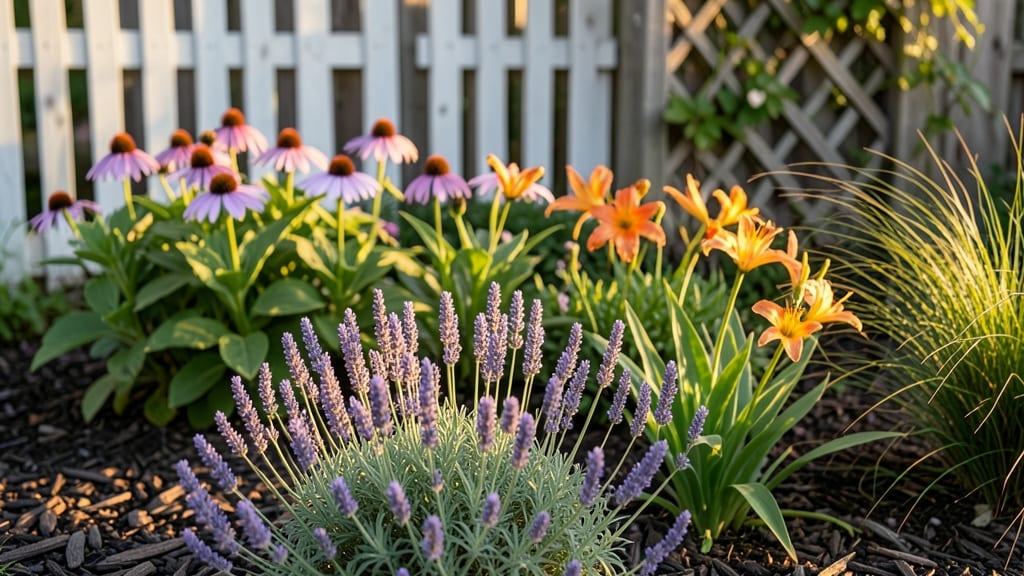
For backyard garden lovers, identifying soil type is simple: perform a jar test, squeeze test, and percolation test to determine whether your soil is clay, sandy, loamy, or silt-based, which directly impacts plant health and garden success.
Knowing your soil type helps you grow stronger plants with less effort. 🌱 The jar test reveals particle size distribution—clay feels sticky when wet, sand drains too fast, while loam (the ideal mix) holds moisture and nutrients perfectly.
I’ve found that most home gardens benefit from adding compost to improve loamy texture, especially if your soil leans too sandy or clay-heavy.
Beyond basic tests, consider your garden’s needs: heavy clay struggles with drainage, while sandy soil loses nutrients quickly. Loamy soil, with its balanced mix, supports root growth and microbial activity—making it the gold standard for most backyard plants.
For example, tomatoes thrive in well-draining loam, while succulents prefer sandy mixes. Testing your soil first saves time and frustration later!
💡 In This Article
- The Science Behind Soil Composition and Plant Growth
- Step-by-Step Soil Testing Tools and Techniques
The science behind soil composition and plant growth
Soil isn't just dirt—it's a complex ecosystem where particle size determines how water, air, and nutrients interact. Clay particles (0.002mm diameter) pack tightly, creating tiny pores that hold water but restrict airflow, while sand (0.05-2mm) has large pores that drain quickly but offer little nutrient retention.
Silt (0.002-0.05mm) sits between them, balancing moisture and aeration. The magic happens when these particles combine in loamy soil (typically 40% sand, 40% silt, 20% clay), creating optimal pore space for roots and microbes.
Root development thrives in loamy soil because its balanced texture allows roots to spread easily while accessing both water and oxygen. For example, tomato plants in clay-heavy soil often develop root rot from poor drainage, while those in sandy soil struggle to retain moisture during dry spells.
Microbial activity also peaks in loamy soil—earthworms and beneficial bacteria flourish in the air-water balance, breaking down organic matter into plant-available nutrients. 🌱 This is why compost (which adds organic matter) transforms heavy clay into a more loamy texture over time.
Water movement is another critical factor. Sandy soil drains water so fast that nutrients wash away, while clay holds water so tightly that roots suffocate. The ideal loamy soil retains 50-60% of its volume in pore space, with 25-30% air and 25-30% water at field capacity.
This balance explains why loamy soil stays workable longer after rain and recovers faster from drought. For instance, a 1-gallon container of loamy soil might hold 3-4 cups of water before drainage begins, compared to just 1 cup in sandy soil or 5 cups in clay.
Nutrient retention follows the same pattern. Clay's tiny surfaces act like sponges, adsorbing nutrients but releasing them slowly, while sand's large particles offer little surface area for nutrient attachment. Loamy soil strikes the perfect balance—it holds essential minerals like nitrogen, phosphorus, and potassium while allowing roots to access them efficiently.
For example, a 1-pound sample of loamy soil might contain 0.5% organic matter, providing a steady supply of nutrients compared to 0.1% in sandy soil or 2% in clay (though much of it may be locked away).
Understanding these mechanics helps explain why some plants thrive in specific soils. Blueberries, for instance, require acidic, sandy soil to prevent root rot, while asparagus prefers well-draining loam. Even vegetables like carrots and potatoes need loose soil to develop properly—clay compacts around their roots, leading to deformed harvests.
By testing your soil first, you can amend it to match your plants' needs, whether that means adding sand to break up clay or compost to boost organic matter in sandy soil.
Microbial diversity is the final piece of the puzzle. Healthy soil teems with 1 billion microbes per gram in loamy conditions, compared to 100 million in clay or 10 million in sand. These microbes decompose organic matter, fix nitrogen, and suppress plant diseases.
For example, mycorrhizal fungi form symbiotic relationships with plant roots, enhancing nutrient uptake—something that happens far more efficiently in loamy soil. 🌍 This is why amending your soil isn't just about physics; it's about creating a thriving ecosystem that supports both plants and the tiny organisms they depend on.