
Advice
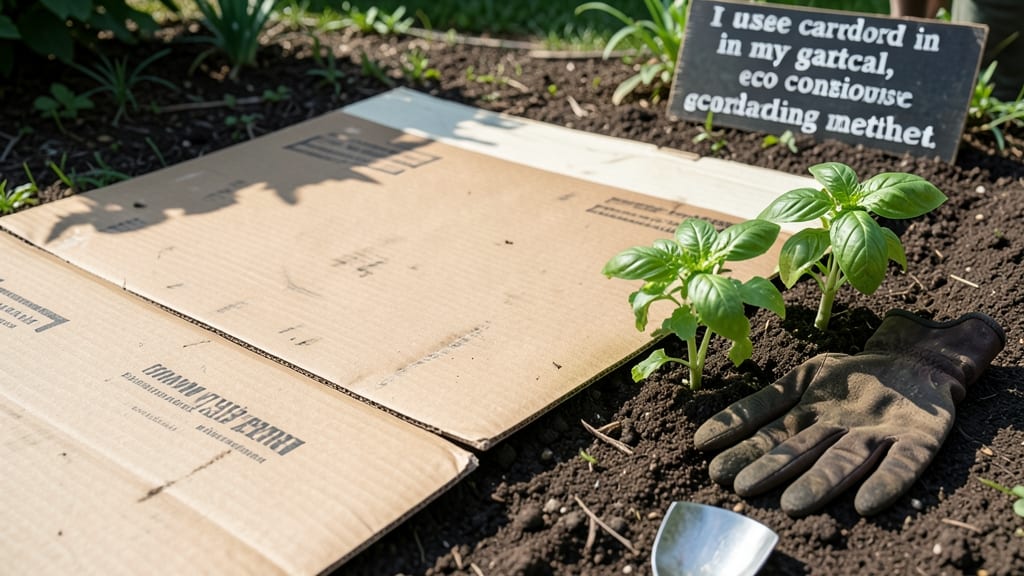
You can use cardboard in your garden safely when prepared correctly—it blocks weeds, retains soil moisture, and decomposes into nutrient-rich compost over time. Skip treated or glossy cardboard, and always bury it under 2-3 inches of soil or mulch.
Cardboard breaks down naturally in your garden because it's made mostly of cellulose, the same material found in plant fibers. 🌱 When properly layered—ink-side down—it creates a barrier that smothers weeds while protecting soil from erosion.
Unlike plastic mulch, it eventually turns into organic matter, feeding beneficial microbes and improving soil structure over time. I've seen gardeners use it as a temporary weed barrier during spring planting, then cover it with compost once the growing season starts.
For best results, tear cardboard into 2-3 inch strips to prevent curling, remove any tape or staples, and place it directly on garden beds or pathways. Avoid colored or glossy cardboard, as inks and coatings may contain harmful chemicals.
If you're unsure about your cardboard's quality, opt for plain brown boxes from grocery stores or shipping packages instead.
💡 In This Article
- How Cardboard Mulch Improves Soil Health
- Step-by-Step Guide to Preparing Cardboard for Gardens
How cardboard mulch improves soil health
When you lay down cardboard in your garden, you're essentially creating a temporary barrier that works in two ways: physically blocking sunlight from weed seeds and gradually breaking down into organic matter.
The cellulose fibers in cardboard decompose through microbial activity—soil bacteria and fungi consume the material over 3-12 months, depending on thickness and climate. This process releases carbon and nutrients back into the soil, similar to how leaf litter enriches forest floors.
Unlike synthetic mulches, cardboard doesn't leave behind plastic micro-particles or chemical residues when properly prepared.
The weed suppression effect comes from the cardboard's ability to block 90-95% of light from reaching weed seeds, preventing germination without herbicides. This is especially valuable in high-traffic garden areas where weeds compete aggressively with plants.
For example, a ¼-inch thick layer of plain cardboard under a vegetable bed can reduce weed growth by up to 80% during the first growing season.
The material also helps retain soil moisture by reducing evaporation—studies show cardboard mulch can maintain 10-15% more soil moisture than bare ground during dry periods.
What makes cardboard unique compared to traditional mulches like straw or leaves is its dual function: immediate weed control combined with long-term soil improvement. Straw primarily insulates soil and breaks down slowly, while leaves add organic matter but don't block weeds as effectively.
Cardboard, when properly layered, gives you both benefits simultaneously. The decomposition process also creates air pockets in the soil, improving drainage and root aeration—something dense mulches like grass clippings don't achieve as well. 🌱
However, the effectiveness depends on proper preparation. Cardboard must be torn into strips (not left in large sheets) to prevent curling, and any tape or staples should be removed as they may contain non-biodegradable materials.
The ink used in printing is typically water-based and breaks down safely, but colored or glossy cardboard should always be avoided due to potential chemical coatings. For comparison, plain brown grocery store boxes decompose cleanly, while shipping boxes with plastic windows or wax coatings can leave harmful residues.
Another key advantage is how cardboard mulch interacts with soil microbes. As it decomposes, it creates a habitat for beneficial bacteria that break down organic matter further, accelerating nutrient cycling.
This microbial boost can improve soil fertility faster than traditional mulches, especially in new garden beds where soil structure needs enhancement. For instance, a ½-inch layer of decomposed cardboard can increase earthworm activity by 30-40% within a few months, further aerating the soil naturally.
For gardeners using cardboard as a mulch alternative, timing matters. In cooler climates, it may take longer to decompose, while tropical regions can see complete breakdown in as little as 3 months.
The key is to monitor the process—once the cardboard has fully integrated into the soil (becoming dark and crumbly), it's ready to be tilled in or left as part of the soil's organic matter.
This makes it an excellent temporary solution for new plantings or areas needing weed control before establishing permanent mulches.