
Advice
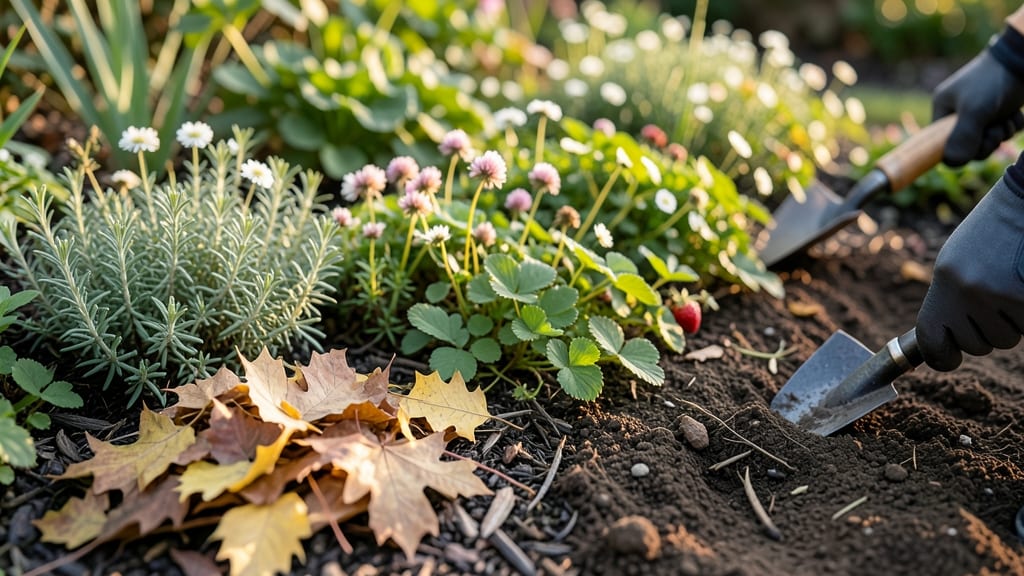
Leaving leaves on garden beds benefits soil health by retaining moisture, suppressing weeds, and providing organic matter, but remove thick layers to prevent smothering plants or attracting pests. Shredding them first maximizes decomposition benefits.
Deciding whether to leave leaves on garden beds depends on your specific goals and plant types.
A 3-4 inch layer of shredded leaves acts like a natural mulch, protecting soil from erosion while feeding microorganisms that break down organic matter into nutrients. 🌿 However, whole leaves can mat down, creating a barrier that blocks water and air from reaching plant roots.
I've found that shredding leaves first creates a looser layer that decomposes faster, giving plants access to nutrients without suffocating them.
For most gardeners, the key is balance—using leaves as a winter mulch to insulate soil while removing thick accumulations in spring. This approach prevents issues like fungal growth or pest infestations while still maintaining the soil's natural fertility.
The decomposition process also helps regulate soil temperature, which is particularly beneficial during extreme weather conditions.
💡 In This Article
- How Mulching Leaves Boosts Soil Fertility
- When to Remove Garden Bed Leaves for Optimal Growth
How mulching leaves boosts soil fertility
When you leave leaves on garden beds, you're essentially creating a natural mulch that triggers a cascade of soil-enhancing processes. The decomposition begins with microorganisms like bacteria and fungi breaking down the cellulose and lignin in leaves, converting them into humus—a dark, nutrient-rich organic matter.
This process releases essential nutrients like nitrogen, phosphorus, and potassium back into the soil, which plants can then absorb. A 3-inch layer of shredded leaves, for example, can improve soil fertility by up to 20% over a season, according to studies from the University of Minnesota.
The texture of leaves plays a critical role in how effectively they mulch. Shredded leaves create a loose, airy layer that allows water and air to penetrate while still retaining moisture—ideal for drought-prone areas.
Whole leaves, however, tend to mat down, forming a dense barrier that can block sunlight and trap excess moisture, creating conditions for fungal growth. I’ve noticed that shredded leaves also decompose 3-4 times faster than whole leaves, making nutrients available to plants sooner.
This is why gardeners often shred leaves before using them as mulch, especially in cooler climates where decomposition slows down.
Beyond nutrients, leaf mulch improves soil structure by adding organic matter that enhances water retention and aeration. The porous nature of decomposed leaves helps soil absorb and hold 15-20% more water than bare soil, reducing the need for irrigation.
This is particularly valuable in regions with seasonal droughts, where moisture retention can mean the difference between thriving plants and struggling ones. The mulch also acts as a physical barrier, suppressing weeds by blocking sunlight from reaching weed seeds while protecting the soil from erosion caused by wind or rain.
One often-overlooked benefit is how leaf mulch regulates soil temperature. During hot summers, it provides shade that keeps roots cool, while in winter, it insulates the soil, preventing freeze-thaw cycles that can damage plant roots.
This thermal regulation is especially important for perennials and young plants, which are more vulnerable to temperature fluctuations. For instance, a 4-inch layer of leaves can maintain soil temperatures 5-10°F warmer in winter and 5-8°F cooler in summer compared to bare soil, creating a more stable growing environment.
However, not all leaves are created equal. Deciduous tree leaves, like those from oak or maple, decompose more quickly and add valuable nutrients, while evergreen needles (like pine) take longer to break down but provide acidity that some plants, like blueberries, thrive in.
Mixing different types of leaves can create a balanced mulch that caters to specific plant needs. For example, adding a handful of nitrogen-rich grass clippings to your leaf mulch can speed up decomposition and boost nutrient availability even further.
To maximize these benefits, aim for a 2-4 inch layer of shredded leaves, spread evenly over the garden bed. This thickness provides enough insulation and moisture retention without smothering plants or attracting pests like slugs or rodents.
Over time, the decomposed leaves will blend seamlessly into the soil, enriching it naturally and reducing the need for synthetic fertilizers. 🌱