
Planting
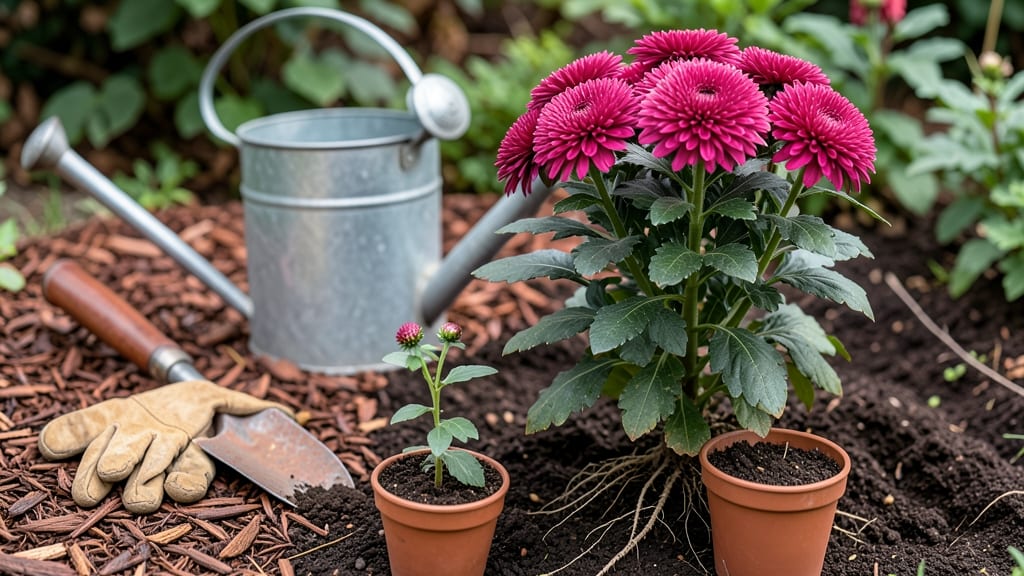
You can plant garden mums in the ground after the last frost date, ideally in early spring or late summer for fall blooms. They thrive in well-draining soil with full sun exposure and regular watering to prevent root rot.
Garden mums are hardy perennials that adapt well to outdoor planting once temperatures stabilize. 🌸 The key is timing—spring planting lets roots establish before summer heat, while late summer planting ensures vibrant fall blooms.
Most gardeners in USDA zones 5-9 aim for mid-April to early May for spring, or August to early September for fall. Just be sure to wait until nighttime temperatures stay consistently above 50°F to avoid frost damage.
For soil conditions, focus on drainage and sunlight. These plants despise soggy roots, so amending heavy clay with compost or planting on a slight mound helps. A 6-8 hour daily sun exposure is ideal, though they tolerate partial shade in hotter climates.
Mulching with 2-3 inches of organic matter keeps roots cool and conserves moisture—critical for their long bloom season.
💡 In This Article
- Best Planting Seasons for Garden Mums in Outdoor Soil
- Soil and Sun Requirements for Thriving Garden Mums
Best planting seasons for garden mums in outdoor soil
Garden mums thrive when planted at the right time, as their growth cycle depends on temperature cues. The ideal window is after the last frost date, when soil temperatures reach 50°F or higher—this prevents root shock from sudden cold snaps.
In most regions, this translates to mid-April to early May for spring planting, giving roots 6-8 weeks to establish before summer heat arrives. For fall blooms, late summer planting (August-September) ensures flowers appear just as cooler weather arrives, creating that classic autumn display.
The science behind timing involves photoperiodism—the plant's response to daylight length. Garden mums need 10-14 hours of daylight to trigger flowering, which is why late summer planting works: shorter days signal the plant to produce blooms.
If you plant too early in spring, the mums may focus on leaf growth instead of flowers. Conversely, planting too late risks frost damage before blooms appear. In colder zones (USDA 3-4), wait until 55°F soil temps to ensure root survival.
Regional adjustments matter—coastal areas with milder winters can plant as early as March, while inland zones may need to wait until May. Check your local frost dates (available via USDA Plant Hardiness Zone Map) and add 2 weeks buffer for safety.
For example, in Zone 7, aim for April 15-May 1 for spring planting, while Zone 9 gardeners can extend fall planting to early October. The goal is to give mums 60-75 days of warm soil before winter dormancy begins.
What most people miss is how temperature affects root development. Soil below 45°F slows root growth by 50%, making plants vulnerable to disease. That's why mulching with 2-3 inches of straw or shredded leaves helps maintain consistent soil temps.
For container-grown mums, harden off plants by exposing them to outdoor conditions for 7-10 days before transplanting to reduce transplant shock.
Special cases include tropical climates (Zones 10-11), where mums can bloom year-round if planted in partial shade and given consistent moisture. In these areas, plant in early spring or fall to avoid summer heat stress.
The key is always matching planting time to your local climate's minimum frost-free period—this ensures your mums have enough time to establish before seasonal changes.
Pro tip: Mark your calendar 2 weeks before your target planting date to prepare soil by adding compost and ensuring good drainage. This head start makes all the difference in how quickly your mums take root and bloom. 🌸