
How To
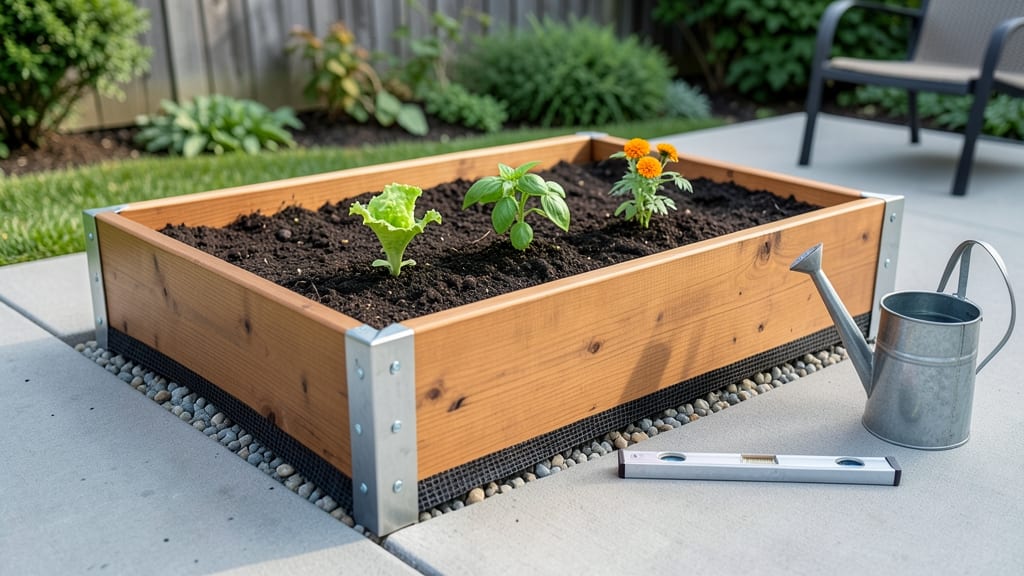
You can put a raised garden bed on concrete, but you must create a stable, level foundation and distribute weight properly to avoid cracking or shifting over time. Use landscape fabric or pavers as a cushion and ensure the base is wide enough to spread the load evenly.
Can you put a raised garden bed on concrete? Yes, but the key lies in preventing pressure points that could crack the slab. 🔥 The weight of soil and plants—especially when saturated—can stress concrete joints, so spreading that weight across a wider area is critical. I’ve found that using 6-inch pavers as a base or a gravel-filled frame creates the necessary stability while allowing drainage. For heavier beds (like those filled with cedar or stone), consider adding a metal grid system beneath the frame to further distribute the load.
Another common concern is moisture—concrete absorbs water, which can lead to mold or rot in the bed’s base. To prevent this, always include a landscape fabric barrier between the concrete and bed frame. This simple step blocks moisture while still allowing roots to access soil nutrients.
If your concrete has visible cracks, fill them first with a concrete patching compound to prevent soil from seeping into structural weaknesses.
💡 In This Article
- Weight Limits and Structural Risks for Raised Beds on Concrete
- Best Foundation Solutions for Concrete Surfaces
Weight limits and structural risks for raised beds on concrete
Concrete slabs are designed to handle static loads like patios or driveways, but the dynamic weight of a raised garden bed—especially when filled with soil and saturated with water—creates concentrated pressure points.
A standard 4x8-foot cedar raised bed filled with soil weighs approximately 1,200-1,500 pounds when dry, but that weight can double or triple when waterlogged.
Concrete’s compressive strength (typically 3,000-4,000 psi) isn’t the issue—it’s the shear stress at the edges where the bed frame meets the slab that causes cracks over time.
The real risk comes from uneven weight distribution. Concrete expands and contracts with temperature changes, and any movement can amplify stress at the bed’s corners.
For example, a 2x4-foot bed with 12-inch-high sides exerts about 250 psi at the base when fully loaded, while a wider 4x8-foot bed spreads that force across a larger area, reducing pressure to roughly 100 psi.
This is why wider beds are far more stable on concrete—think of it like spreading your weight across a yoga mat instead of standing on one foot. 🌱
Moisture worsens the problem by increasing soil weight and potentially seeping into concrete cracks, weakening the slab over time. If your concrete has control joints (the thin lines you see in driveways), these are intentional weak points where cracks should occur.
Placing a raised bed directly over one of these joints can turn a harmless hairline crack into a structural failure. Always check for existing cracks before positioning your bed, and avoid placing it within 12 inches of any joint.
Another critical factor is the type of wood used for the bed frame. Pressure-treated lumber is heavier than cedar or redwood, adding 50-100 pounds to the total load. If you’re using cedar (which resists rot naturally), the weight savings can help extend the life of your concrete foundation.
For extra-large beds (8x12 feet), consider splitting the load by using multiple smaller beds instead of one massive structure—this mimics how commercial greenhouses distribute weight across multiple piers.
What most people overlook is how the bed’s height affects stability. A 12-inch-tall bed creates more leverage against the slab than a 6-inch-tall one, increasing the risk of tipping during wind or seasonal shifts.
To counteract this, secure the bed to the concrete using galvanized screws or L-brackets into the slab’s edge. This isn’t just for aesthetics—it prevents the bed from rocking or shifting, which can loosen soil and damage plant roots over time.
For a real-world example, imagine a 4x6-foot cedar bed filled with 18 cubic feet of soil (weighing ~2,700 pounds when wet).
If placed directly on concrete, the corners could exert 300 psi locally, while a bed with a gravel-filled base spreads that force across 24 square feet, reducing pressure to a safer 110 psi.
The difference isn’t just theoretical—it’s the gap between a bed that lasts 5 years and one that fails in 2.