
Advice
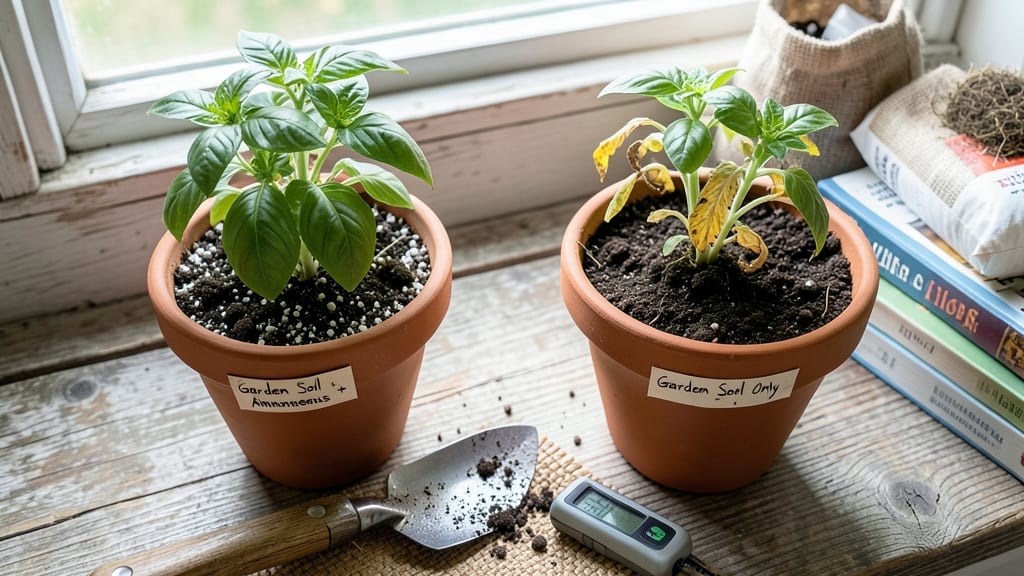
You shouldn't use garden soil as potting soil because it compacts easily, drains poorly, and may harbor pests or diseases. Potted plants need lightweight, sterile, well-aerated mixes like coconut coir or peat-based blends for optimal growth.
Garden soil is designed for outdoor beds where roots can spread freely, but container plants need something completely different. 🌱 The dense particles in garden soil smother roots, preventing oxygen flow and trapping moisture—leading to rot. Plus, outdoor soil often contains weeds, pathogens, or larvae that can devastate potted plants.
For containers, I recommend pre-mixed blends with perlite or vermiculite to improve aeration and drainage, while organic matter like compost keeps nutrients balanced.
If you're working with a budget, you can create your own lightweight mix by combining equal parts coconut coir, perlite, and compost. This DIY approach mimics commercial potting soil while avoiding the pitfalls of garden soil.
Just avoid using straight garden soil—even "amended" versions will still compact over time and fail to support healthy root systems.
💡 In This Article
- Why Garden Soil Fails as Potting Mix
- Best Potting Soil Alternatives for Healthy Plants
Why garden soil fails as potting mix
Garden soil is engineered for outdoor beds where roots can expand freely, but its dense structure makes it disastrous for containers. The particles in garden soil—typically 45-50% clay and silt—pack tightly when watered, creating a suffocating environment for roots.
This compaction reduces oxygen flow by up to 70% compared to potting mixes, starving roots and slowing growth. 🌱 The result? Stunted plants that struggle to absorb nutrients or water efficiently.
Another critical issue is drainage. Garden soil holds moisture like a sponge, often retaining 30-40% more water than ideal potting mixes. This excess moisture leads to root rot within 3-5 days in containers, where water has nowhere to escape.
Potting soil, on the other hand, incorporates perlite or vermiculite (20-30% by volume), which creates air pockets to prevent waterlogging and improve drainage.
Pathogens and pests are another hidden danger. Outdoor soil often contains weed seeds, fungal spores, and larvae that thrive in the dark, moist conditions of pots.
A single tablespoon of garden soil can introduce thousands of microbial organisms, including harmful bacteria like Pseudomonas or Fusarium, which can wipe out potted plants in weeks. Sterile potting mixes eliminate these risks entirely.
Nutrient imbalances also play a role. Garden soil provides a steady supply of nutrients over time, but potted plants deplete resources much faster in confined spaces. Without regular fertilization, plants in garden soil often show signs of deficiency—yellowing leaves or weak stems—within 4-6 weeks.
Potting mixes are formulated with balanced organic matter (like composted bark) to release nutrients gradually, matching the faster growth rates of container plants.
Finally, the texture difference is night and day. Garden soil feels heavy and gritty, while potting soil has a light, almost fluffy consistency. This isn't just about feel—it's about root health. Roots in garden soil can't expand properly, leading to circular growth patterns that weaken the plant structure.
In contrast, potting soil encourages roots to spread outward naturally, creating a stronger, more resilient plant. 🌿
Think of it like this: Garden soil is the concrete foundation of a skyscraper, while potting soil is the lightweight framework that allows roots to breathe and grow. The wrong choice can mean the difference between a thriving plant and one that struggles to survive.