
Flowers
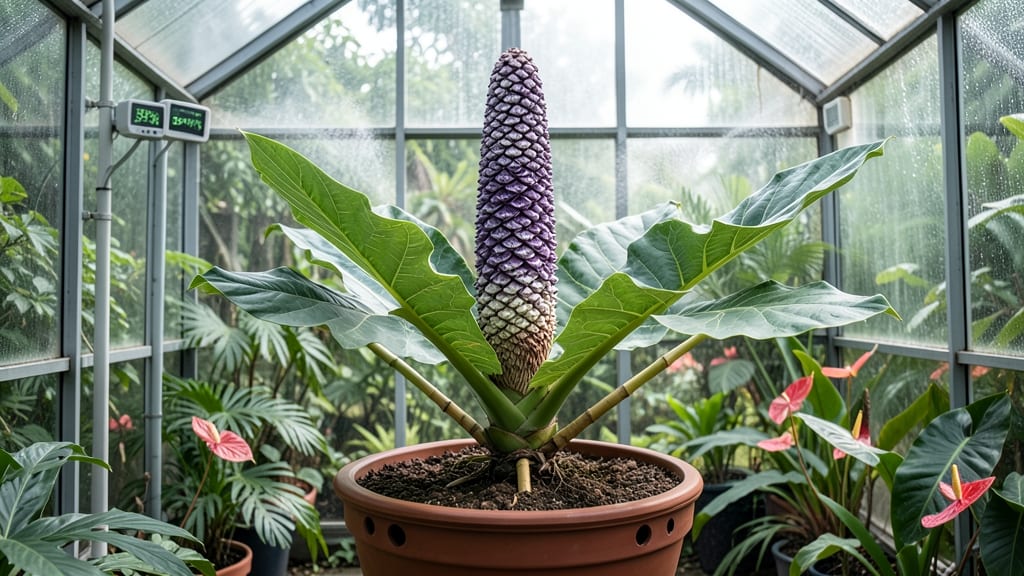
To see a corpse flower in a botanic garden, visit renowned collections such as the New York Botanical Garden, Chicago Botanic Garden, or Fairchild Tropical Botanic Garden, where blooms appear every 7-10 years and last only 24-48 hours. Always check bloom announcements for exact timing, as the flowers release a strong rotting scent during peak bloom.
These rare botanical wonders thrive in controlled environments where temperature, humidity, and soil conditions mimic their natural tropical habitats. 🌿 The blooms are triggered by a combination of factors, including the plant's energy reserves and environmental cues—think of them as nature's most dramatic, infrequent fireworks.
Many gardens now use advanced monitoring systems to predict bloom cycles, giving visitors a fighting chance to witness this once-in-a-decade spectacle.
What makes these gardens special is their ability to cultivate corpse flowers (Amorphophallus titanum) under precise conditions, often requiring years of preparation. The scent, often compared to rotting meat, isn't just for shock value—it's an evolutionary adaptation to attract carrion flies for pollination.
Visitors should arrive early, as crowds swell quickly, and consider bringing earplugs or a mask if the aroma is overwhelming.
💡 In This Article
- Why Corpse Flowers Bloom So Infrequently in Botanic Gardens
- Top Botanic Gardens for Corpse Flower Viewing and Preparation Tips
Why corpse flowers bloom so infrequently in botanic gardens
The corpse flower's rare blooming cycle is a survival strategy tied to energy conservation. These plants, native to the rainforests of Sumatra, store energy in their massive corms (underground stems) over decades.
A single bloom can consume 70-80% of the plant's energy reserves, which is why they only flower every 7-10 years—sometimes even longer. This extreme energy investment ensures the plant can survive between blooms in nutrient-poor tropical soils.
Botanic gardens replicate these conditions using precise environmental controls. The New York Botanical Garden, for example, maintains 75-85% humidity and 75-85°F temperatures to mimic Sumatra's climate. The plants also require well-draining, slightly acidic soil with high organic content to support their massive size.
Without these conditions, the energy reserves won't accumulate properly, delaying—or preventing—blooms entirely. 🌱
Temperature fluctuations act as natural triggers. In the wild, the monsoon season's rising humidity and heat signal the plant to bloom. Gardens use artificial heat mats to simulate this, but even then, blooms remain unpredictable.
The scent production (that infamous rotting meat aroma) is triggered by ethylene gas released during peak bloom, which attracts pollinators but also creates the sensory spectacle visitors experience.
Evolutionarily, this rare blooming strategy maximizes reproductive success. By flowering infrequently, the corpse flower ensures it's ready to produce thousands of seeds when conditions are optimal. In gardens, this means visitors witness a once-in-a-lifetime event—one that's been years in the making.
The dramatic scent and size (flowers can reach 3 feet in diameter) are all part of this high-stakes reproductive gamble.
What most people don't realize is that even after blooming, the plant enters a recovery phase. The corm must rebuild its energy stores for the next cycle, which can take 5-10 years.
This explains why some gardens, like Fairchild Tropical Botanic Garden, have multiple corpse flowers at different stages—some may bloom annually if they've reached maturity, but most follow the 7-10 year pattern. 💫
Advanced monitoring systems now help gardens predict blooms with 90% accuracy by tracking soil temperature, ethylene levels, and corm growth. However, the process remains an art as much as a science—because even with perfect conditions, nature still holds some surprises.
This is why bloom announcements are always met with excitement and a dash of uncertainty!