
Watering
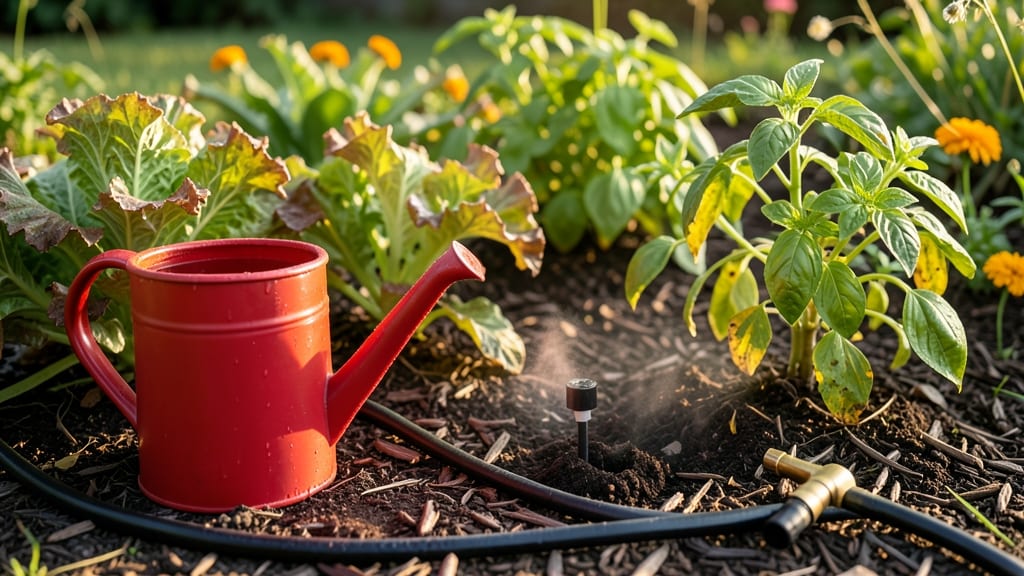
You don't need to water your garden every day—most plants thrive with 1-1.5 inches of water per week, adjusted by plant type, climate, and soil drainage. Overwatering harms roots as much as underwatering does.
Daily watering creates more problems than it solves for most gardens. Instead, focus on deep, infrequent watering that encourages strong root growth. 🌱 Different plants have unique needs—succulents and drought-tolerant varieties need far less than thirsty vegetables or flowering annuals.
I recommend checking soil moisture with your finger: if the top 1-2 inches feel dry, that's usually your cue to water. The key is matching your schedule to your plants' natural cycles and your local climate patterns.
For example, container plants dry out faster than in-ground ones, while established perennials often survive on rainfall alone.
A simple moisture meter can save you time and prevent overwatering, which is just as damaging as neglect. 💧 The best approach is to observe your garden's response—wilting leaves or yellowing foliage often signal either too much or too little water, not daily attention.
💡 In This Article
- How Plant Types Determine Watering Frequency
- Signs Your Garden Needs Water (and When to Skip It)
How plant types determine watering frequency
Root depth and structure are the primary factors that dictate how often a plant needs water. Succulents and cacti, for instance, have shallow but water-storing roots that can survive weeks without moisture. Their leaf structures are designed to minimize water loss, with waxy coatings that reduce evaporation.
In contrast, leafy greens like lettuce or spinach have shallow, fibrous roots that dry out quickly—often needing water every 2-3 days in hot weather. 🌵 The difference comes down to how efficiently each plant can access and retain water in its environment.
Leaf surface area plays a critical role too. Plants with broad leaves, like tomatoes or basil, lose moisture rapidly through a process called transpiration.
A single tomato plant can lose up to 0.5 gallons of water per day during peak summer heat, while a drought-resistant rosemary bush might lose only 1/4 cup under the same conditions. This is why vegetables often require more frequent watering than ornamental plants.
Climate zones further complicate things: in arid regions like Arizona, even thirsty plants may need water only every 5-7 days, while humid climates like Florida can lead to fungal issues if soil stays too wet.
Soil type dramatically alters how water behaves. Sandy soils drain water like a sieve, requiring daily checks in hot weather, while clay soils hold moisture for weeks. A simple test: grab a handful of soil—if it crumbles easily when dry, it's sandy; if it forms a tight clump, it's clay.
The ideal is loamy soil, which balances drainage and retention. For example, a 1-inch rainfall might penetrate only 2-3 inches into sandy soil but could soak 6+ inches into clay.
This explains why daily watering in clay soils can drown roots, while sandy soils may need frequent light waterings to prevent drought stress.
Established trees and shrubs have deep taproots that access groundwater, often needing water only during extreme droughts. Their large canopies create shade that reduces soil evaporation, creating a self-regulating system. Newly planted trees, however, require consistent moisture to establish roots—typically 1-2 gallons per week for the first year.
The key is matching watering depth to root zones: shallow-rooted plants need frequent light watering, while deep-rooted species benefit from infrequent deep soaking. 💧 This principle is why drip irrigation systems, which deliver water slowly at root level, are far more efficient than overhead sprinklers.
Seasonal adjustments are equally important. Spring and fall often require less water than summer, as cooler temperatures reduce evaporation rates. In winter, most plants enter dormancy and need minimal moisture—unless you're growing winter vegetables like kale or carrots, which may still require 1 inch per week.
The exception is newly seeded areas, which need consistent moisture to germinate, often requiring daily light watering until sprouts appear. Understanding these cycles helps avoid both overwatering and underwatering, both of which stress plants and attract pests.
Consider this breakdown for common plant categories:
- Succulents/Cacti: Water every 2-4 weeks (check soil—if dry 2 inches down, water deeply)
- Vegetables (tomatoes, peppers, lettuce): 1-1.5 inches per week (daily in extreme heat)
- Flowers (roses, petunias, marigolds): 1 inch per week (mulch helps retain moisture)
- Trees/Shrubs (established): Deep watering every 10-14 days (except new plantings)