
Watering
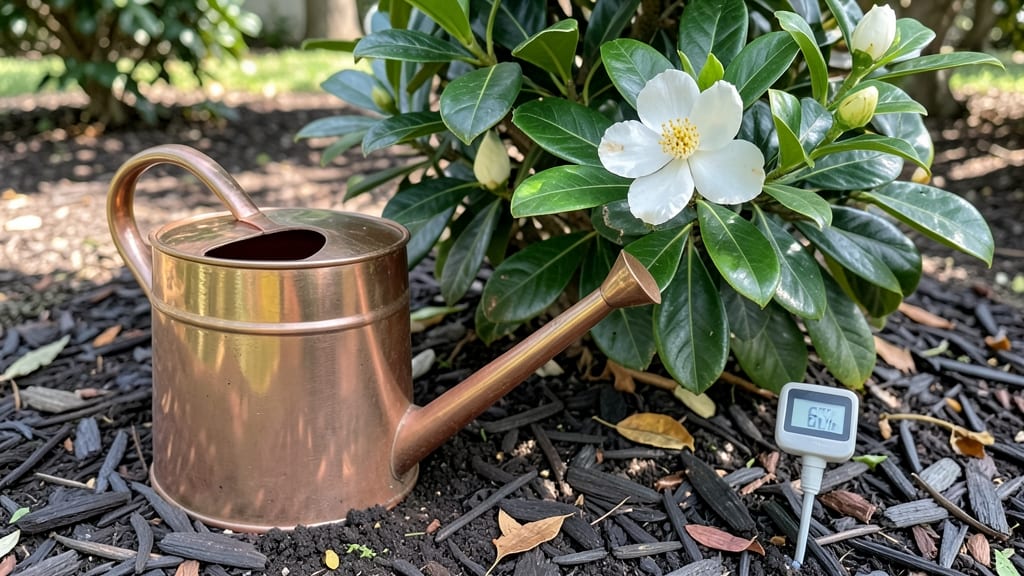
Mastering gardenia water requirements is the key to those fragrant white blooms 🌸 without the dreaded root rot that kills so many plants.
Struggling to keep your gardenia blooming year after year? The secret isn’t just sunlight or fertilizer—it’s mastering the exact watering schedule that prevents root rot while fueling those intoxicating white flowers.
Too much water, and you’ll drown the roots; too little, and the leaves yellow and drop. The balance is tricky, but with the right routine—deep soaks in the morning, mulch to lock in moisture, and seasonal adjustments—you can turn your gardenia into a fragrant, thriving centerpiece.
Below, I’ll walk you through the precise watering schedule by season, how to spot over- or under-watering, and the best soil and mulching tricks to keep your plant happy and blooming for years.
Gardenia watering schedule by season: how often to water for peak blooms
Your gardenia’s fragrant blooms and lush foliage depend on a precise watering schedule that changes with the seasons. Unlike drought-tolerant succulents, gardenias thrive on consistent moisture—but too much water leads to root rot, while too little causes wilting buds.
The key? Adjusting your watering routine based on temperature, humidity, and rainfall while keeping soil evenly moist but never soggy.
In my USDA Zone 6a garden, I’ve learned that gardenias need daily attention in summer but can go weeks without water in winter. The trick is monitoring soil moisture with your finger—stick it 2 inches deep; if it’s dry, it’s time to water.
For container gardenias, this happens faster than in-ground plants, so I check them every 1-2 days in summer.
Environmental factors like humidity and heatwaves drastically alter your schedule. In high humidity (like my coastal garden), I water less frequently because the air already holds moisture. During heatwaves, I increase watering to daily deep soaks to prevent stress. Even rainfall changes the game—after a downpour, I skip watering for 2-3 days to avoid overwatering.
Let’s break down each season so you can tailor your watering like a pro. In spring, your gardenia wakes up from dormancy and needs steady hydration to support new growth.
I water every 2-3 days, but I always check the soil first—if it’s still damp, I wait. Morning watering is critical here because it gives leaves time to dry before evening, reducing fungal risks.
Summer is when gardenias crave the most water, but overwatering is deadly. During heatwaves (like the 90°F+ summers in my area), I water deeply every morning to encourage root growth. Pro tip: Use a moisture meter to avoid guesswork—aim for 2 inches of moisture at all times.
If your gardenia’s leaves curl or droop, it’s thirsty; if they yellow or feel mushy, you’ve overdone it.
As fall arrives, I gradually reduce watering to every 3-4 days because cooler temps mean slower evaporation. This is also when I mulch heavily (with pine bark) to retain moisture and regulate soil temperature.
By late fall, I barely water at all—just enough to keep the soil slightly moist without encouraging rot.
Winter care is minimal, but don’t skip it entirely. In USDA Zone 6a, I water bi-weekly unless we get snow or frost. The goal is to keep roots alive without promoting growth. If your gardenia is potted, move it to a gar
Signs of overwatering vs. underwatering gardenias (and how to fix it)
Your gardenia's health depends on a delicate balance of water—too much or too little can spell disaster for those prized white blooms. Overwatering smothers roots with root rot, while underwatering causes wilting leaves and stunted growth.
Let’s decode the visual cues so you can rescue your plant before it’s too late.
Start by checking the soil moisture—stick your finger 2 inches deep. If it’s soggy, you’re overwatering. If dry, it’s time to hydrate. Gardenias thrive in consistently moist (not soggy) soil, so aim for 1-2 deep waterings weekly, adjusting for rain or heat.
Overwatering vs. Underwatering Gardenias
- Yellowing leaves (especially lower ones)
- Mushy stems or blackened roots
- Foul-smelling soil (sign of rot)
- Wilting despite wet soil
- Crispy, brown leaf edges
- Drooping leaves that don’t bounce back
- Dry, brittle soil when touched
- No new growth or buds
If your gardenia shows yellow leaves and a mushy stem, act fast! Prune affected areas with sterilized shears and repot in well-draining soil. For underwatered plants, soak the root zone until water runs out the drainage holes—this mimics natural rainfall.
Mulch plays a critical role in regulating moisture. Apply a 2-inch layer of organic mulch (like pine bark) around the base, but keep it 6 inches away from the trunk to prevent rot. This helps maintain even soil moisture and reduces evaporation.
Seasonal shifts matter too. In summer heat, gardenias may need daily watering, while winter dormancy calls for bi-weekly checks. Always water in the morning to avoid fungal diseases that thrive in damp evening air.
Remember, gardenias hate soggy feet but crave consistent moisture. Adjust your routine based on these signs, and your plant will reward you with lush foliage and fragrant blooms all season long. 🌸