
Light Requirements
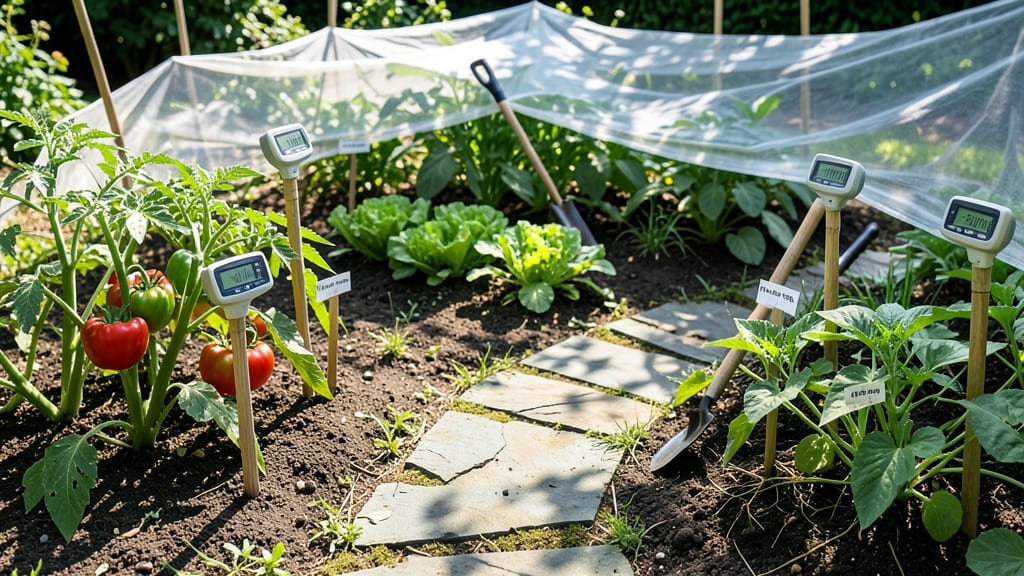
Vegetable gardens need full sun (6-8 hours daily) for peak performance, though many leafy greens and root crops grow well in partial shade (3-6 hours), while fruiting plants like tomatoes and peppers demand full sun to produce abundant harvests. Match your plant choices to your garden's natural light.
Sunlight drives photosynthesis, the process that fuels plant growth, but different vegetables have varying needs. 🌱 Leafy greens like lettuce and spinach actually prefer partial shade to prevent bolting, while fruiting plants need intense light to develop flavorful yields.
I've seen firsthand how even slight shade reductions can cut tomato production by 30%—it's why I always prioritize sun-loving crops in my south-facing beds. For shade gardens, focus on cool-season crops and use reflective mulches to boost light exposure.
This balance means you don't need to sacrifice your entire garden to full sun—just strategically place plants where they'll thrive. Many home gardeners create layered plantings with shade-tolerant crops under taller sun-lovers, maximizing space while meeting everyone's light requirements.
The key is understanding each plant's native growing conditions and adapting your layout accordingly.
💡 In This Article
- How Sunlight Affects Vegetable Growth and Productivity
- Best Vegetables for Shade Gardens and Sun Requirements
How sunlight affects vegetable growth and productivity
Sunlight powers photosynthesis, the process where plants convert light energy into chemical energy through chlorophyll. For vegetables, this means more light equals more energy for growth, flowering, and fruiting.
Leafy greens like spinach and kale can actually thrive with 3-4 hours of direct sunlight because they prioritize leaf production over fruiting.
However, fruiting plants like tomatoes and peppers need 6-8 hours to develop the energy required for fruit set and ripening—studies show tomato yields can drop by up to 40% with less than 6 hours of sun. 🌞
The intensity of light matters just as much as duration. Bright, direct sunlight (like midday rays) provides the high-energy photons needed for photosynthesis, while diffused light (common in partial shade) produces lower-energy photons.
This is why peppers and eggplants, which rely on abundant energy for fruit development, struggle in shaded spots. Even a 10% reduction in light intensity can delay flowering and reduce fruit size in sun-dependent crops.
The science behind this is simple: more light means more glucose production, which fuels growth and flavor development.
Nutrient uptake also depends on sunlight exposure. Plants in full sun develop stronger root systems because they need to support larger above-ground growth. For example, carrots grown in partial shade often produce smaller, less flavorful roots compared to those in full sun.
Meanwhile, leafy greens like lettuce and Swiss chard actually benefit from partial shade in hot climates—it prevents them from bolting (going to seed prematurely) and keeps their leaves tender. The trade-off? These greens grow slower in low-light conditions, so they require more frequent harvesting to prevent overgrowth.
Shade also affects flavor and texture. Fruiting plants like tomatoes and peppers develop their signature sweetness through a process called "sugar accumulation," which requires intense sunlight.
A study from the University of Florida found that tomatoes grown with full sun exposure had 20% more lycopene (the antioxidant responsible for red color and sweetness) than those in partial shade.
Even herbs like basil and cilantro become milder in flavor when deprived of sufficient light, losing their aromatic oils.
Another critical factor is temperature regulation. Full sun warms the soil, speeding up germination and growth, while shaded areas stay cooler—ideal for slow-growing crops like Brussels sprouts or cabbage. However, too much shade can lead to leggy, weak plants prone to disease.
The solution? Use reflective mulches (like white gravel or aluminum foil) to bounce extra light onto shaded plants, effectively increasing their light exposure by 10-15%. This trick is especially useful in urban gardens with limited space.
For gardeners working with limited sunlight, prioritize vertical growing. Trellises or cages for vining plants like cucumbers or pole beans can lift them into brighter airspace, while shade-tolerant crops like arugula or radishes can be tucked into gaps.
The goal is to mimic the natural light gradients found in forests, where understory plants thrive under the canopy. By understanding these dynamics, you can create a productive garden even in less-than-ideal light conditions. 🌱