
Size
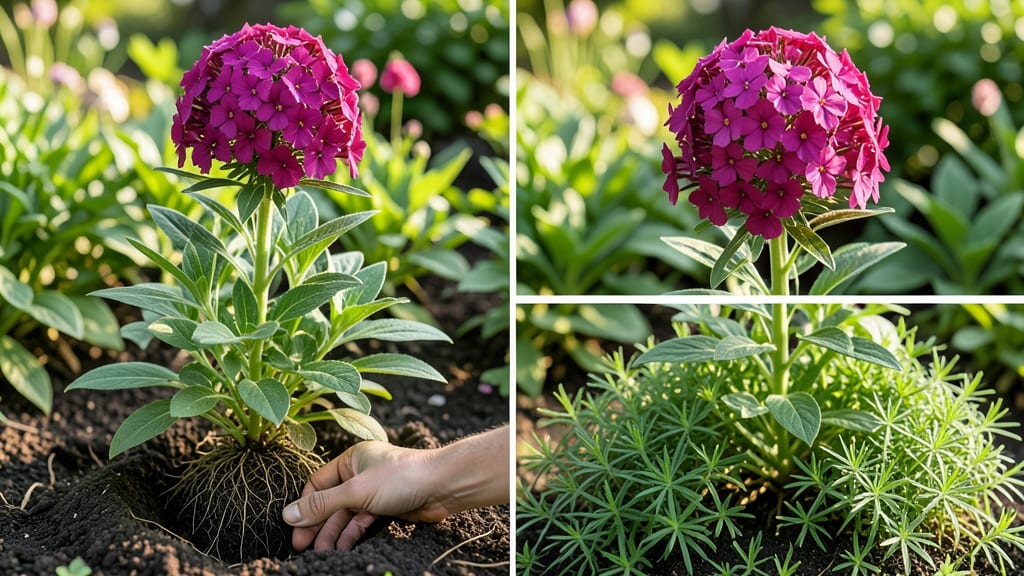
Tall garden phlox does spread, but slowly—typically 12 to 24 inches per year through underground rhizomes. Clumping varieties grow more upright, while spreading types may form dense patches over time with proper care and pruning.
Tall garden phlox spreads at a pace that gives you plenty of time to enjoy its vibrant blooms before needing intervention. 🌸 The underground rhizomes—thick, horizontal roots—allow it to gradually expand its territory, especially in well-drained soil with consistent moisture.
Unlike aggressive spreaders, phlox maintains a controlled growth habit, making it perfect for borders or cottage gardens where you want color without chaos.
What sets phlox apart is how its growth pattern varies by cultivar. Clumping types stay more contained, forming neat mounds, while spreading varieties gradually fill in gaps over seasons. This means you can shape your garden's look by choosing the right variety—whether you prefer structured clumps or lush, cascading patches.
The key to managing its spread lies in strategic pruning and occasional division, which I'll cover in the next section.
💡 In This Article
- How Tall Garden Phlox Spreads: Rhizomes vs. Clumping Growth
- Managing Tall Garden Phlox Spread: Pruning and Planting Tips
How tall garden phlox spreads: rhizomes vs. clumping growth
The spreading behavior of tall garden phlox stems from its underground rhizome system—thick, horizontal roots that store nutrients and produce new shoots. Unlike fibrous root systems, these rhizomes grow laterally, extending outward from the parent plant at a rate of about 12-24 inches per year.
This gradual expansion allows phlox to gradually fill space without the aggressive takeover seen in plants like mint or bamboo.
Clumping varieties, such as 'David' or 'Jeanne d'Arc', develop a more vertical growth habit with shorter rhizomes. Their energy focuses on upward growth rather than lateral spread, creating dense, mounded plants. In contrast, spreading types like 'Miss Wilford' or 'Lipstick' produce longer rhizomes, gradually forming wider patches over time.
The difference lies in their genetic makeup—clumping types prioritize flower production, while spreaders invest in root expansion for survival.
Sunlight and soil moisture play critical roles in this growth pattern. Phlox thrives in full sun to partial shade, with 6-8 hours of direct sunlight daily promoting stronger rhizome development. Well-drained soil with a slightly acidic pH (6.0-7.0) encourages healthy root growth, while soggy conditions can stunt rhizome expansion.
The plant's natural tendency to spread is also influenced by its native habitat—wild phlox grows in open meadows where lateral expansion helps it compete for space.
What's fascinating is how phlox uses its rhizomes for both survival and reproduction. Each node along the rhizome can produce a new shoot, allowing the plant to colonize new areas while maintaining its core structure.
This dual-purpose system explains why phlox can thrive in gardens for decades—it's not just growing wider, but also becoming more resilient with age. The trade-off? Without intervention, spreading varieties may eventually form dense colonies that require thinning.
Consider this comparison: A clumping phlox planted in a 2-foot-wide border may stay contained for years, while a spreading type in the same space could fill a 4-foot diameter within 3-5 years.
The key difference isn't just the rhizome length, but how aggressively the plant allocates resources to new growth versus flower production. This biological balance is what gardeners can work with to shape their desired garden aesthetic.
For those concerned about spread, remember that phlox's growth rate is gentle enough to manage with simple techniques. The plant's natural rhythm means you'll have plenty of time to enjoy its vibrant blooms before needing to address its expansion.
The real magic lies in how this growth habit can be harnessed—whether you want to create a naturalized meadow effect or maintain precise garden lines.