
Tools
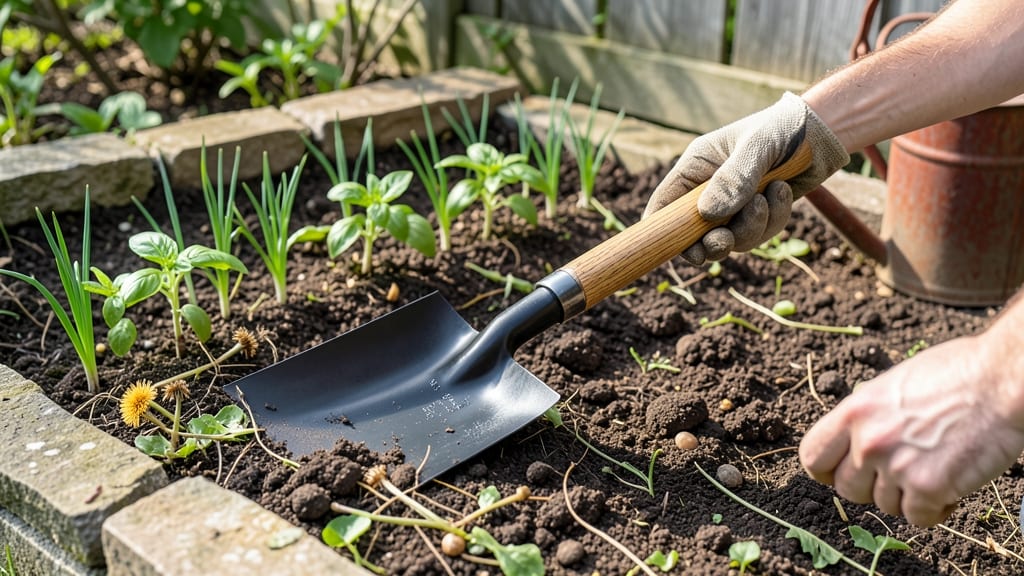
A hoe gardening tool definition includes a versatile long-handled blade designed specifically for weeding, cultivating soil, and breaking up compacted ground. These tools come in specialized variations like draw hoes for surface-level weeding and stirrup hoes for deeper soil penetration, each optimized for different gardening tasks.
A hoe gardening tool is more than just a blade on a stick—it's your secret weapon for maintaining healthy soil without the backbreaking work of deep tilling. 🌱 The right blade shape makes all the difference: draw hoes slice through surface weeds with precision, while stirrup hoes dig deeper to chop roots at the soil line.
I've found that using the proper technique—like cutting at a 45-degree angle—saves time and prevents soil compaction, which is crucial for root growth. Whether you're working in vegetable beds or flower gardens, the right hoe can transform your gardening efficiency.
What sets hoes apart from other digging tools is their ability to work between plants without disturbing roots. This precision is especially valuable in established gardens where you need to maintain soil structure while removing weeds.
The key is using the right blade for the job: a warren hoe's narrow points work well in tight spaces, while a Dutch hoe's flat blade is better for larger areas. Proper grip and controlled pressure are essential to avoid creating hardpan layers that can suffocate plant roots.
💡 In This Article
- Hoe Blade Types and Their Specific Uses in Gardening
- Mastering Proper Hoe Digging Techniques for Soil Health
Hoe blade types and their specific uses in gardening
The mechanics behind hoe blade designs directly impact their effectiveness. Draw hoes feature a flat, rectangular blade that slices horizontally just below the soil surface, perfect for cutting weed roots at the crown where they meet the stem.
This design creates minimal soil disturbance while severing roots at their weakest point—typically 1/4 to 1/2 inch below the surface. The blade's width (usually 3-6 inches) allows for efficient coverage in rows, making it ideal for vegetable gardens where precision matters most.
Stirrup hoes take a different approach with their U-shaped blade that straddles the plant row. The blade's curved design lets you push it forward while chopping roots at the soil line, creating a clean cut that prevents regrowth.
This method works particularly well in hard-packed soil because the blade's angle distributes force downward, breaking up compaction without requiring deep penetration. For example, in a 12-inch wide row, a stirrup hoe can efficiently clear weeds while leaving crop plants undisturbed—something flat hoes struggle with in tight spaces.
Warren hoes stand out with their three narrow, pointed tines that work like a miniature plow. These blades penetrate 1-2 inches deep between plants, chopping roots while aerating soil without turning it over like a tiller would.
The design makes them perfect for mulched beds where you need to maintain soil structure while removing weeds. I've found that warren hoes excel in areas with loose, sandy soil where their points glide through easily, whereas they'd struggle in heavy clay without proper technique.
Ergonomics play a crucial role in hoe selection. Long-handled hoes (typically 36-48 inches) reduce strain on your back, while shorter handles offer better control for precise work.
The blade's weight distribution affects balance—lighter blades (under 2 pounds) are easier for prolonged use, while heavier blades (up to 4 pounds) provide more cutting power for tough weeds.
For instance, a Dutch hoe with its offset blade requires a different grip than a scuffle hoe, which demands more wrist action—this distinction matters when choosing based on your physical comfort.
Consider the soil type when selecting blades. Clay soils benefit from stirrup hoes that can break up hardpan, while sandy soils pair better with warren hoes that won't clog.
The blade's edge angle also matters: sharper edges (30-45 degrees) cut cleaner but require more frequent honing, while duller edges (60 degrees) work better in rocky soil where frequent sharpening isn't practical.
Most gardeners find that maintaining a 1/8-inch edge sharpness keeps hoes performing optimally across different soil conditions.
For specialized tasks, consider hybrid designs like the loop hoe, which combines stirrup and draw hoe features. This versatile blade can both chop roots and slice surface weeds, making it a favorite for no-till gardening where soil disturbance must be minimized.
The key is matching the blade's design to your specific needs—whether that's precision weeding in flower beds or heavy-duty soil cultivation in vegetable plots.