
How To
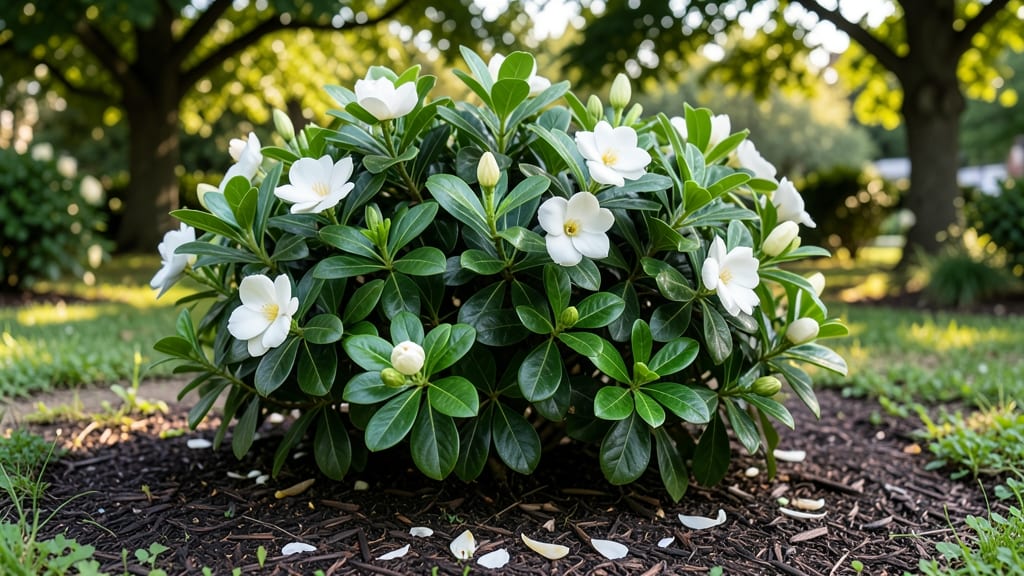
Gardenia bushes grow to heights of 4 to 6 feet at maturity, with spreads reaching 3 to 5 feet wide—though the size depends entirely on the variety you choose.
If you’ve ever dreamed of adding fragrant gardenias to your garden but worry about them outgrowing their space, you’re not alone. Many gardeners hesitate because they assume these tropical beauties will take over a yard.
The good news? Some dwarf varieties stay under 3 feet, making them perfect for containers or small spaces, while others can become privacy screens in larger landscapes.
Understanding how big your gardenia will get helps with placement—whether you’re tucking one into a patio corner or lining a driveway with fragrant blooms. Below, I break down the mature sizes for popular varieties, how pruning affects growth, and the ideal spacing to keep your gardenia thriving without overcrowding.
Ready to pick the perfect gardenia for your space? You’ll also discover how growth rates vary by type and when to trim for the best shape and blooms.
Gardenia bush size by popular variety: mature height and spread
Choosing the right gardenia variety depends heavily on your space and design goals. The most common gardenia, Gardenia jasminoides, typically matures between 4 to 6 feet tall with a 3 to 5-foot spread, making it ideal for medium-sized gardens or as a focal point near patios.
This variety’s lush, glossy foliage and heavily fragrant blooms are worth the space they occupy, especially in warmer climates where they thrive year-round.
If you’re working with limited space, consider dwarf varieties like Gardenia 'Radicans', which stays compact at just 2 to 3 feet tall and 2 to 3 feet wide.
This variety is perfect for containers, small yards, or foundation plantings, offering the same intense fragrance without overwhelming your landscape. Its smaller stature also makes it easier to protect from harsh winds or freezing temperatures in cooler zones.
For larger landscapes, Gardenia 'Fortuniana' is a standout choice, reaching 6 to 8 feet tall and 5 to 7 feet wide at maturity. This variety is often used as a privacy screen or specimen plant due to its vibrant blooms and dense foliage.
Its size makes it a great option for backyard borders or mixed shrubbery beds, where it can create a tropical, lush backdrop for other plants.
Here’s a quick visual guide to help you compare sizes and plan your gardenia placement:
When planning your gardenia’s placement, always account for its mature size, not just its current dimensions. For example, a 6-foot-tall gardenia planted too close to a walkway or patio will eventually cast shade and obstruct movement.
Aim to space gardenias 3 to 5 feet apart depending on the variety, allowing room for airflow and sunlight penetration, which are critical for bloom production and disease prevention.
Another factor to consider is pruning impact. Regular pruning can control height and shape, but it’s essential to avoid over-pruning, which can reduce flowering.
For taller varieties, focus on selective pruning to maintain an open center, while dwarf varieties may only need light trimming to encourage bushier growth. Always prune after the blooming season to avoid removing next year’s flower buds.
For container gardening, opt for dwarf or semi-dwarf varieties like 'Radicans' or 'Kleim’s Hardy', which thrive in 15- to 20-gallon pots. Ensure the container has drainage holes and use a well-draining, acidic potting mix to mimic their natural tropical soil conditions.
In containers, gardenias may grow slightly slower but still reach their mature spread over time, making them perfect for balconies, patios, or small courtyards.
If you’re planting gardenias in cooler climates, choose varieties like 'Kleim’s Hardy', which tolerates USDA Zone 7a with proper winter protection. These varieties may grow slightly slower but are more resilient to frost, making them a low-maintenance option for gardeners in transition zones.
Always mulch around the base in winter to insulate roots and water sparingly during dormancy.
In summary, gardenias offer a wide range of sizes to suit every garden, from compact dwarf varieties to towering statement plants.
By selecting the right variety and planning for its mature dimensions, you can create a fragrant, low-maintenance focal point that enhances your outdoor space for years to come. 🌸
How fast do gardenia bushes grow? Pruning tips to control size
If you’ve planted gardenias, you’ve probably wondered how quickly they’ll reach their mature size. Most varieties grow at a moderate pace, adding about 6-12 inches per year under ideal conditions.
However, growth rates vary wildly—some compact varieties mature in just 2-3 years, while larger types can take 5+ years to reach full size. Understanding these differences helps you plan for their eventual height and spread.
Seasonal growth also plays a key role. Gardenias experience their fastest growth during spring and early summer, when warm temperatures and increased sunlight fuel new foliage and blooms. In cooler months, growth slows dramatically, making late fall and winter ideal times for pruning and shaping without stressing the plant.
This natural rhythm lets you time your maintenance efforts for maximum impact.
- 1
- 2
- 3
- 4
- 5
To control the size of your gardenia, focus on regular pruning and proper spacing. If you’re growing a standard variety, plant it 3-5 feet from structures or other plants to allow room for mature spread.
For dwarf types, 2-3 feet of clearance is sufficient. Always prune just above a leaf node or bud to encourage branching and a fuller shape.
One common mistake is pruning too late in the season. If you trim in late summer or fall, new growth may not harden off before winter, leaving your gardenia vulnerable to cold damage.
Stick to spring or early summer pruning for the best results, and your gardenia will reward you with lush foliage and fragrant blooms year after year.
For container gardenias, pruning is even more critical since space is limited. Trim back 1/3 of the plant’s height annually to maintain compactness, and repot every 2-3 years to refresh the soil. With consistent care, even large varieties can thrive in pots—just choose a 15-20 gallon container for standard-sized plants.
🌿