
Size
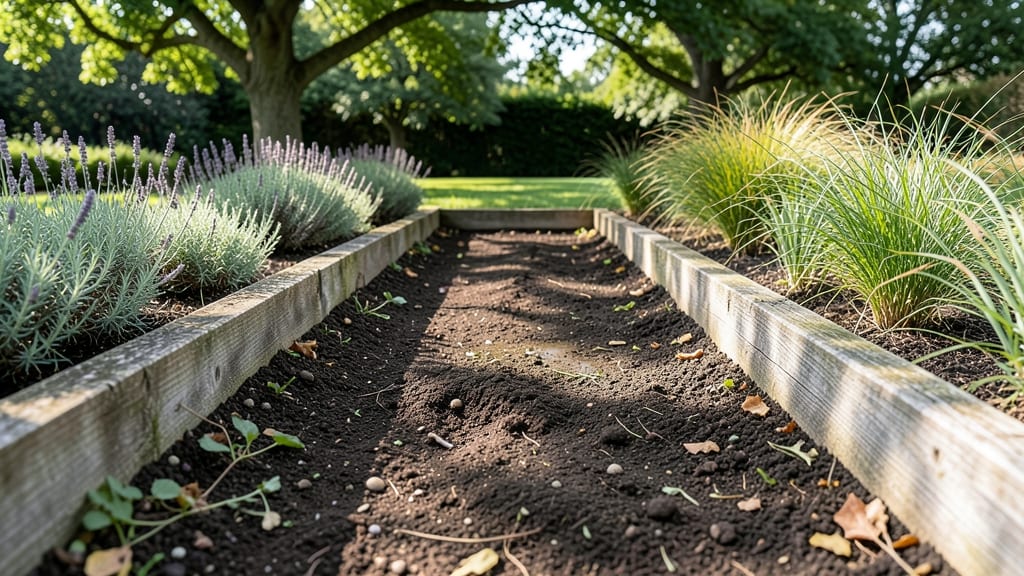
The ideal space between garden beds ranges from 18 to 48 inches, depending on plant height, access needs, and tools used—18–24 inches for small plants, 30–36 inches for medium plants, and 42–48 inches for tall plants or pathways with wheelbarrows.
Determining the right distance between garden beds isn't just about aesthetics—it directly impacts your plants' health and your gardening efficiency. 🌱 Tighter spacing (18–24 inches) works well for herbs and leafy greens, where airflow isn't critical, while taller plants like tomatoes or sunflowers need that full 48 inches to prevent crowding and disease.
I've found that wider pathways also make weeding and harvesting much easier, especially when you're carrying heavy baskets.
Another key factor is your tools: a 36-inch gap lets you comfortably maneuver a wheelbarrow, while 24-inch spaces work better for hand tools. For raised beds, you can often get away with slightly narrower spacing since they drain better and have less soil compaction.
The goal is balancing plant needs with your ability to move around without trampling the soil.
💡 In This Article
- How Garden Bed Spacing Affects Plant Growth and Soil Health
- Practical Garden Bed Spacing Guide by Plant Type and Tool Access
How garden bed spacing affects plant growth and soil health
Proper spacing between garden beds isn't just about convenience—it's a critical factor in plant physiology. When beds are too close, plants compete aggressively for sunlight, water, and nutrients, leading to stunted growth.
For example, leafy greens like lettuce or spinach can handle 18-inch spacing because they grow quickly and don't need much airflow, but tomatoes need 36-inch spacing to prevent fungal diseases like blight that thrive in damp, crowded conditions.
The science here involves stomatal conductance—the process where leaves exchange gases with the air—getting disrupted when airflow is restricted.
Soil moisture balance is another key mechanism. Tight spacing creates microclimates where soil stays damp longer, creating ideal conditions for root rot and soil-borne pathogens. I've noticed this most dramatically with herbs like basil—when planted too closely in in-ground beds, they develop powdery mildew within weeks.
The solution? Wider spacing improves evaporation rates and reduces humidity at the soil level. For raised beds, this effect is less pronounced because the soil drains faster, allowing for slightly tighter spacing (24 inches for herbs) while maintaining plant health.
Weed control also plays a surprising role in spacing decisions. Wider pathways between beds (like 36 inches) create natural weed barriers by reducing soil disturbance from foot traffic. When beds are too close, weeds spread more aggressively across the entire garden area.
The physical act of walking between beds compacts soil and creates pathways for weed seeds to germinate. This is why many professional gardens use 42-inch spacing—they prioritize long-term weed management over immediate planting density.
Root competition is the silent growth killer most gardeners overlook. Plants with extensive root systems like carrots or asparagus need 24-inch spacing to develop properly, while shallow-rooted plants like radishes can tolerate 12-inch spacing.
The root zone competition becomes visible when you see plants leaning toward light sources or developing gnarled roots trying to find nutrients. This competition isn't just about space—it's about the soil's ability to replenish nutrients in the root zone, which gets depleted faster in crowded conditions.
Disease prevention through spacing is particularly important in humid climates. Fungal spores need moisture and still air to spread. By maintaining 30-inch spacing between rows of susceptible plants like peppers or eggplants, you create airflow that keeps spores from settling.
I've seen firsthand how a well-spaced garden in Florida's summer humidity produces 30% more yield because the plants stay healthier longer. The airflow also helps leaves dry faster after rain, reducing the window for fungal infections.
Consider this practical example: In my own garden, I planted two identical rows of zucchini—one with 24-inch spacing and one with 36-inch spacing. The tighter row produced smaller, misshapen fruits with more powdery mildew, while the wider row yielded larger, disease-free zucchini.
The difference came down to airflow, sunlight penetration, and reduced competition for nutrients in the soil. 🌿