
Watering
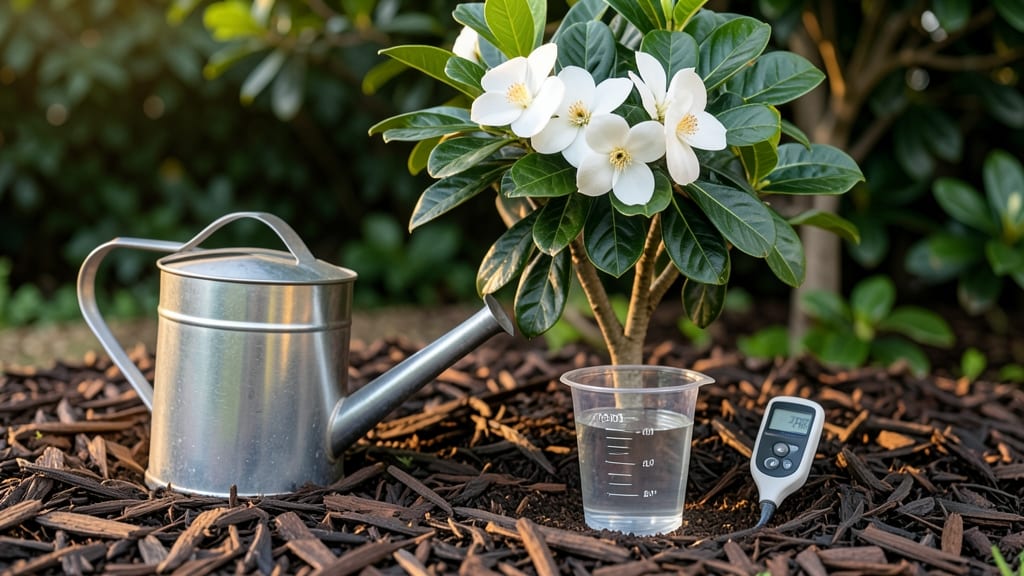
Gardenias need 1 to 1.5 inches of water per week to thrive, but the real trick is deep-soaking their roots rather than skimming the surface.
Picture this: your 🌸 gardenias are drooping despite your daily sprinkle, or worse, their leaves yellow and fall off—both classic signs of watering gone wrong. Too much or too little, and those fragrant blooms you love disappear faster than you can say "humidity."
Here’s the game-changer: gardenias crave moisture that reaches 6 to 8 inches deep, mimicking their natural tropical habitat. In Zone 6a, that means adjusting your watering schedule from spring’s every 3 days to summer’s daily soak, then tapering off in winter.
The key? Let the top inch of soil dry out between waterings—your gardenias will thank you with bold, fragrant blooms all season.
In this guide, I’ll walk you through the exact deep-soaking schedule, how to spot over- or under-watering, and seasonal tweaks to keep your gardenias lush—no guesswork required.
The ideal watering schedule for gardenias: how deep and how often
Gardenias thrive when their watering routine mimics their natural tropical habitat—consistent moisture without soggy roots. Unlike drought-tolerant plants, gardenias demand deep, infrequent watering to encourage strong root growth and lush blooms. The key? Watering to a depth of 6-8 inches so roots absorb moisture before the topsoil dries.
Overwatering causes root rot, while underwatering leads to wilted leaves and dropped buds. Let’s break down the perfect schedule for your fragrant shrubs.
Seasonal changes dramatically impact how often you should water gardenias. In spring and fall, when growth is moderate, water every 3-5 days depending on rainfall. During summer’s peak heat, increase frequency to daily or every other day—but always check soil moisture first.
Winter slows metabolism, so reduce watering to bi-weekly unless your climate stays mild. Adjust based on your local climate and soil type (sandy soils dry faster than clay).
Soil moisture checks are non-negotiable. Stick your finger 2 inches deep into the soil—if it feels dry, it’s time to water. For container-grown gardenias, lift the pot: if it’s light, water thoroughly. Mulching with 2-3 inches of organic mulch (like pine bark) retains moisture and regulates temperature, reducing your watering frequency by up to 30%. Pro tip: Water in the early morning to prevent fungal diseases from evening dampness.
Overwatering is the #1 killer of gardenias, leading to root rot and yellow leaves. If your plant’s foliage turns yellow and feels mushy at the base, it’s drowning. To fix it, stop watering immediately and let the soil dry out completely.
Repot in fresh, well-draining soil mixed with perlite or sand if needed. Underwatered gardenias show signs like crispy leaf edges and buds that refuse to open. Revive them by giving a deep soak and applying a balanced fertilizer to encourage recovery.
Adjust your watering based on container size. Gardenias in small pots dry out faster—water every 2-3 days in summer.
For in-ground plants, 5-7 days between waterings is ideal unless your area experiences heatwaves. Drip irrigation is perfect for gardenias: it delivers water directly to roots, reducing evaporation and fungal risks.
If you’re using a hose, water slowly to avoid runoff, and always aim for the base of the plant, not the leaves.
In humid climates, reduce watering slightly—gardenias absorb moisture from the air. Conversely, in arid regions, increase frequency and consider shade cloth to prevent leaf scorch. Mature gardenias (3+ years old) need 1-2 gallons of water per session, while younger plants require ½ gallon.
Always water until you see moisture seep from the drainage holes (for pots) or the top 2 inches of soil are damp. This ensures roots get the hydration they crave without waste.
Watch for seasonal blooming cues to fine-tune your schedule. Gardenias bloom most heavily in summer and early fall—this is when they need the most water. If buds form but fail to open, it’s often a sign of inconsistent watering.
Keep a watering journal to track what works: note rainfall, temperature swings, and your plant’s response. Over time, you’ll develop a routine tailored to your gardenia’s unique needs. Patience is key—consistency beats perfection every time.
Remember, gardenias are not drought-tolerant, but they also despise soggy conditions. The goal is even moisture, not a swampy base. With this schedule, your gardenias will reward you with glossy leaves and heavily fragrant blooms from spring through fall.
Happy watering—your nose (and your garden) will thank you! 🌸
Deep-soaking techniques: how to water gardenias for maximum bloom health
If your gardenias look thirsty but you're unsure how to quench their roots properly, you're not alone. These fragrant shrubs thrive on deep, consistent moisture, but their watering needs shift with soil type and season.
The key is mimicking their natural tropical habitat—where roots get steady hydration without soggy extremes. Let's dive into the science behind deep-soaking and how to apply it perfectly to your gardenias.
First, understand that gardenias despise surface watering. A light sprinkle only wets the top inch of soil, while their roots need to reach 12-18 inches deep for true hydration. This is where deep-soaking comes in—it encourages roots to grow downward, making your plants more resilient.
But before you grab your hose, let's tackle the soil type factor that changes everything.
Step-by-Step Deep-Soaking Guide for Gardenias
- Step 1 Check soil moisture before watering. Stick your finger 3-4 inches deep—if it feels dry, it's time. For sandy soil, check daily; for clay soil, every 3-4 days.
- Step 2 Water deeply until soil is saturated 12-18 inches down. Use a soaker hose or drip irrigation for even distribution. Aim for 1-2 gallons per plant per session.
- Step 3 Adjust for soil type. Sandy soil drains fast—water every 2-3 days. Clay soil holds moisture longer—water every 4-5 days. Always water in the morning to prevent fungal issues.
- Step 4 Mulch heavily with 3-4 inches of organic mulch (pine bark or shredded leaves). This locks in moisture, reduces evaporation, and keeps roots cool—critical for tropical gardenias.
- Step 5 Monitor seasonal changes. In summer heat, water daily if soil dries quickly. In winter, cut back to bi-weekly watering. Always adjust based on rainfall.
Don't underestimate the power of mulching—this simple step can cut your watering needs by 30-50%. I use pine bark mulch around my gardenias because it breaks down slowly and improves soil structure over time. Plus, it adds that acidic touch gardenias crave, keeping roots happy and blooms abundant.
For container gardenias, the rules change slightly. Since pots dry out faster, water every 2-3 days in summer and check the weight of the pot—if it feels light, it's time to water.
Pro tip: Use terracotta pots for better drainage, but move them to shade during peak afternoon sun to prevent moisture loss.
Remember, the goal is consistency without soggy soil. Overwatering is just as deadly as underwatering—it leads to root rot and yellowing leaves. If you notice leaves curling or dropping, you're either overwatering or underwatering. Adjust your schedule and watch your gardenias bounce back in 2-3 weeks.
With these deep-soaking techniques, your gardenias will reward you with glossy leaves and fragrant blooms all season. The secret? Treat their roots like they're sipping from a tropical rainforest—steady, deep, and never extreme. Your nose (and your neighbors!) will thank you. 🌸💧