
Planting
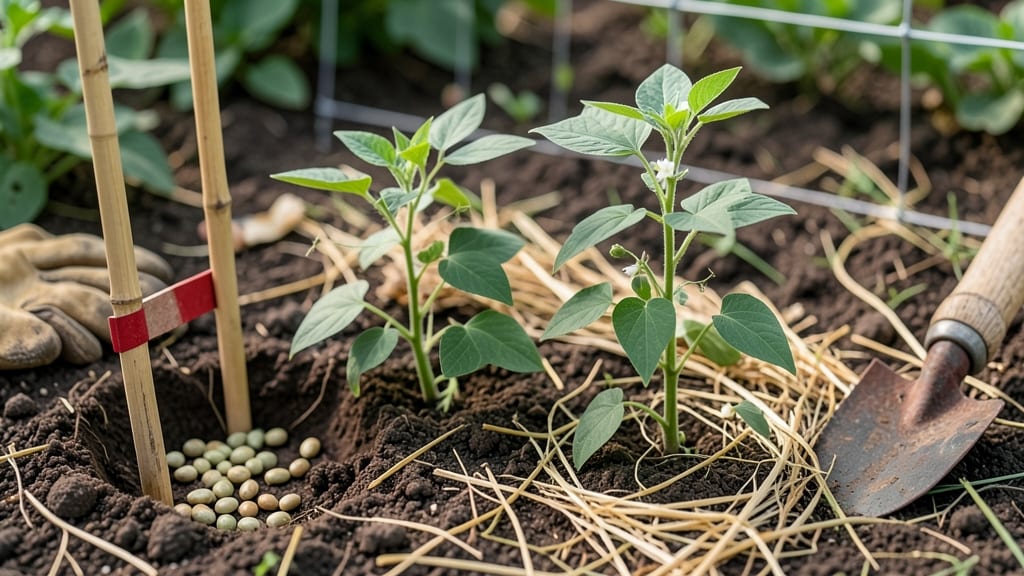
Planting green beans in your garden is the easiest way to grow a high-yielding, low-maintenance crop that delivers fresh, crisp pods straight from your backyard.
Yet even experienced gardeners mess up spacing, soil prep, or variety choices—ending up with stunted plants or a harvest that fizzles before July. The secret isn’t just timing; it’s knowing when to plant bush vs. pole beans, how deep to bury those seeds, and which companions keep pests at bay.
In USDA Zone 6a, your window is tight: April to May, after the last frost, but the right prep turns a 50-day wait into a bumper crop. Below, I break down the exact steps for soil, spacing, and early care—plus the 3 mistakes that kill yields before harvest.
Ready to go from seed to snap? Let’s get your green beans 🌱 thriving with foolproof techniques that work for both beginners and seasoned growers.

Green bean planting guide: soil, spacing & depth for maximum yield
Green beans thrive when planted with precision—especially when it comes to soil quality, spacing, and depth. These three factors directly impact your harvest size, flavor, and even disease resistance.
I’ve learned the hard way that planting too deep or crowding bush varieties can lead to stunted growth or fungal issues. Let’s break down the science behind perfect green bean planting to ensure your garden produces a bountiful, healthy crop.
First, focus on well-draining soil with a slightly acidic to neutral pH of 6.0–7.0. Green beans prefer loose, fertile soil rich in organic matter like compost or aged manure. If your soil is heavy clay or rocky, amend it with 2–3 inches of compost or coconut coir before planting.
This improves root penetration and prevents waterlogging, which can cause seed rot or poor germination.
🌱
For spacing, bush beans need 4–6 inches between plants and 18–24 inches between rows. This prevents overcrowding, which leads to poor airflow and fungal diseases like rust or powdery mildew.
Pole beans, on the other hand, should have 4–6 inches between plants but 3–4 feet between rows to accommodate their trellises or stakes. If you’re short on space, consider bush varieties like 'Blue Lake' or 'Contender', which stay compact and produce well without support.
When it comes to planting depth, green beans should go 1 inch deep in the soil. Planting too shallow can expose seeds to drying out, while planting too deep may hinder germination.
Use your finger to create small holes, drop in 2–3 seeds per spot (they’re slow to germinate), and cover lightly with soil. Gently pat the soil down to ensure good seed-to-soil contact, which is critical for moisture absorption and root initiation.
🌿
If your garden soil is rocky or clay-heavy, don’t despair—there are workarounds. For rocky soil, mix in sand or perlite to improve drainage, and add compost or leaf mold to retain moisture. For clay soil, incorporate organic matter like peat moss or well-rotted manure to break up compaction.
Raised beds are another great solution, as they allow you to control soil composition entirely. I’ve had the best success with green beans in raised beds filled with a mix of 50% topsoil, 30% compost, and 20% perlite.
One common mistake I see is over-fertilizing with nitrogen, which promotes leafy growth at the expense of pod production. Instead, use a balanced fertilizer like 10-10-10 at planting time, then side-dress with compost or a low-nitrogen fertilizer every 4–6 weeks during the growing season.
Overwatering is another pitfall—green beans need consistent moisture but hate soggy roots. Water deeply in the morning to allow foliage to dry, reducing the risk of fungal diseases.
Finally, always plant green beans in full sun locations with at least 6–8 hours of direct sunlight daily. Partial shade can lead to leggy plants and fewer pods. If you’re growing pole beans, install trellises or stakes at planting time to avoid disturbing roots later. I recommend using 5–
When and how to plant green beans: timing secrets for bush vs. pole varieties
Timing is everything when planting green beans—especially since they thrive in cool-season conditions but wilt under scorching summer heat. I’ve learned the hard way that planting too early or late can mean fewer beans at harvest.
The key is understanding your last frost date and choosing varieties that match your climate zone. For most regions, aim to plant 2-3 weeks after your last frost, when soil temperatures reach 60°F (15°C).
Green beans fall into two main categories: bush beans (compact, no support needed) and pole beans (climbing, need trellises). Each has its own ideal planting window. Bush varieties like 'Blue Lake' mature faster (50-60 days), while pole beans like 'Kentucky Wonder' take longer (60-70 days).
This difference affects when you should start seeds indoors or plant directly in the garden.
| Factor | Bush Beans | Pole Beans |
|---|---|---|
| Planting Time | April-May (after last frost) | April-June (earlier for long seasons) |
| Frost Tolerance | Moderate (avoid frost) | Sensitive (needs warmth) |
| Spacing | 4-6" apart, rows 18" apart | 6" apart, rows 3-4" apart (with trellis) |
| Container Planting | 5-gallon pots (1 plant per pot) | 10-gallon pots (2-3 plants per pot with trellis) |
| Succession Planting | Every 2-3 weeks until July | Every 3-4 weeks until August |
For gardeners in warmer climates (Zones 8-10), I recommend planting in fall or early spring to avoid summer’s heat. In these regions, beans planted in September-October will thrive through mild winters.
If you’re in a cooler zone (Zones 3-6), focus on early spring plantings and use row covers to extend the season. I’ve had success with black plastic mulch to warm the soil faster in chilly springs.
Container gardening is a game-changer for small spaces or urban gardeners. Use deep pots (10"+) for pole beans and place them in full sun. I’ve grown 'Mascotte' pole beans in 5-gallon buckets on my balcony, harvesting continuously from June to September.
The trick is keeping soil moist—containers dry out 3x faster than in-ground beds. Water deeply in the morning to prevent fungal issues.
To maximize your harvest, practice succession planting. Sow new seeds every 2-3 weeks until mid-summer. This ensures a steady supply of fresh beans instead of one big harvest. For pole beans, stagger plantings by 3-4 weeks to extend the season.
In my garden, this means planting the first batch in April and the last in July, with beans ready to pick until October in most zones.
Pro tip: If frost threatens early, cover plants with frost cloth or a lightweight blanket. I’ve saved entire rows of 'Contender' bush beans this way, allowing them to produce right up until the first hard freeze.
And remember—pole beans are frost-sensitive, so protect them first if temperatures drop below 32°F (0°C). With the right timing, you can enjoy homegrown beans from early summer to fall!