
Tools
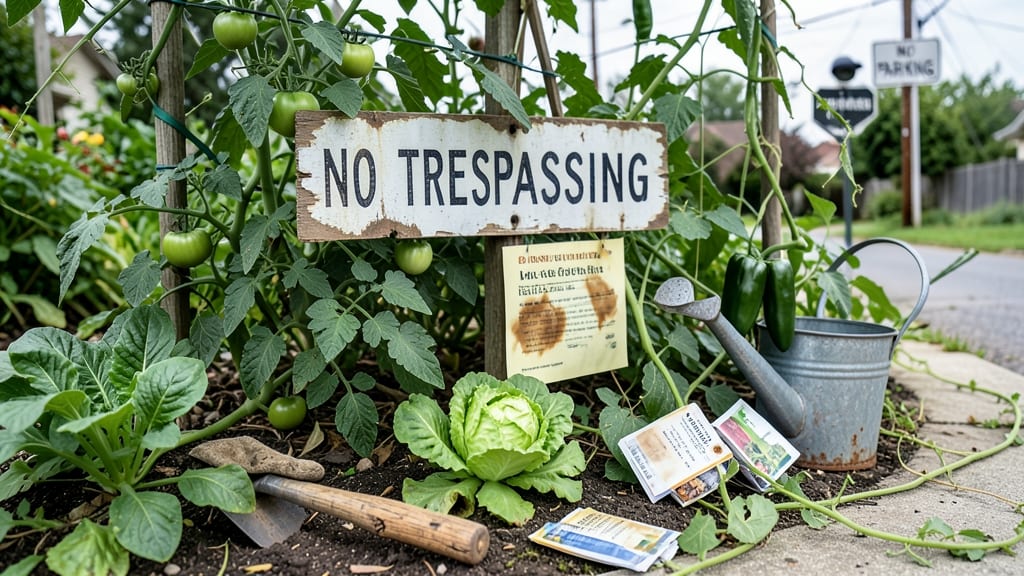
A front yard vegetable garden is illegal in many areas because it violates residential zoning laws that typically limit farming activities to rear yards or commercial agricultural zones. Always verify your city's setback rules, permit requirements, and land-use regulations before planting.
Most cities classify front yards as residential aesthetic zones, meaning they're meant for landscaping—not food production. 🌱 The restrictions exist to prevent conflicts with neighbors, maintain property values, and avoid issues like pests or unsightly plants.
Even small plots can trigger fines if they violate height limits, fencing rules, or agricultural zone boundaries. I've seen cases where homeowners unknowingly planted vegetable gardens only to receive violation notices months later.
Your best bet is to check your local municipal code website or contact the planning department directly. Some areas allow container gardening on patios or balconies, while others permit small raised beds in the back yard.
If you're passionate about growing your own food, community garden plots often have relaxed rules—or you could explore petitioning for a conditional use permit if your neighborhood supports it.
💡 In This Article
- Understanding Local Zoning Laws for Home Vegetable Gardens
- Legal Alternatives to Front Yard Gardening in Restricted Areas
Understanding local zoning laws for home vegetable gardens
Zoning laws categorize land use into distinct zones, and residential front yards typically fall under single-family or multi-family residential zones. These zones prioritize aesthetics, curb appeal, and property values over agricultural activities.
The key distinction lies in how municipalities classify "gardening"—ornamental plants like flowers or shrubs are usually permitted, while food crops (vegetables, fruits, herbs) often trigger restrictions.
For example, a city like Portland, Oregon, allows front yard gardens but prohibits food production unless it's part of an approved urban farming program.
Setback requirements further complicate front yard farming. These rules dictate how close structures or plants can be to property lines. A common restriction is a 10-20 foot setback from the street for any raised beds or permanent garden structures.
Violating these can result in fines up to $500-$2,000, depending on the municipality. Additionally, some areas require permits for any garden exceeding 100 square feet, even if it's just decorative. The logic?
Food gardens can attract pests, reduce property values, or create disputes with neighbors over odors or maintenance.
Neighbor disputes are a major reason for these restrictions. Imagine your tomato plants spilling over into your neighbor's yard—or the smell of compost bins wafting across property lines. Cities also worry about blight risks: overgrown or poorly maintained food gardens can lower neighborhood appeal.
For instance, a 2018 study in Atlanta found that homes with visible food gardens saw a 12% drop in resale value compared to those with ornamental landscapes. This isn't just theoretical—many zoning boards cite these factors when denying permits for front yard farming.
Another layer is the agricultural zoning exemption. Most cities reserve agricultural zones for commercial farms or large-scale operations, not residential plots. Even if you're growing organically or sustainably, the law often doesn't distinguish between a backyard farm and a front yard one.
For example, Los Angeles requires agricultural activities to be in Zone A-1 or A-2, which are designated for farming—not residential areas. This means your front yard tomato plants could technically be classified as an unpermitted agricultural operation, even if they're just for personal use.
What most people don't realize is how subjective enforcement can be. Some cities issue warnings first, while others jump straight to fines.
I've seen cases where a homeowner planted a single row of herbs in their front yard and received a violation notice—only to learn their neighbor had complained about the "unsightly" greenery. The solution?
Always check your city's land development code for terms like "agricultural use," "food production," or "commercial gardening," as these often define what's prohibited in residential zones.
If you're determined to grow food in your front yard, start by reviewing your city's zoning map (usually available online). Look for terms like "R-1" (residential single-family) or "R-2" (residential multi-family)—these zones almost always ban food crops.
Then, contact your local planning department to ask about conditional use permits, which might allow exceptions under specific conditions (like community benefit or low visibility). Some cities, like Denver, have started pilot programs for front yard urban farms, but these require applications and often come with strict guidelines.