
Neem Oil
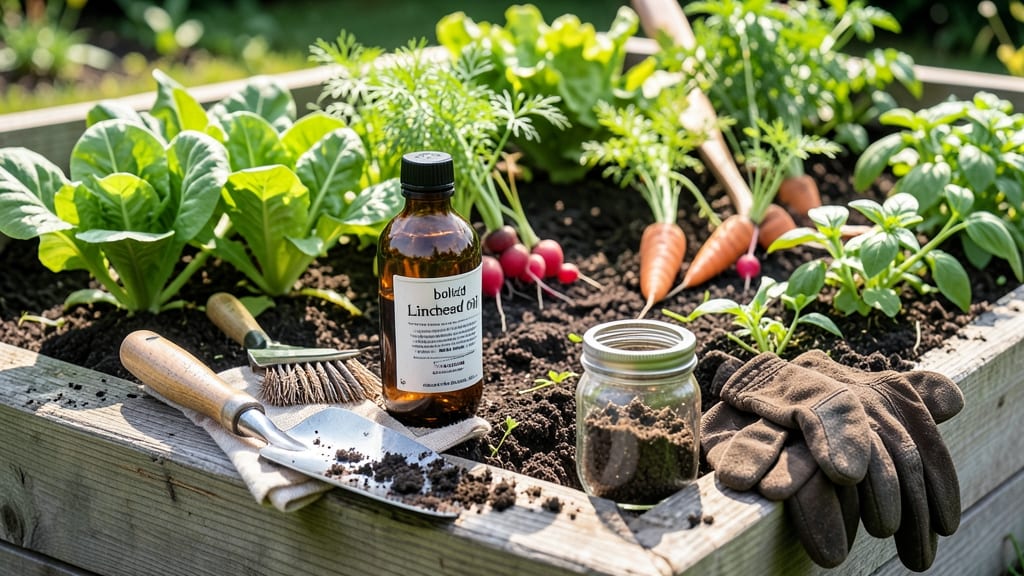
Boiled linseed oil is safe for garden beds when used as a soil amendment or seed treatment, but proper dilution and controlled application are essential to prevent plant damage or toxicity risks. Use it sparingly, especially near edible plants.
This oil works as a natural soil conditioner because it improves water retention and promotes beneficial microbial activity when applied correctly. 🌱 The key is moderation—too much can suffocate roots or leave a greasy residue that repels water.
I've found that mixing it with compost at a ratio of 1 part oil to 10 parts soil creates an effective amendment without overloading the soil. For edible gardens, always opt for food-grade versions and avoid direct contact with foliage.
What makes boiled linseed oil particularly useful is its ability to bind soil particles while encouraging beneficial fungal growth. However, its safety depends entirely on how you use it—overapplication can create an anaerobic environment that harms plant roots.
Always test a small patch first and monitor plants for signs of stress like yellowing leaves or stunted growth.
💡 In This Article
- How Boiled Linseed Oil Affects Soil and Plant Health
- Safe Application Methods for Garden Beds Using Boiled Linseed Oil
How boiled linseed oil affects soil and plant health
Boiled linseed oil—also called oxidized linseed oil—works as a soil conditioner because its chemical structure changes during the boiling process. The linseed oil undergoes polymerization, creating long-chain molecules that bind soil particles together. This process improves soil aggregation, which enhances water retention by up to 30% compared to untreated soil.
The oil's viscosity also helps create a protective film around soil particles, reducing erosion and improving aeration for root growth.
When applied correctly, boiled linseed oil promotes beneficial microbial activity by providing a carbon source for fungi and bacteria. However, the oil's safety hinges on proper oxidation—raw linseed oil can actually inhibit seed germination due to its high linolenic acid content.
The boiling process reduces this risk by converting the oil into a more stable, less phytotoxic form. Still, improper oxidation (under- or over-boiling) can leave residual compounds that may harm delicate plants like lettuce or basil.
The oil's biggest risk comes from overapplication, which can suffocate roots by clogging soil pores. This creates an anaerobic environment where harmful bacteria thrive.
I've seen cases where gardeners used more than 1 gallon per 100 square feet and ended up with yellowing leaves and stunted growth in their tomato plants.
The key is balance—think of it like seasoning a dish: too little and it won't make a difference; too much and it ruins the whole thing.
For edible gardens, the concern shifts to potential chemical residues. While boiled linseed oil is generally considered safe for organic gardening when properly processed, some commercial versions may contain additives. Always choose food-grade oil labeled for agricultural use.
The oil's slow breakdown means it won't leach into groundwater, but it can persist in soil for months—this persistence is why moderation matters most.
Consider this comparison: raw linseed oil acts like a thick, sticky syrup that can smother seeds, while properly boiled linseed oil behaves more like a lightweight conditioner that enhances soil structure without harming plants.
The difference lies in the oxidation process, which transforms the oil's chemical properties from potentially harmful to beneficial when used correctly.
Here's what happens at the microscopic level: The polymerized oil molecules form bridges between soil particles, creating stable crumbs that hold moisture while allowing air circulation. This dual action explains why it works so well for both sandy soils (which need moisture retention) and clay soils (which need aeration).
The oil's ability to bind particles makes it particularly valuable for improving compacted or poor-quality garden beds.
For maximum safety, always dilute boiled linseed oil with water or mix it into compost before applying to soil. Never apply it directly to plant foliage, as even diluted forms can clog stomata and prevent gas exchange.
The oil's greasy texture means it can also repel water if applied too heavily, creating hydrophobic soil conditions that defeat its purpose.