
Tools
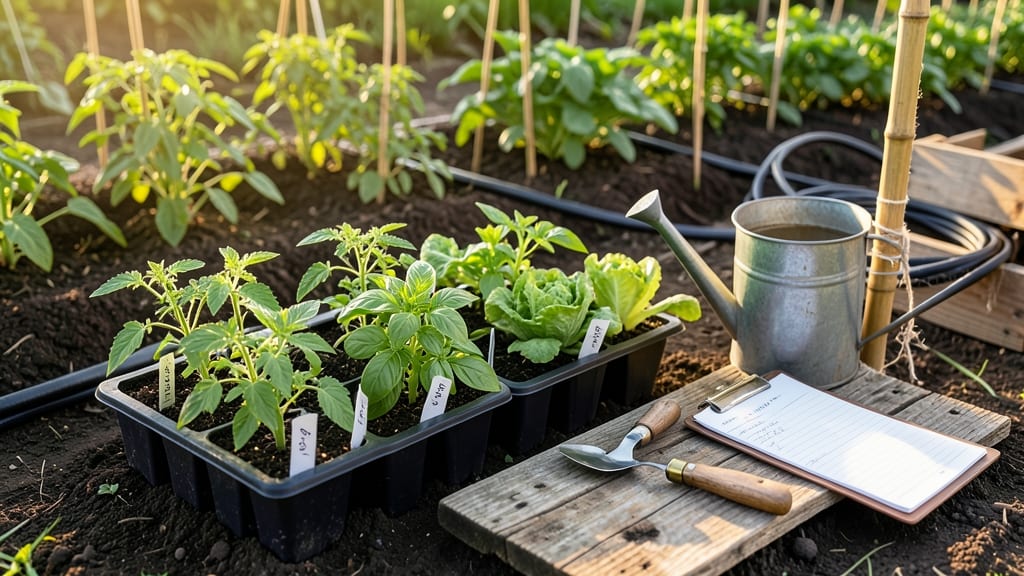
A market gardening definition highlights small-scale, high-intensity farming that grows fresh vegetables, herbs, and fruits for direct sales to local customers, restaurants, or specialty markets instead of large commercial operations. This approach emphasizes quick harvest cycles, diverse crop rotations, and maximizing yield per square foot.
A market gardening definition highlights small-scale, high-intensity farming that grows fresh vegetables, herbs, and fruits for direct sales to local customers, restaurants, or specialty markets instead of large commercial operations.
This farming style stands out from traditional agriculture by focusing on local demand rather than mass production. 🌱 Instead of growing single crops over vast acres, market gardeners cultivate a variety of high-value produce on smaller plots—often just a few acres or even urban lots—using techniques like succession planting to ensure continuous harvests.
The goal isn't just quantity but quality and freshness, which commands premium prices at farmers' markets and restaurant partnerships.
What sets it apart is the speed-to-market model: crops like leafy greens or radishes might be harvested in weeks rather than months, allowing gardeners to respond directly to customer preferences.
This flexibility makes it ideal for entrepreneurs who want to build direct relationships with buyers while keeping overhead low compared to industrial farming operations.
💡 In This Article
- Key Characteristics That Define Market Gardening
- How to Start a Profitable Market Garden Business
Key characteristics that define market gardening
Market gardening thrives on small-scale intensity, typically operating on plots under 5 acres—often just ¼ to 1 acre—where every square foot is optimized for productivity. This contrasts sharply with large-scale agriculture, which prioritizes monocultures like corn or soybeans over vast acreage.
The secret lies in high-density planting: techniques like intercropping (growing complementary plants together) or vertical farming (using trellises for cucumbers or beans) can produce 3-5 times more yield per square foot than conventional row crops. 🌱
The emphasis on diverse, perishable crops sets market gardening apart—think leafy greens, herbs, berries, and root vegetables that sell best fresh. These crops have short growing cycles (often 30-60 days to harvest) compared to annuals like corn or wheat, allowing gardeners to rotate crops frequently and avoid soil depletion.
For example, a 1,000-square-foot plot might yield 2,000 pounds of mixed greens annually with proper succession planting, whereas the same space growing a single corn crop might yield just 500 pounds.
Labor becomes the defining factor—market gardening is 80% hands-on work, from hand-weeding to hand-harvesting delicate greens. Unlike mechanized farms, market gardeners rely on manual tools like hoes, transplanter boxes, and hand pruners to maintain precision.
This labor intensity explains why market gardens often produce 2-3 times more value per acre than conventional farms: a single $500 investment in seeds and soil amendments might generate $10,000+ in sales at farmers' markets or to restaurants, where premium pricing reflects freshness and quality. ✨
Seasonal planning is another cornerstone. Market gardeners use crop calendars to stagger plantings—starting cool-season crops like spinach in early spring, followed by heat-loving tomatoes in late May, then fall greens by August. This overlapping harvest strategy ensures a steady supply of fresh produce year-round, even in short growing seasons.
For instance, a high-tunnel greenhouse (a low-cost, unheated structure) can extend the season by 4-6 weeks on either end, allowing gardeners to sell microgreens or baby lettuce when field crops are dormant. 💫
Finally, the direct-to-consumer model shapes every decision. Unlike commodity farmers who sell to brokers, market gardeners focus on local relationships: farmers' markets, CSA (Community Supported Agriculture) subscriptions, or restaurant contracts. This proximity eliminates middlemen, letting gardeners charge 2-5 times more per pound for heirloom tomatoes or specialty herbs.
The trade-off? Higher risk—market demand fluctuates, and perishable crops require daily sales efforts. But for those who master the balance, the rewards are unmatched in both income and community impact. 🔥
Consider the numbers: A 1-acre market garden might generate $50,000-$150,000 annually (depending on crop mix and sales channels), while a conventional 1-acre cornfield in the same region could yield just $20,000-$40,000—but with far less flexibility or direct customer engagement.
The key difference? Market gardening turns land into a high-value asset through diversity, speed, and connection.