
Neem Oil
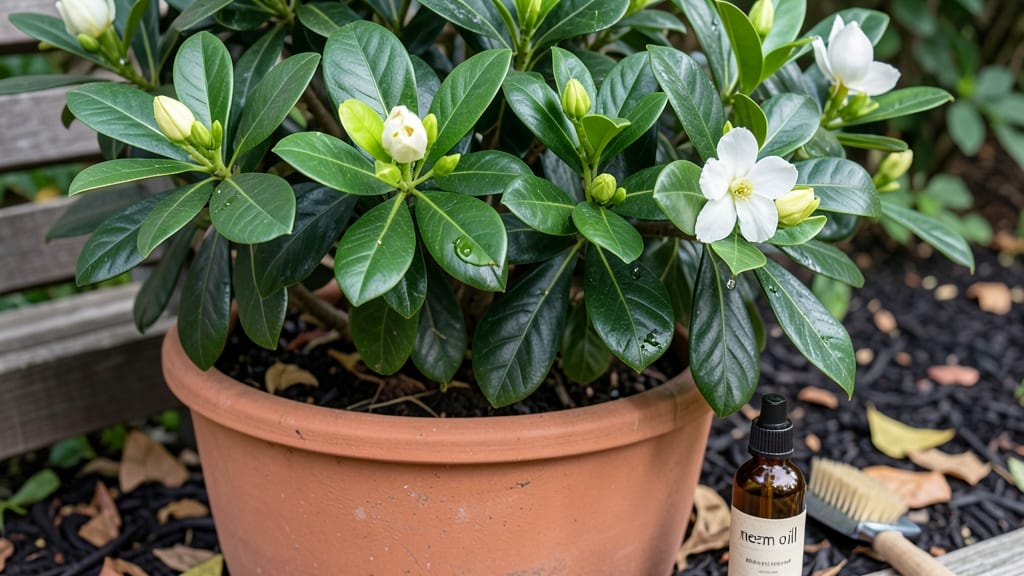
Using neem oil on gardenia plants requires extreme caution, as improper application can trigger leaf yellowing, crispy brown edges, or slowed growth. Always dilute it to 1-2 teaspoons per gallon of water and apply only at dusk to prevent sunburn. Start with a small leaf test to check for sensitivity.
Gardenias are particularly sensitive to neem oil because their delicate leaves absorb oils quickly, leading to chemical burns. 🌿 The active compounds in neem oil, like nimbin and azadirachtin, disrupt the plant's natural defenses when applied too strongly.
I've seen gardenia leaves develop brown spots within days of overapplication, so always prioritize dilution and timing. For pests like aphids, consider using a gentler horticultural oil instead—it targets insects without harming the plant's foliage.
When applying neem oil, focus on the undersides of leaves where pests hide, but avoid oversaturating the soil. The roots of gardenias are also vulnerable to oil buildup, which can inhibit nutrient absorption.
If you notice any wilting or discoloration after treatment, flush the soil with water immediately to dilute any residual oil.
💡 In This Article
- How Neem Oil Affects Gardenia Leaves and Roots
- Safe Neem Oil Application Guide for Gardenia Care
How neem oil affects gardenia leaves and roots
Neem oil's active compounds—nimbin and azadirachtin—disrupt gardenia plants at a cellular level. These compounds act as natural pesticides by interfering with insect hormones, but they also interfere with the plant's waxy cuticle layer.
Gardenias have thin, delicate leaves that absorb oils rapidly, leading to clogged stomata (the tiny pores) and restricted gas exchange. When applied undiluted or at high concentrations, the oil can cause oxidative stress, triggering leaf yellowing and brown, crispy edges within 24-48 hours. 🌿
The roots are equally vulnerable because gardenias have a shallow, fibrous root system that absorbs water and nutrients efficiently—but also oils. When neem oil penetrates the soil, it can coat root hairs and block nutrient uptake, particularly phosphorus and potassium.
Studies show that even diluted neem oil can reduce root respiration by up to 30% if applied too frequently. This is why gardenias, unlike hardier tropical plants like hibiscus, show visible stress faster when exposed to neem oil.
Gardenias' sensitivity stems from their natural defenses. Unlike robust plants, gardenias rely on a fine balance of moisture and oil-soluble compounds in their leaves. Neem oil's high concentration of fatty acids (around 40-50%) disrupts this balance, leading to cellular dehydration.
The oil also lowers the leaf's surface tension, making it easier for pathogens like fungal spores to latch on. This explains why gardenias often develop secondary infections after neem oil exposure.
Comparing gardenias to other tropical plants, their leaves lack the thick, waxy coating found in plants like bougainvillea or plumeria. For example, bougainvillea can tolerate neem oil at a 1:10 ratio (1 part oil to 10 parts water), while gardenias typically require a 1:500 ratio or stronger dilution.
The difference lies in their evolutionary adaptations—bougainvillea thrives in arid conditions with natural oil resistance, while gardenias evolved in humid, shaded environments where delicate foliage is prioritized over oil tolerance.
To visualize the damage, imagine sprinkling a heavy oil on a thin, wax paper—it immediately becomes translucent and brittle. Gardenia leaves react similarly when exposed to undiluted neem oil. The oil's viscosity (thickness) prevents proper photosynthesis by blocking light penetration, further weakening the plant.
Even when diluted, gardenias may show signs of stress if applied during peak sunlight hours, as the oil's UV-absorbing properties can amplify sunburn damage.
Here’s what happens step-by-step when neem oil is misapplied:
- First 6 hours: Leaves develop a dull, matte appearance due to cuticle damage.
- 12-24 hours: Yellowing appears along leaf edges, starting with the oldest leaves.
- 48 hours: Brown, necrotic spots form, often accompanied by wilting.
- 72 hours+: Stunted growth or root rot may occur if oil reaches the soil.
Understanding these mechanisms helps explain why gardenias react so severely compared to other plants. Their entire physiology is geared toward delicate, aromatic blooms—not resilience against harsh treatments. 🌸