
Tools
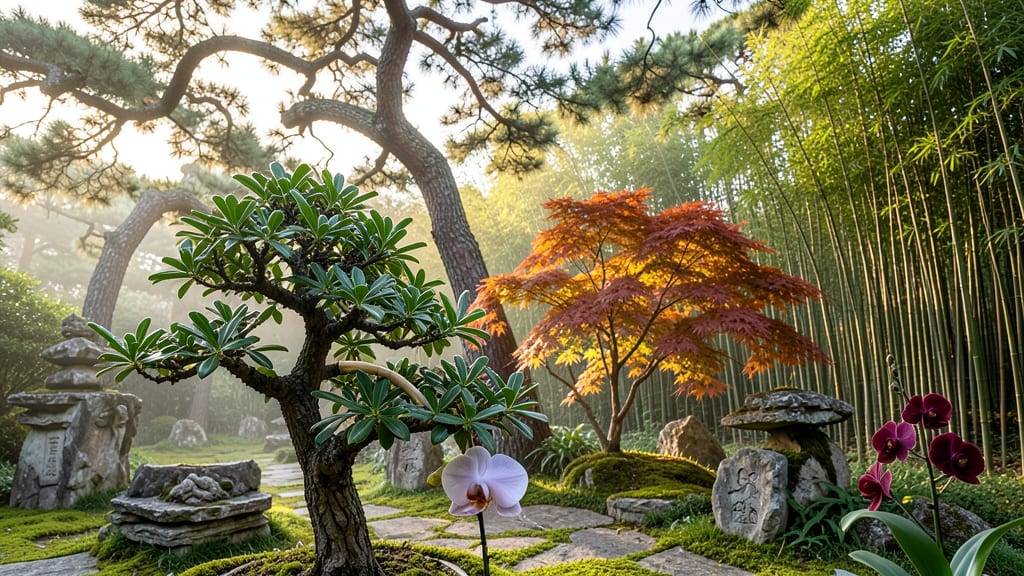
The New York Chinese Scholar’s Garden is a meticulously designed cultural landmark that harmonizes Ming Dynasty-inspired Chinese aesthetics with Manhattan’s urban landscape, featuring rockeries, pavilions, and tranquil koi ponds.
The New York Chinese Scholar’s Garden is a rare urban oasis where ancient Chinese design principles meet modern city life. 🌿 Inspired by Ming Dynasty scholar retreats, this 6-acre garden in Chinatown incorporates key elements like curved bridges, stone lanterns, and meticulously placed rocks—all arranged to create balance and flow.
What makes it special is how these traditional features adapt to NYC’s climate and space constraints while maintaining their cultural authenticity. The garden’s serene atmosphere offers a peaceful escape from the city’s hustle, making it both a historical tribute and a living example of cross-cultural harmony.
Visitors often marvel at how the garden’s layout reflects yin-yang balance and feng shui principles, even in an urban setting. The carefully selected flora—like resilient bamboo and fragrant pine trees—thrive in Manhattan’s climate, proving that traditional Chinese gardens can flourish beyond their native landscapes.
Whether you're admiring the architecture or simply enjoying the tranquility, this garden serves as a bridge between East and West, blending history with everyday city life.
💡 In This Article
- Traditional Chinese Garden Design Principles in New York
- Plants and Landscaping: A Guide to NY Scholar’s Garden Flora
Traditional Chinese garden design principles in New York
The New York Chinese Scholar’s Garden embodies centuries-old design principles that prioritize harmony between humans, nature, and architecture. At its core, the garden follows the yin-yang balance philosophy—where opposing forces (light/dark, water/rock, open/closed) must coexist in equilibrium.
For example, the garden’s central 1.5-acre pond represents yin (water), while the surrounding granite rockeries symbolize yang (earth). This balance isn’t just aesthetic; it’s a functional approach to creating spaces that promote mental clarity and tranquility, much like the scholar retreats it emulates.
Feng shui principles guide every element’s placement, from the winding stone pathways (designed to encourage slow, mindful movement) to the strategically positioned pavilions that frame views of the koi ponds. The garden’s 360-degree layout ensures no single structure dominates the space—visitors experience a dynamic flow rather than rigid symmetry.
Even the 12-foot-tall bamboo grove is positioned to channel positive energy ("qi") through the garden’s central axis, a technique borrowed from Ming Dynasty landscape design.
What’s fascinating is how these principles adapt to NYC’s constraints: the garden’s 6-acre footprint is compact yet feels expansive due to clever use of perspective and layered vistas.
Symbolism plays a crucial role in plant selection, where each species carries cultural meaning. The pine trees, for instance, represent longevity and resilience—qualities that resonate in both Chinese philosophy and urban survival.
Meanwhile, orchids (grown in the garden’s greenhouse) symbolize refinement and prosperity, aligning with the scholar’s pursuit of knowledge. The garden’s seasonal blooms, like cherry blossoms in spring and chrysanthemums in autumn, reflect China’s traditional calendar, creating a living connection to ancient agricultural cycles.
This thoughtful curation ensures the garden isn’t just beautiful but also educational, offering visitors a tactile understanding of Chinese cultural values.
The adaptation to NYC’s climate is a masterclass in practical feng shui. Traditional scholar gardens in China rely on subtropical conditions, but this garden thrives in Manhattan’s humid continental climate (USDA Zone 7a) by selecting hardy species like Japanese maples and dwarf conifers.
The granite used in rockeries (sourced from Vermont) withstands freeze-thaw cycles, while the pond’s recirculating water system prevents stagnation—a critical innovation for urban water features. Even the stone lanterns, typically made of porcelain in China, are crafted from durable cast stone to endure NYC’s weather extremes.
These adaptations prove that Chinese garden design isn’t static; it’s a living tradition that evolves with its environment.
One often-overlooked aspect is how the garden’s design principles extend to its architectural features.
The curved bridges (like the Moon Bridge) aren’t just decorative—they’re designed to create "borrowed scenery," a technique where views are framed to include distant elements (like the New York skyline visible from the garden’s northern edge).
This fusion of East and West is intentional: the garden’s creators wanted visitors to experience the serenity of a Chinese retreat while remaining aware of their urban surroundings. The result is a space that feels timeless yet undeniably New York.
For those curious about replicating these principles at home, start with scale and proportion. A small urban garden can borrow the scholar’s garden ethos by using asymmetrical layouts, natural materials (stone, wood), and water features—even a tabletop fountain can channel qi.
The key is intention: every plant, rock, or path should serve a purpose, whether symbolic, functional, or both. In a city like NYC, where space is limited, the scholar’s garden proves that beauty and meaning can thrive in the most unexpected places. 🌿