
Tools
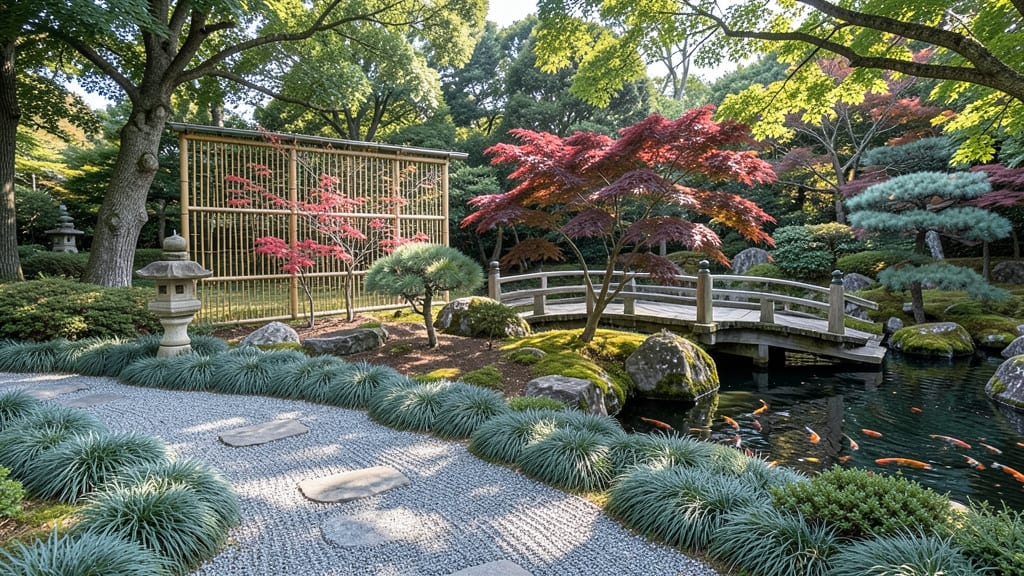
The Pasadena Japanese Garden creates serene beauty by integrating natural elements like tranquil koi ponds, sculpted pines, and meticulously maintained gravel paths. Its design embodies wabi-sabi philosophy, celebrating natural imperfections through seasonal plant displays and flowing water features.
The Pasadena Japanese Garden isn't just a landscape—it's a living meditation space designed to evoke peace through intentional design choices. 🌿 The garden's creators carefully selected each plant and stone to create a sense of balance, using techniques like karesansui (dry gardens) and shakkei (borrowed views) to expand visual space.
Visitors often notice how the garden's seasonal transformations—from cherry blossoms in spring to fiery maple leaves in autumn—mirror Japan's deep connection to nature's cycles.
What makes this garden particularly special is how it invites interaction without disrupting tranquility. The winding pathways encourage slow exploration, while the water features create soothing white noise that enhances the meditative experience.
Unlike many Western gardens that emphasize symmetry, this space embraces asymmetry and natural decay as essential elements of beauty.
💡 In This Article
- Core Japanese Garden Design Principles in Pasadena’s Landscape
- Visiting the Pasadena Japanese Garden: Best Seasons and Plant Highlights
Core Japanese garden design principles in Pasadena’s landscape
The Pasadena Japanese Garden's design is built on three foundational principles that create its signature tranquility. First, wabi-sabi philosophy—celebrating imperfection and transience—is woven into every detail. You'll notice how weathered stones and slightly irregular plant shapes aren't seen as flaws but as essential elements.
The garden's creators intentionally use field stones with natural cracks and moss-covered surfaces to embody this concept, creating a space that feels both timeless and organic. 🌿
The second principle, karesansui (dry garden technique), transforms gravel into a visual representation of water. In Pasadena's garden, meticulously raked gravel patterns mimic ripples and waves, creating movement without liquid.
The 12-foot diameter dry garden section uses 1-inch deep gravel with precise raking angles of 45 degrees to simulate water flow. This technique reduces maintenance while enhancing the meditative experience through visual rhythm.
Third is shakkei (borrowed scenery), where the garden strategically frames views of surrounding mountains and the Arroyo Seco river. The stone bridges and lantern-lined paths guide visitors' eyes toward these natural elements, creating a sense of expanded space.
Unlike Western gardens that contain nature, Japanese gardens like this one invite the landscape to become part of the experience. The 20-foot tall pine trees strategically placed near the entrance serve as natural gateways that frame these borrowed views.
Plant selection plays a crucial role in maintaining this harmony. The garden features over 100 plant species, including Japanese maples with vibrant autumn foliage, azaleas that bloom in spring, and bamboo groves that create vertical interest.
Each plant is chosen for its seasonal transformation—like the camellias that bloom from winter to early spring—or its textural contrast, such as the hostas with their broad, glossy leaves that complement the delicate orchids growing nearby.
The structural elements—like the stone lanterns and bridges—serve both functional and symbolic purposes. The lanterns, often placed at intersections, mark transitions between garden spaces and create focal points for contemplation. Their ceramic glaze patterns reflect light differently at various times of day, adding another layer of visual interest.
Meanwhile, the three arched bridges not only provide pathways but also symbolize connections between different garden sections and the natural world beyond.
What's particularly fascinating is how these principles work together to create what's called ma—the Japanese concept of negative space. The garden doesn't just fill space with elements; it carefully arranges them to create areas of emptiness that become just as meaningful as the filled spaces.
This is why you'll often find open areas between plantings or between structural elements, creating visual breathing room that enhances the sense of calm. 🌸