
Tools
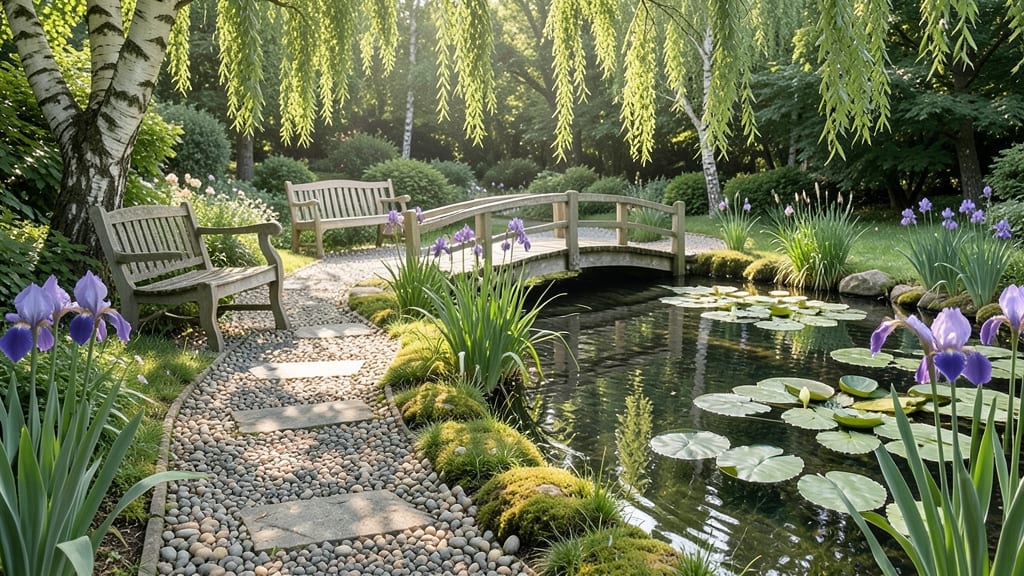
Monet’s garden pathways create dreamy, immersive routes by weaving organic curves through lush plantings, using gravel, stepping stones, and soft borders to guide visitors through seasonal blooms and harmonious color transitions.
Monet’s genius lay in how his pathways didn’t just connect spaces—they became part of the experience. 🌿 The winding curves, often lined with gravel or irregular stepping stones, invite exploration while softening the transition between lawns and flowerbeds.
His strategic use of seasonal plants (like peonies and irises) ensured each visit revealed new colors, while low-lying ground covers prevented the paths from feeling harsh or rigid. The key was balance: enough structure to define the route, but enough plant variety to keep it feeling alive and ever-changing.
What’s fascinating is how Monet treated pathways as living artworks. Instead of rigid brick lines, his routes meandered like rivers, with materials chosen to complement the surrounding flora—gravel for drainage, stepping stones to highlight focal points, and borders of lavender or rosemary to soften edges.
This approach turns a simple walk into a sensory journey, where every step reveals new textures and scents.
💡 In This Article
- Monet’s Pathway Design Principles: Curves, Materials, and Plant Harmony
- Plant Pairings for Monet-Inspired Garden Paths
Monet’s pathway design principles: curves, materials, and plant harmony
Monet’s pathways weren’t just functional—they were carefully crafted to enhance the garden’s dreamy atmosphere. The organic curves he favored (often resembling gentle S-shapes or flowing rivers) created a sense of movement and discovery.
Unlike rigid geometric designs, these curves encouraged visitors to slow down, inviting them to pause and absorb the surrounding colors and scents. Studies in perceptual psychology show that curved pathways reduce visual stress, making spaces feel more inviting—something Monet intuitively understood and applied in Giverny.
Material choices played a crucial role in maintaining this harmony. Gravel, for instance, wasn’t just practical for drainage but also provided a soft, muted contrast to vibrant blooms.
Monet often used irregularly shaped stepping stones (like those in his Japanese-inspired sections) to break up long stretches of gravel, creating visual interest without disrupting the natural flow. Brick pathways, when used, were laid in asymmetrical patterns—never perfectly straight—to reinforce the garden’s organic feel.
The texture of these materials also mattered: smooth river stones near water features, rougher gravel in drier areas.
Plant layering was Monet’s secret weapon for creating depth along pathways.
He’d use tall perennials like delphiniums (up to 5 feet) at the edges to frame the route, medium-height roses or peonies (2-3 feet) for mid-level interest, and low-growing thyme or creeping phlox (6-12 inches) to soften the path’s edges.
This tiered approach ensured every season brought new visual layers—spring’s irises transitioning to summer’s hydrangeas, then autumn’s asters—while maintaining a cohesive color palette. The key was 3-5 dominant colors per season, with neutrals (greens, grays) acting as the canvas.
Color transitions were no accident—Monet used them to guide the eye through the garden’s "rooms." For example, the yellows of forsythia near the entrance would gradually shift to soft blues of hydrangeas as visitors approached the water lily pond, creating a visual journey.
This technique, called "progressive harmony," relies on the eye’s ability to perceive gradual shifts in hue. In practice, this meant planting 10-15% of each dominant color in overlapping zones along the path, ensuring smooth transitions without jarring contrasts.
The materials and plants worked together to create a sensory experience. Underfoot, gravel’s crunchy texture contrasted with the velvety leaves of lamb’s ear lining the borders, while the scent of lavender or rosemary (often planted at path edges) would waft with each step.
Monet’s pathways weren’t just walked—they were experienced, with every element carefully chosen to engage multiple senses. The result? A garden where the journey felt as important as the destination. 🌿
What’s often overlooked is how Monet’s pathways served as "visual bridges" between different garden sections. The width of the path (typically 2-3 feet) was just wide enough for two people to walk side-by-side, encouraging conversation and connection with the environment.
Narrower paths (18-24 inches) led to more intimate spaces, like his Japanese bridge or the water lily pond, creating a sense of anticipation. This thoughtful scaling is a principle any gardener can adapt—whether using wider gravel paths for social areas or narrower stone paths for quiet reflection.