
Companion Plants
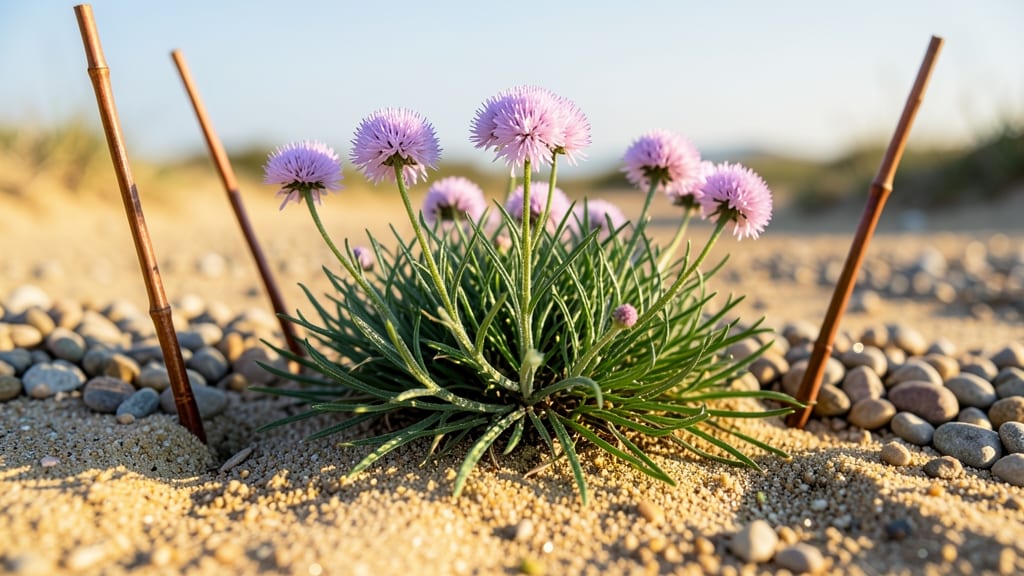
For seaside gardens, salt-tolerant plants like sea oats, beach roses, and saltmarsh cordgrass create resilient landscapes that withstand wind, salt spray, and sandy soil while enhancing coastal beauty and supporting local ecosystems. Drought-resistant succulents and native grasses also perform exceptionally well in these challenging conditions.
Coastal environments demand plants with special adaptations to thrive where salt spray, strong winds, and nutrient-poor soils would otherwise stifle growth. 🌊 These hardy species have evolved unique mechanisms—like salt exclusion through specialized root systems or osmotic regulation to maintain moisture.
For instance, sea oats develop deep roots to anchor against storms while filtering salt, while beach roses use waxy leaves to prevent salt buildup. Many also double as erosion controllers, making them practical choices for dune stabilization projects.
When selecting plants, consider your specific coastal zone—Atlantic coasts often need plants that handle saltier air, while Pacific varieties may prioritize drought resistance due to foggy conditions. Native species are always the safest bet, as they've naturally adapted to local microclimates.
I recommend starting with 3-5 core plants that complement each other's growth habits, spacing them according to their mature sizes for optimal airflow and sunlight exposure.
💡 In This Article
- How Salt-Tolerant Plants Survive Coastal Conditions
- Best Salt-Resistant Plants by Garden Zone and Purpose
How salt-tolerant plants survive coastal conditions
Salt-tolerant plants have evolved remarkable physiological adaptations to handle the harsh realities of coastal environments. One key mechanism is salt exclusion, where specialized root systems filter out excess sodium before it enters plant tissues.
For example, sea oats (Uniola paniculata) develop deep, fibrous roots that extend 6-10 feet into sandy soil, allowing them to access fresh water while excluding up to 90% of salt from their systems.
This adaptation is crucial because even small amounts of salt can disrupt cellular functions by interfering with water uptake through osmosis.
The leaves of many coastal plants also play a critical role in survival.
Beach roses (Rosa rugosa) feature thick, waxy cuticles that create a protective barrier against salt spray, while their curled leaf edges reduce wind resistance. 🌿 Another fascinating adaptation is osmotic regulation, where plants like saltmarsh cordgrass (Spartina alterniflora) produce special compounds called proline and glycine betaine to maintain proper water balance in their cells.
These organic molecules act like internal antifreeze, allowing the plants to continue functioning even when surrounded by saline conditions. In contrast, dune grasses like American beachgrass (Ammophila breviligulata) prioritize physical resilience, growing in dense clumps that stabilize sand while their hollow stems reduce wind damage.
These adaptations aren't just about survival—they directly impact how you should care for your coastal garden. Plants that excel at salt exclusion often need well-draining soil to prevent salt buildup, while those with osmotic regulation systems can tolerate occasional flooding.
For instance, beach heather (Erica cinerea) thrives in sandy, acidic soils with pH levels as low as 4.5, while sea lavender (Limonium spp.) prefers slightly alkaline conditions near 7.5-8.0 pH.
Understanding these preferences helps you create microclimates within your garden where different species can coexist harmoniously.
Wind resistance is another critical factor that varies by plant type. Tall grasses like switchgrass (Panicum virgatum) bend rather than break in storms, while shrubs like bayberry (Myrica pensylvanica) grow in compact forms that reduce wind exposure. The trade-off?
Grasses often need more space between plants (3-5 feet apart) to prevent crowding, while shrubs can be planted 2-3 feet apart for denser coverage. This spacing also improves air circulation, which is vital for preventing fungal diseases that thrive in the humid coastal environment.
One surprising adaptation worth noting is how some coastal plants actually require salt to thrive. Species like sea thrift (Armeria maritima) become leggy and weak when grown in freshwater conditions, demonstrating how deeply these adaptations are hardwired into their biology.
This explains why many nurseries specializing in coastal plants use saltwater irrigation for their stock—it helps maintain the plants' natural physiological balance before they reach your garden. For home gardeners, this means you shouldn't try to "desalt" your soil unless you're dealing with severe accumulation from irrigation or runoff.
When selecting plants for your seaside garden, consider this hierarchy of adaptations: root systems for water access, leaf structures for salt protection, and growth habits for wind resistance. The most resilient coastal gardens combine plants that address all three layers—like pairing deep-rooted grasses with wind-resistant shrubs and salt-tolerant ground covers.
This layered approach not only creates visual interest but also mimics natural coastal ecosystems where different species play complementary roles.