
Container Gardens
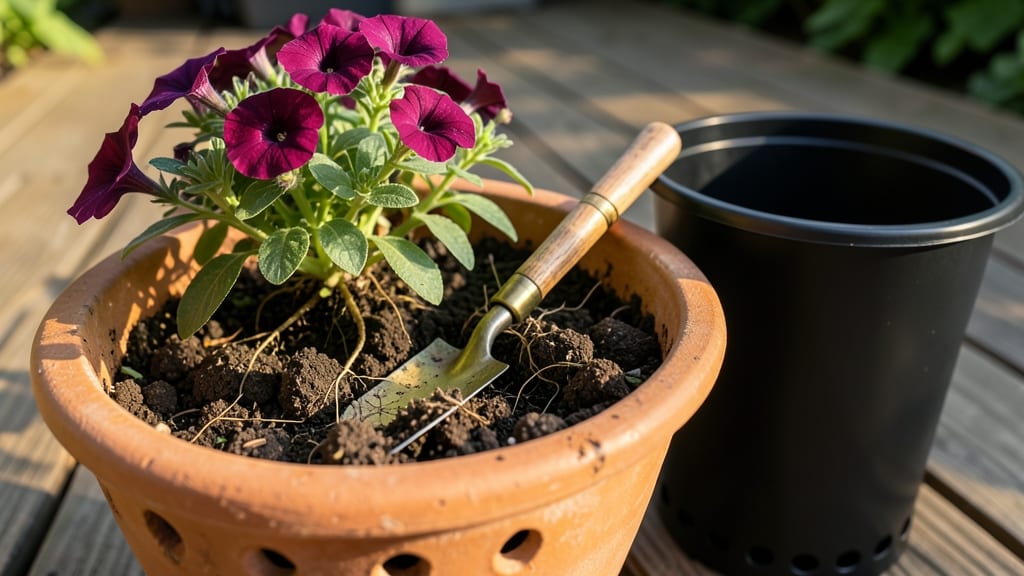
Using garden soil in pots requires careful amending with perlite, sand, or compost to prevent root suffocation and drainage issues, though it still works best for hardy plants like herbs or vegetables in well-draining containers.
Garden soil is heavy and dense, packing down tightly in pots and cutting off oxygen to roots—a problem called compaction. 🌱 Unlike loose potting mixes, it also holds too much moisture, creating soggy conditions that breed fungus.
Even after amending, I’ve found it’s best for plants like rosemary or kale, which tolerate tougher conditions, rather than delicate flowers or succulents.
For a safer approach, mix garden soil with 50% perlite or coconut coir to improve aeration and moisture control. Test your soil first—if it’s clay-heavy, add builder’s sand to help water drain.
Always use containers with drainage holes, and avoid garden soil for plants needing precise moisture like ferns or orchids.
💡 In This Article
- Why Garden Soil Fails in Containers
- How to Safely Amend Garden Soil for Potted Plants
Why garden soil fails in containers
Garden soil's natural composition makes it a poor fit for containers. Its dense, clay-heavy structure packs down when watered, creating a suffocating environment for roots. In-ground soil has years to develop natural drainage pathways, but confined pots trap moisture and cut off oxygen—critical for root respiration.
This compaction reduces pore space by up to 30-50% compared to loose potting mixes, which can have 40-60% air space when properly formulated.
The problem goes deeper than just density. Garden soil often contains pathogens and weed seeds from the yard, which thrive in the warm, moist conditions of pots. Unlike sterile potting mixes, it can introduce fungal diseases like damping-off or root rot within weeks.
The nutrient balance also shifts unpredictably—too much organic matter can lead to nitrogen spikes, while sandy soils may leach essential minerals too quickly. 🔥
Root systems adapt differently in containers. In-ground plants develop deep, exploratory roots seeking nutrients and water, but potted plants grow in circles, creating a dense root ball. Garden soil's lack of aeration forces roots to compete aggressively for oxygen, stunting growth.
Even hardy plants like rosemary or thyme will struggle if the soil remains compacted, showing symptoms like yellowing leaves or slow growth despite adequate watering.
Consider the texture difference: garden soil feels gritty and heavy, while ideal potting mix has a light, crumbly consistency. This isn't just about feel—it's about physics. The bulk density (weight per volume) of garden soil averages 1.2-1.6 g/cm³, while premium potting mixes sit at 0.2-0.5 g/cm³.
That's a 3-8x difference in how roots experience their growing medium!
Moisture control is another critical failure point. Garden soil holds water like a sponge, staying saturated for days after watering. Potted plants need quick drainage to prevent root suffocation, but garden soil's high clay content can keep containers 20-30% wetter than ideal.
This moisture retention creates perfect conditions for anaerobic bacteria, which produce toxic byproducts that damage roots.
The visual difference is striking too. Healthy potted plants in proper mix show white, fibrous roots spreading evenly, while those in unamended garden soil develop dark, gnarled roots from oxygen deprivation. The contrast is a clear indicator of why garden soil struggles in containers unless heavily modified. 💫