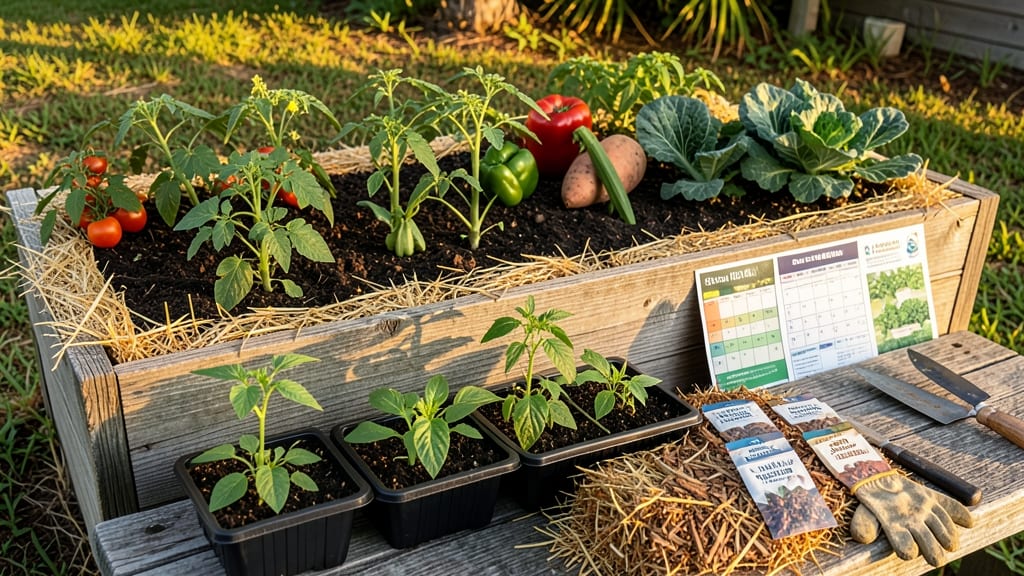
Planting a vegetable garden in Florida requires knowing when to plant each crop to beat the heat and hurricanes 🥕—and the wrong timing can mean wilted seedlings or wasted effort.
Florida’s long growing season means you can grow almost anything, but the key is matching crops to the right months. Warm-season veggies like tomatoes and peppers thrive in spring, while cool-season greens like lettuce and broccoli need fall planting to avoid wilting in summer’s relentless sun.
This guide breaks down the best planting windows for your Florida garden, including heat-resistant varieties that won’t bolt in 90°F+ temperatures. We’ll also cover soil prep for sandy or clay-heavy soil and how to protect your crops from sudden storms.
Ready to grow a bountiful garden? Learn the exact months to plant, what to avoid, and how to keep your veggies thriving year-round—no matter the Florida heat.
Jan
🥕
Feb
🥕
Mar
🥕
Apr
🥕
May
🥕
Jun
🥕
Jul
🥕
Aug
🥕
Sep
🥕
Oct
🥕
Nov
🥕
Dec
🥕
Florida planting calendar: best months for vegetables by season
Florida’s year-round growing potential means you can grow vegetables almost anytime—but timing is everything. Unlike northern states, Florida’s frost-free winters and intense summer heat create two distinct planting windows: cool-season crops thrive in fall/winter, while heat-tolerant varieties dominate spring/summer.
Even in USDA Zones 8a-11, microclimates vary, so knowing your last frost date (if applicable) and summer humidity levels is key.
For cool-season crops like lettuce, broccoli, and peas, aim for September-October planting to harvest before summer heat sets in. Meanwhile, warm-season favorites such as tomatoes, peppers, and okra should go in the ground after March 1 in most regions, avoiding early-season cold snaps.
Florida’s tropical transitions (like Malabar spinach) even allow year-round harvests with proper care.
⚠️ Critical Tip: Florida’s sandy soils drain too quickly, while clay-heavy areas (common in central Florida) hold moisture poorly. Amend your soil 4-6 weeks before planting with compost or aged manure to improve structure and fertility.
This is especially important for transplanted seedlings, which need stable moisture to establish roots.
Here’s your seasonal planting breakdown, including direct sowing vs. transplanting windows for Florida’s most popular vegetables:
| Vegetable |
Season |
Planting Window |
Method |
Notes |
| Tomatoes |
Spring/Summer |
March–May, August–September |
Transplant |
Heat-tolerant varieties like 'Solar Fire' recommended. |
| Peppers (Bell, Jalapeño) |
Spring/Summer |
February–April, August–September |
Transplant |
Start indoors 8–10 weeks before last frost. |
| Lettuce (Leaf, Romaine) |
Fall/Winter |
September–November, February–March |
Direct Sow |
Use shade cloth in summer to prevent bolting. |
| Broccoli |
Fall/Winter |
September–October, February |
Transplant |
Harvest before summer heat (by May). |
| Okra |
Summer |
April–June, August–September |
Direct Sow |
Thrive in 90°F+ temperatures—perfect for Florida summers. |
| Sweet Potatoes |
Summer/Fall |
March–April, July–August |
Slips (root cuttings) |
Harvest before first frost (if applicable). |
| Green Beans |
Fall/Winter |
September–October, February–March |
Direct Sow |
Top 10 heat-resistant vegetables for Florida gardens
Florida’s scorching summers can turn a vegetable garden into a struggle, but the right heat-resistant varieties thrive when temperatures soar. These 10 top performers handle 90°F+ heat with ease, offering bountiful harvests even during peak summer months.
Whether you’re a seasoned gardener or just starting, these Florida-friendly crops will keep your garden productive year-round.
From okra to Malabar spinach, these vegetables not only survive Florida’s heat but often flavor improves under sunny conditions. Most require well-draining soil and full sun exposure (6+ hours daily), but their drought tolerance makes them low-maintenance stars.
Let’s dive into the top 10 heat-resistant vegetables that will make your Florida garden shine!
-
1. Okra – Thrives in 100°F+ heat, loves poor soil, and produces pods year-round. Plant after last frost (March-April) for continuous harvests.
-
2. Sweet Potatoes – Drought-tolerant and shade-adaptable, perfect for Florida’s humid summers. Plant slips (May-June) in sandy loam soil for sweet, starchy roots.
-
3. Malabar Spinach – A heat-loving vine with tender leaves that thrive in 95°F+ temps. Sow seeds (April-September) and trellis for vertical growth.
-
4. Peppers (Bell & Hot) – Florida’s perennial peppers (like ‘Jalapeño’) produce nonstop in heat. Plant seedlings (February-April) in well-draining soil with mulch to retain moisture.
-
5. Eggplant – Loves hot, humid days and long growing seasons. Start seeds indoors (February) or transplant seedlings (March-April) for summer harvests.
-
6. Cowpeas – Nitrogen-fixing and drought-resistant, these edible pods thrive in poor soil. Plant seeds (April-July) for summer-fall harvests.
-
7. Black-Eyed Peas – Heat-tolerant and fast-growing, perfect for Florida’s climate. Sow seeds (March-April) in full sun for 60-day harvests.
-
8. Tomatillos – Heat-loving relatives of tomatoes, thriving in 90°F+ temps. Plant seedlings (March-April) in rich, moist soil for tangy harvests.
-
9. Amaranth – A nutrient-dense green that loves heat and humidity. Direct-sow seeds (May-July) for summer harvests before first frost.
-
10. Yard-Long Beans – Drought-tolerant and high-yielding, perfect for Florida’s long summers. Plant seeds (April-May) in well-drained soil for continuous pods.
Each of these heat-resistant vegetables offers unique benefits for Florida gardens. For example, okra and sweet potatoes are drought-tolerant, while Malabar spinach and amaranth thrive in humid conditions. To maximize success, always mulch heavily to retain moisture and water deeply in the morning to avoid fungal issues.
With these Florida-friendly varieties, your garden will stay productive even during the hottest months!
Pro tip: Rotate crops annually to prevent soil depletion and pest buildup. For instance, plant okra where tomatoes grew last year—they’re not related, so pests won’t target the same plants. Happy gardening in the Sunshine State! 🌱
★★★★★5.0(3 reviews)
|