
Plants
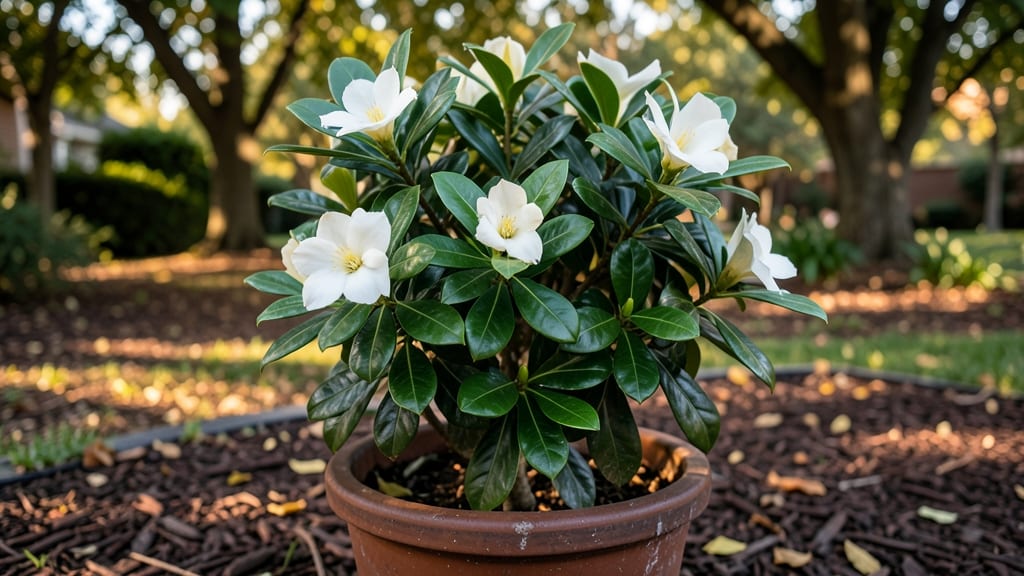
A gardenia plant looks like a lush, tropical shrub with shiny, dark green elliptical leaves that grow in opposite pairs along the stems. Its signature feature is the large, creamy-white to pale yellow blooms with thick, waxy petals that often carry a delicate pink blush at the edges.
A gardenia's leaves are one of its most distinctive features—smooth-edged and leathery to the touch, they create a dense, glossy canopy that thrives in warm climates. 🌿 The flowers, which can reach 3-4 inches in diameter, aren't just visually striking but also highly fragrant, especially in the evening when their scent intensifies.
What sets gardenias apart is how their blooms emerge from vibrant green buds that gradually open into those iconic waxy petals, creating a stunning transformation over a few days.
These plants typically grow as shrubs 3-6 feet tall, though some varieties like G. augusta can reach 15 feet in tropical settings. Their appearance makes them a standout in both formal gardens and container arrangements, where their glossy foliage and fragrant blooms add a touch of elegance.
The contrast between the deep green leaves and the creamy flowers creates a visually appealing focal point that's hard to resist.
💡 In This Article
- Identifying Gardenia Leaves and Flowers: Key Botanical Features
- Gardenias in Landscaping: Best Placement and Companion Plants
Identifying gardenia leaves and flowers: key botanical features
The gardenia's leaves are a botanical masterpiece of elegance, featuring a leathery texture that resists tearing and a deep, glossy sheen that reflects light like polished mahogany. Each leaf measures 2-6 inches long and 1-2 inches wide, forming an elliptical shape with a pointed tip that tapers gracefully.
What's fascinating is how these leaves grow in opposite pairs along the stems, creating a symmetrical pattern that's both visually pleasing and structurally efficient for capturing sunlight.
When it comes to flowers, the gardenia's petals are a study in texture and form—thick, waxy, and highly reflective, giving them that signature luminous quality. The blooms typically measure 3-4 inches in diameter, though some tropical varieties like G. augusta can produce flowers up to 6 inches wide.
The petals emerge from a bright green calyx that acts like a protective cup, gradually unfurling over 3-5 days into their full glory. This slow reveal creates a dramatic transformation that's one of the plant's most captivating features.
The color variations are equally intriguing. While most gardenias are creamy white, some varieties like G. jasminoides 'Radicans' develop a soft pink blush along the petal edges, especially in cooler temperatures.
The scent is equally complex—composed of 200+ volatile compounds, including linalool and jasmine-like esters, that combine to create that intoxicating fragrance. What's remarkable is how the scent intensifies after sunset, peaking between 8 PM and midnight when most pollinators are inactive, suggesting an evolutionary adaptation to attract night-flying moths.
Gardenias exhibit two primary growth forms: compact shrubs (typically 3-6 feet tall) and climbing varieties like G. augusta, which can reach 15 feet in tropical climates. The shrub forms develop a rounded habit with multiple stems, while climbing types produce long, flexible branches that can wrap around supports.
This growth diversity means gardenias can be tailored to different garden styles, from formal hedges to cascading container displays.
One often-overlooked feature is the fruit—a woody capsule that develops after flowering and contains 1-2 seeds surrounded by a fleshy, orange-red aril. While not as showy as the flowers, these fruits provide valuable food for birds, helping to disperse gardenia seeds.
The entire plant's architecture—from its glossy leaves to its waxy blooms—demonstrates nature's attention to both beauty and function.
For identification purposes, focus on these three key markers: opposite leaf arrangement, waxy flower texture, and intense evening fragrance. These traits create a signature that's hard to confuse with other plants, making gardenias instantly recognizable to those in the know. 🌸