
Planting
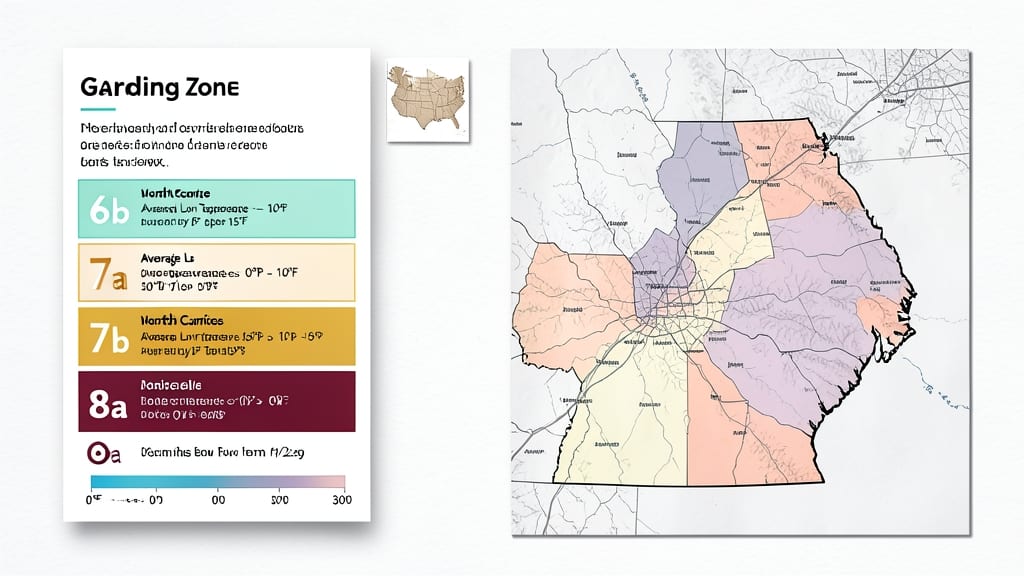
North Carolina's gardening zones range from USDA Zone 5 in the mountains to Zone 8 along the coast, with the Piedmont region typically falling in Zone 7. The USDA Plant Hardiness Zone Map provides exact boundaries for your specific location.
North Carolina's diverse geography creates distinct growing conditions. The mountainous western region (like Asheville) dips into Zone 5, where winters can drop below -15°F, while the coastal plains (such as Wilmington) stay in Zone 8, rarely seeing frost.
The Piedmont—home to Raleigh and Charlotte—lands primarily in Zone 7, offering a balance between cold winters and warm summers. 🌿 For precise planting decisions, I always recommend checking the USDA interactive map, as microclimates (like urban heat islands) can shift zones by half a number.
This variation affects plant selection: Zone 5 gardeners should choose cold-hardy varieties like Serviceberry or Blueberry bushes, while Zone 8 growers can experiment with tropicals like Elephant Ears or Citrus trees.
Even within a single zone, elevation changes can matter—just a few hundred feet higher might push you into a colder subzone. My advice? Start with your zip code on the USDA map, then observe your local frost dates for fine-tuning.
💡 In This Article
- How North Carolina’s Climate Varies by Region
- Best Plants for Each NC Gardening Zone
How north Carolina’s climate varies by region
North Carolina’s gardening zones reflect its dramatic geographic diversity, where elevation and proximity to the coast create starkly different growing conditions. The mountainous west, including the Blue Ridge and Great Smoky Mountains, sits in Zone 5, where winter lows can plunge to -15°F or lower.
This high-altitude region experiences shorter growing seasons due to cooler temperatures and earlier frost dates—often around mid-October—while summer highs rarely exceed 85°F. The thin, oxygen-rich air at elevations above 3,000 feet accelerates heat loss at night, making frost a persistent risk even in summer months. 🌲
The Piedmont region, stretching from Charlotte to Raleigh, dominates Zone 7 with its rolling hills and moderate climate. Here, winters average 25-35°F, while summers climb to 85-95°F, creating a near-perfect balance for most garden plants.
The Piedmont’s 180-220 frost-free days allow for longer growing seasons compared to the mountains, though late spring frosts (after April 15) can still damage tender crops.
Urban areas like Raleigh experience microclimates where pavement and buildings trap heat, potentially pushing zones up to 7b—meaning gardeners can sometimes grow plants rated for Zone 8.
Along the coastal plain, from Wilmington to the Outer Banks, Zone 8 reigns supreme, where winters rarely dip below 20°F and frost occurs less than 10 days per year. The Atlantic Ocean moderates temperatures, creating a humid subtropical climate with 250+ frost-free days.
Coastal gardeners enjoy year-round growth for warm-season crops like tomatoes and peppers, while cold-hardy plants thrive without winter protection. However, hurricane season (June-November) introduces unique challenges, as salt spray and wind can damage plants—making sturdy, flexible varieties essential. 🌊
Elevation plays a critical role in zone determination, with every 1,000-foot increase roughly equivalent to moving one zone north. For example, Asheville (Zone 7a) sits at 2,200 feet, while nearby Black Mountain (Zone 6b) rises to 3,300 feet.
This means gardeners in the same city might need to adjust planting times or choose hardier varieties based on their exact neighborhood.
The USDA map accounts for these variations by averaging the coldest winter temperatures over a 30-year period, but local conditions—like a sheltered valley or exposed ridge—can still shift your effective zone by half a number.
Another key factor is the last spring frost date, which varies dramatically across the state. In the mountains, this often occurs around May 15, while coastal areas may see their final frost as late as March 15.
This timing dictates when to plant warm-season crops like squash or beans. For instance, in Raleigh (Zone 7b), gardeners typically wait until April 30 to plant tomatoes, but in Charlotte (Zone 7a), the safe date is May 10.
These nuances explain why even neighboring towns might have different gardening strategies. 🌱
Understanding these regional differences helps explain why a plant thriving in Wilmington (Zone 8) might struggle in Boone (Zone 5). The 10°F temperature difference between these zones translates to a 30-40 day difference in growing season length.
For example, while Zone 8 gardeners can grow Citrus trees outdoors, Zone 5 growers must either choose cold-hardy varieties like Dwarf Meyer Lemon (Zone 9) or overwinter them indoors.
This geographic variability is why the USDA map remains the gardener’s most valuable tool—it’s not just about the zone number, but the specific climate story your backyard tells. ✨