Tools
The best time to start a vegetable garden depends on your climate zone, but the fastest germination and healthiest plants begin with timing that matches your local frost dates and soil warmth.
Timing your vegetable garden planting wrong can mean slow growth, poor yields—or even total failure. But knowing the exact climate-zone-specific windows for starting seeds and transplants unlocks faster germination, stronger plants, and a harvest you’ll actually enjoy.
In USDA Zone 6a, like much of the Midwest, the ideal window for cool-season crops like lettuce and peas opens in late March, while warm-season favorites such as tomatoes and peppers wait until after your last frost—typically mid-May.
Below, I’ll break down the month-by-month timeline for your zone, how to adjust for microclimates, and the 5 biggest mistakes that delay germination—so you can skip the guesswork and plant with confidence.
Best planting times by USDA climate Zones: a month-by-month breakdown
Timing your vegetable garden planting is everything—plant too early, and frost will kill tender seedlings. Plant too late, and you’ll miss peak harvests. The USDA hardiness zones (3-10) dictate when to start seeds indoors, transplant seedlings, and direct-sow into your garden.
For example, Zone 3 gardeners can start cool-season crops in early April, while Zone 10 may plant year-round with minimal frost risk.
Your frost-free date is the golden rule: count backward for cool-season crops (like kale or spinach) and forward for warm-season crops (like tomatoes or peppers). Use the table below to pinpoint your zone’s exact windows—whether you’re sowing seeds indoors or transplanting outdoors.
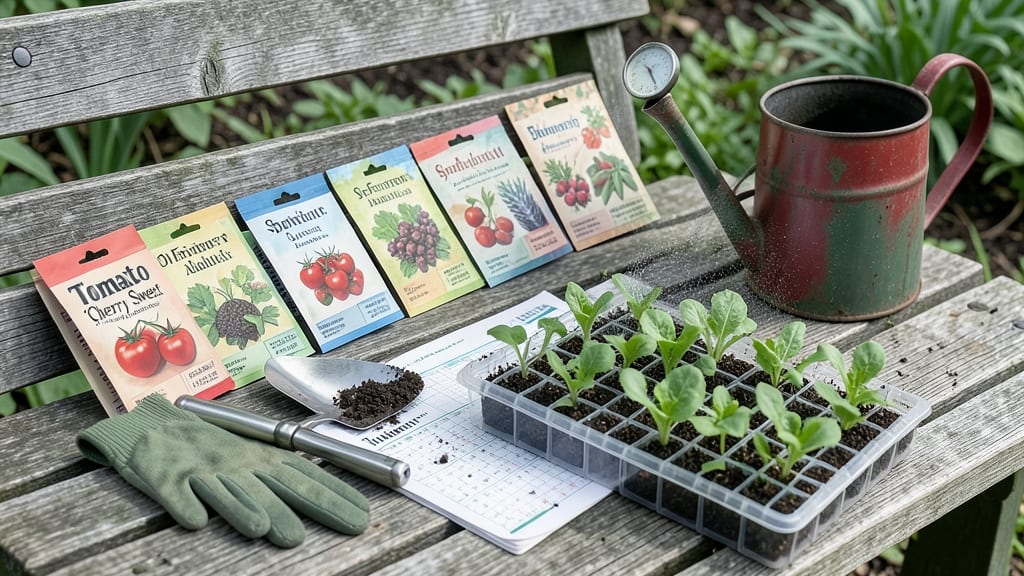
Pro tip: Soil temperature matters more than air temperature. Use a soil thermometer—most seeds need 40–75°F soil to germinate. For instance, peas thrive in 40–50°F, while cucumbers require 60–70°F.
Let’s break down the month-by-month timeline for your zone. In Zones 3–5, start cool-season crops like broccoli or carrots indoors in February for outdoor planting by late April. Meanwhile, Zones 7–10 can sow spinach directly in January—no indoor start needed!
For warm-season crops, the rule shifts: start tomatoes or peppers indoors 6–8 weeks before your last frost. In Zone 6, that’s mid-March indoors, ready for late May planting. In Zone 10, direct-sow beans or squash in January—no frost risk!
Don’t forget succession planting! After harvesting early radishes (ready in 30 days), replant with bush beans or lettuce for a continuous harvest. In Zones 5–8, you can squeeze in a fall crop of kale or turnips by mid-August.
Use a planting calendar to track deadlines. For example, cucumbers need 70–90 days to mature—so in Zone 4, start them indoors by April 15 for a July harvest. Miss the window? Try fast-maturing varieties like ‘Early Girl’ tomatoes (55 days).
In Zones 9–10, where frost is rare, focus on winter crops like broccoli or cabbage planted in September for a holiday harvest. Even in warm climates, soil prep is key—amend beds with compost before planting to improve drainage and fertility.
Finally, watch for local microclimates. A south-facing wall can warm soil by 10°F, letting you plant 2–4 weeks earlier. Use row covers in <
How to adjust planting for your local microclimate (even if you’re not in a ‘typical’ Zone)
Your USDA zone gives you a starting point, but local microclimates can shift planting times by weeks or even months. Urban heat islands, coastal fog, mountain chill, and urban canyons all create unique growing conditions that standard zone maps ignore.
For example, a rooftop garden in Zone 7 might behave like Zone 8 due to heat retention, while a valley floor could experience frost 2 weeks later than surrounding hills.
Instead of relying solely on air temperature, focus on soil temperature—the real predictor of germination success. Most seeds need soil temps between 50°F and 85°F to sprout.
Use a soil thermometer ($10 at garden centers) to check depths of 1-2 inches for cool-season crops and 2-3 inches for warm-season varieties. My tomato seeds in Zone 6 didn’t sprout until soil hit 68°F, even though air temps were already in the 70s.
Here’s how to tweak your planting schedule for unusual conditions:
🌱 Microclimate Adjustments for Planting
Plant 2-3 weeks earlier (heat islands warm soil faster). Use shade cloth for heat-sensitive crops like lettuce.
Delay warm-season crops by 1-2 weeks (cooler soils from ocean breezes). Choose drought-tolerant varieties like Swiss chard.
Extend growing season by 30-60 days—start seeds 6-8 weeks early indoors. Use row covers to protect from late frosts.
Wait until soil reaches 50°F+ for cool crops, 60°F+ for warm crops. Never plant when soil is cold—it causes rot.
For urban gardeners, concrete and asphalt absorb heat, raising soil temps by 5-10°F compared to rural areas. This means you can plant warm-season crops like peppers and cucumbers 2-3 weeks earlier than the zone average.
However, heat-sensitive greens (spinach, arugula) may bolt faster—so opt for shade-tolerant varieties like ‘Black Seeded Simpson’ lettuce or grow them under 30% shade cloth.
Coastal gardeners face the opposite challenge: fog and ocean breezes delay soil warming. In my Zone 8 coastal garden, I planted tomato transplants in late May instead of April because soil temps hovered around 55°F until then.
To compensate, I used black plastic mulch to warm the soil 5°F faster and chose early-maturing varieties like ‘Celebrity’ tomatoes (55 days to harvest).
High-altitude gardeners (above 5,000 feet) have shorter growing seasons and colder soils. To maximize yields, start cool-season crops like broccoli and peas 6-8 weeks indoors under grow lights. For warm-season crops, use row covers or cold frames to extend the season by 4-6 weeks.
My friend in Denver (Zone 5) grows zucchini successfully by planting in late May and covering seedlings until soil temps stabilize.
Pro tip: Track your local frost patterns for 3 years to spot trends. In my area, valley bottoms get frost 10 days later than hilltops—so I plant frost-sensitive crops like basil and squash only in the valley.
Use a frost calendar (free from local Cooperative Extension offices) or apps like PlantNet to log your microclimate’s unique data. The more you know, the more you can fine-tune planting times for your exact spot.