
Planting
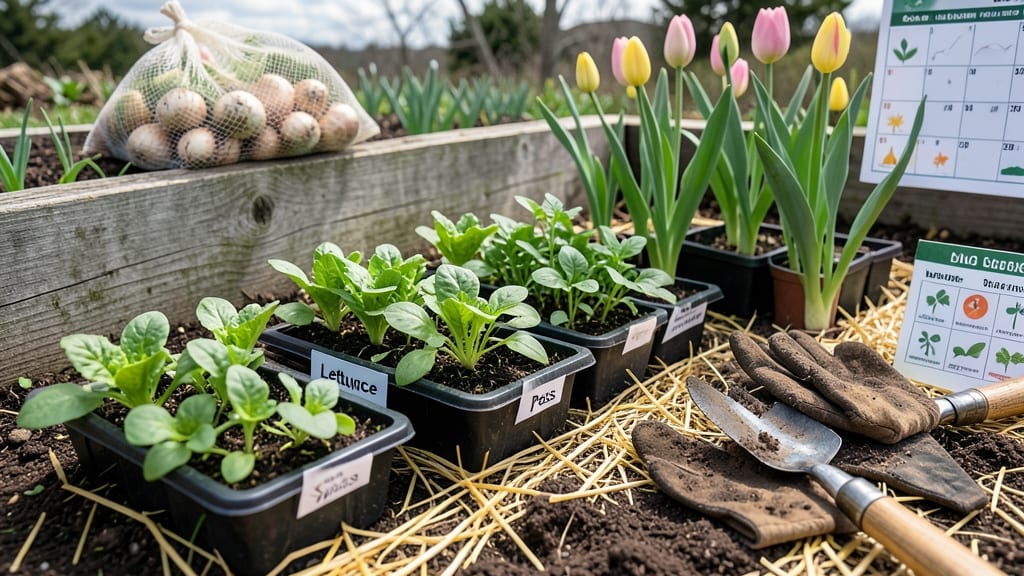
You should plant a garden in Ohio between mid-April and early June, depending on your hardiness zone and the crop type.
Ohio’s unpredictable spring weather can turn your gardening plans into a gamble—unless you know the exact frost-free deadlines for planting by plant type and hardiness zone. Get it wrong, and your seedlings could freeze; time it right, and you’ll harvest like a pro.
Most of Ohio falls in USDA Zones 5b and 6a, where the last frost typically arrives between April 15 and May 10.
Cool-season crops like lettuce and peas can go in as early as late March, while warm-season favorites like tomatoes need to wait until after the last frost date.
In this guide, I’ll break down the best planting windows for your favorite vegetables and flowers, how to adjust for microclimates, and three common mistakes that ruin Ohio gardens every year.
Ohio’s frost-free planting deadlines by hardiness Zone (2024 guide)
Ohio’s hardiness zones 5a-6b create a 14-day difference in average last frost dates—meaning your Cincinnati garden might be ready weeks before Toledo’s. Understanding these zones helps you avoid frost damage to tender seedlings and maximize your harvest window.
Most of Ohio falls in Zone 5b, where last frosts typically arrive between April 15-30, but microclimates can shift deadlines by 1-2 weeks.
Cool-season crops like spinach and peas thrive when planted 4-6 weeks before your last frost, while warm-season tomatoes and peppers need soil temperatures above 55°F—usually after May 15 in most zones.
Fall planting follows the opposite rule: sow kale or radishes 60-90 days before your first frost (typically October 15-November 1).
Zone 5a (northeast Ohio, e.g., Akron) has the latest frosts (May 1-15), while Zone 6b (southwest Ohio, e.g., Chillicothe) sees frost-free soil by April 1-15. Urban areas like Columbus (Zone 5b) average April 22 for last frost, but valleys and low-lying spots can delay this by 10 days or more.
| Zone | Avg Last Frost | Cool-Season Planting Window | Warm-Season Planting Window | Fall Planting Deadline | Notes |
|---|---|---|---|---|---|
| 5a (NE Ohio) | May 1-15 | March 15-April 15 | May 15-June 1 | October 1-November 1 | Latest frosts; use row covers |
| 5b (Most of Ohio) | April 15-30 | March 1-April 1 | April 30-May 15 | October 15-November 15 | Standard deadlines; adjust for microclimates |
| 6a (SW Ohio) | April 1-15 | February 28-March 15 | April 15-May 1 | November 1-15 | Earliest planting; extend fall with cold frames |
| 6b (Far SW Ohio) | March 20-April 1 | February 15-March 1 | March 20-April 15 | November 15-30 | Longest growing season; plant heat-loving crops |
For Zone 5b (covering Columbus, Dayton, and Cincinnati), my early spring planting starts March 1 for hardy greens like spinach and lettuce, while warm-season crops like tomatoes and peppers wait until April 30-May 15.
Use a soil thermometer—warm-season plants need soil at 60°F+ for 2+ weeks before planting. In fall, broccoli and carrots can handle light frosts, but squash must be in the ground by July 15 to mature before frost.
Microclimates matter: South-facing slopes warm up 1-2 weeks earlier than north-facing yards. If you’re in a valley or urban heat island (like Cleveland’s downtown), adjust deadlines 5-7 days later.
Always monitor the National Weather Service’s Ohio frost predictions—unpredictable late-spring frosts (like the 2020 April freeze) can wipe out seedlings overnight.
Pro tip: Succession planting every 2 weeks after your last frost keeps your harvest continuous. For example, sow bush beans on May 1, May 15, and June 1 in Zone 5b to enjoy them through September.
Similarly, fall lettuce planted August 1, August 15, and September 1 gives you three harvest waves before winter.
Don’t ignore fall planting—it’s when cool-season crops shine. In Zone 5b, kale and radishes
Best planting times for Ohio’s top 10 vegetables (and how to adjust for microclimates)
Ohio’s frost-free dates vary by microclimate, but most gardeners in Zone 5b-6a can follow these general rules. For high-altitude areas like Youngstown, delay planting by 1-2 weeks to avoid late frosts. Meanwhile, urban gardens in Cincinnati’s sheltered spots can start 1 week earlier than rural areas.
Warm-season crops like tomatoes and peppers need soil temperatures above 60°F to thrive. In Ohio, this typically means waiting until mid-May in most regions, but late May in colder microclimates.
Cool-season crops like lettuce and spinach can handle light frosts, so they’re safe to plant as early as late March.
- 1 Tomatoes & Peppers: Plant after last frost (mid-May for most Ohio). Too late if soil stays cold past June 1.
- 2 Beans & Peas: Sow 2 weeks after last frost (late April-early May). Never plant before soil warms—cold soil causes rot.
- 3 Lettuce & Spinach: Start late March (cool-season). Too late if planted after July—bolts quickly in heat.
- 4 Carrots & Radishes: Sow early spring (March) or late summer (August) for fall harvest. Too late if soil hardens before maturity.
- 5 Cucumbers & Squash: Wait until soil hits 65°F (late May). Too late if planted after July 15—vines struggle in fall heat.
- 6 Onions & Garlic: Plant early spring (March) or fall (September). Too late if started after April 15 for spring harvests.
- 7 Broccoli & Cabbage: Transplant 4-6 weeks before first frost (late July for fall crops). Too late if planted after August 15.
Pro Tip: Use row covers to extend planting windows by 2-3 weeks in spring/fall.
For urban gardeners in cities like Columbus, heat islands can push planting dates 1 week earlier than rural areas. Test soil temperature with a thermometer—warm-season crops need 60°F+ soil, while cool-season crops tolerate 40°F+.
In high-altitude zones like Youngstown, add 10-14 days to all deadlines to account for cooler microclimates.
If you miss the optimal window, don’t panic! Succession planting (e.g., sowing lettuce every 2 weeks) ensures continuous harvests. For warm-season crops planted late, use black plastic mulch to warm soil faster. Always check your local Cooperative Extension for 2024 frost updates—Ohio’s weather is unpredictable! 🌱
Remember: Cool-season crops (like kale or peas) can handle light frosts, while warm-season crops (like eggplants) will die if exposed to temps below 50°F. Adjust your schedule based on your yard’s sun exposure—south-facing beds warm up faster than north-facing ones. ☀️