
Planting
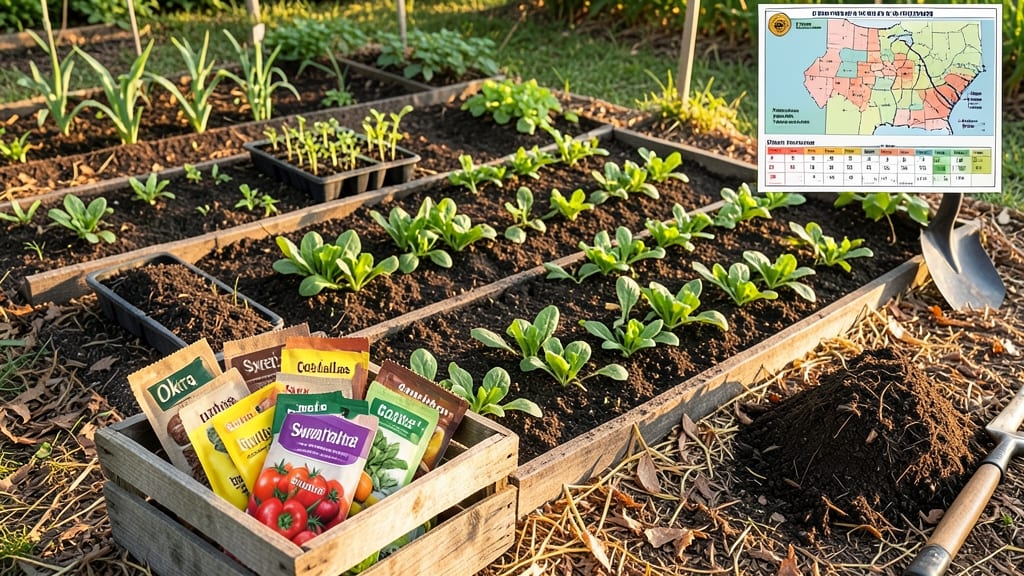
To plant a vegetable garden in Mississippi, aim for February–March for cool-season crops and July–August for heat-loving varieties — timing this right means the difference between a thriving harvest and wasted seeds.
Mississippi’s warm climate means your 🌱 vegetable garden can grow nearly year-round, but frost still sneaks in. In zones 8a–9a, last frosts typically hit mid-March, while first frosts arrive in November. Planting too early risks damage, while waiting too long cuts yields short.
Cool-season crops like lettuce and broccoli need to go in 4–6 weeks before the last frost, while tomatoes and peppers thrive only after soil warms to 60°F+. Below, I break down the exact windows by crop, plus how to stretch seasons with row covers and succession planting.
Skip the guesswork: Learn the zone-specific schedule that turns your Mississippi garden into a year-round producer, from spring greens to fall squash.
Mississippi’s last frost dates by region: when to plant cool-season vegetables
Mississippi’s USDA zones 7a-8b create unique planting windows for cool-season vegetables like broccoli, cabbage, lettuce, and spinach.
The last frost dates vary dramatically from the Delta region (Zone 8a) to the Northern hills (Zone 7a), with some areas seeing frost as late as March 15 and others as early as February 15. Understanding these dates ensures your leafy greens survive and thrive.
In Northern Mississippi (Zones 7a-7b), where winters linger longer, your cool-season planting window opens around February 15 and closes by March 15. This gives you just 6 weeks to get seeds in the ground before the risk of frost diminishes.
Meanwhile, Southern Mississippi (Zones 8a-8b) enjoys a 4-week head start, with planting possible as early as January 20 and lasting until March 30.
Row covers are your best friend for extending these windows. In Zone 7a, they can push your spinach harvest into early April, while in Zone 8b, they allow cabbage to mature by late March instead of waiting until April. Always remove covers during the day to prevent overheating and check for pest activity like cabbage moths.
Here’s how to use last frost dates to plan your cool-season vegetable garden:
For Zone 7a gardeners, I recommend starting spinach and kale indoors by January 15 to transplant outdoors by February 20. This head start ensures they’re large enough to handle late-March frosts.
In Zone 8b, you can even plant radishes as early as December 15 for a January harvest—just cover them with frost cloth on cold nights.
Soil temperature matters just as much as air temperature. Cool-season crops like broccoli and cabbage need soil temps above 40°F to germinate. Use a soil thermometer to check before planting. If temps are too cold, wait a few days or use black plastic mulch to warm the soil faster.
Don’t forget about succession planting! In Zone 8a, you can plant lettuce every 2 weeks from January through March for continuous harvests.
Meanwhile, in Zone 7b, focus on hardier crops like collards, which can tolerate light frosts and even improve in flavor after a 28°F night.
If you’re unsure about your exact last frost date, check the Mississippi State University Extension frost maps or ask local gardeners. They’ve likely tested their own microclimates and can share invaluable insights. For example, gardens near lakes or rivers often experience later frosts than inland areas.
Pro tip: Mark your planting calendar with these dates and add 3-4 weeks for slower-growing varieties like cabbage. This ensures your cool-season veggies mature before summer heat sets in. With the right timing, you’ll enjoy fresh greens from February through May—no
Heat-loving crops: best planting times for tomatoes, peppers, and okra in Mississippi
Mississippi’s long, hot summers make it perfect for growing tomatoes, peppers, and okra—but timing is critical. These crops thrive when soil temperatures stay above 60°F (15°C), and planting too early can lead to stunted growth or bolting.
For most of Mississippi (USDA Zones 7a-9a), the ideal window starts 2-3 weeks after your last frost date, typically mid-April in the north and early March in the south.
In northern Mississippi, where frost lingers longer, wait until May 1st to transplant seedlings. Southern regions can start as early as March 15th, but avoid planting before soil warms—cold soil delays germination and invites disease.
A soil thermometer is your best tool to confirm readiness (70°F/21°C for tomatoes, 75°F/24°C for peppers and okra).
- 🌱 Tomatoes: Transplant seedlings 2-3 weeks after last frost (mid-April north, early March south). Use cage supports early to avoid stem damage. Varieties like Celebrity or Better Boy thrive in Mississippi’s heat.
- 🌶️ Peppers: Start indoors 8-10 weeks before last frost (January-February) or buy transplants. Direct-sow after soil hits 75°F (24°C). Jalapeños and Bell Peppers love Mississippi’s humidity but need well-draining soil to prevent rot.
- 🌿 Okra: Direct-sow after May 1st when nights stay above 65°F (18°C). Okra handles heat better than tomatoes—plant in full sun and water deeply 2-3 times weekly during dry spells.
- ⚠️ Avoid Bolting: Cool spring nights can trigger tomato bolting. Use row covers or plant in black plastic mulch to warm soil faster. Peppers hate cold soil—wait until night temps stay above 55°F (13°C).
- 🌡️ Late-Season Blights: By August, fusarium wilt and early blight threaten tomatoes. Space plants 18-24 inches apart, prune lower leaves, and rotate crops yearly to prevent buildup.
For a second crop, succession plant okra in June-July—it tolerates heat better than tomatoes and peppers. In southern Mississippi, you can even squeeze in a fall planting of fast-maturing varieties like Early Girl tomatoes in August, harvesting before the first frost (mid-November).
Always harden off seedlings for 7-10 days before transplanting to reduce shock.
Mississippi’s humidity is a double-edged sword: it speeds growth but also invites pests like aphids and hornworms. Use neem oil or row covers for organic protection. Mulch with straw to retain moisture and suppress weeds—critical during the dog days of summer when water evaporates quickly.
Pro tip: Test your soil in early spring (aim for pH 6.0-6.8). Tomatoes and peppers need phosphorus-rich compost at planting, while okra thrives in poor soil but benefits from a balanced 10-10-10 fertilizer mid-season.
In northern Mississippi, start seeds indoors in February for an early jump on the growing season.
With the right timing and care, your Mississippi garden can produce bush-sized tomatoes, spicy peppers, and foot-long okra pods all summer long. Just remember: soil temperature > air temperature when scheduling your plantings! 🌱☀️