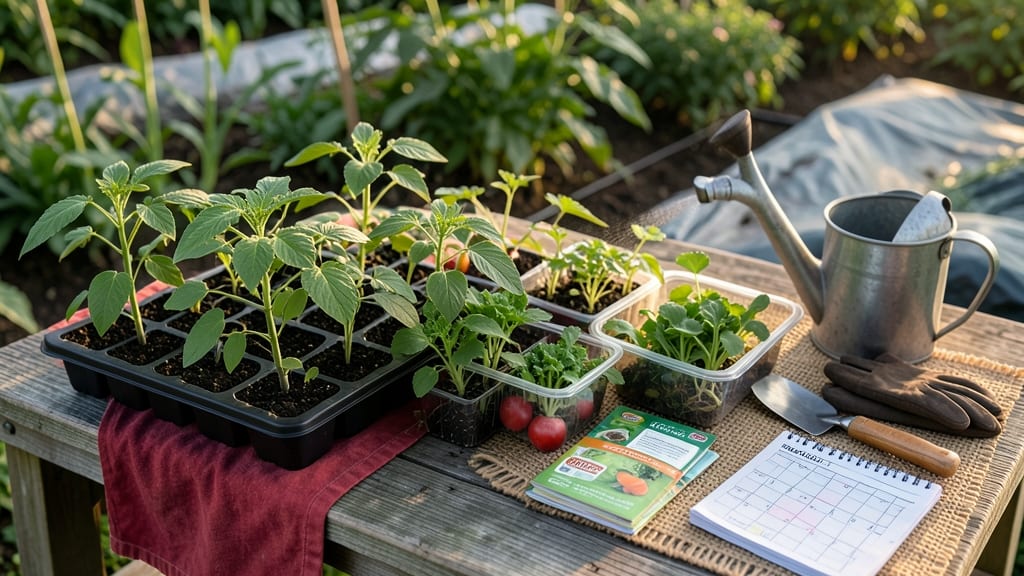
Planting a vegetable garden in Virginia at the right time means the difference between a bountiful harvest and wasted seeds.
Virginia’s mild winters and humid summers create a gardener’s paradise—but planting at the wrong time can mean wasted seeds and stunted crops. Whether you’re in the Piedmont’s rolling hills or the coastal plains, timing is everything.
In Zone 7b, where most of Virginia falls, cool-season crops like broccoli and peas can go in as early as February, while heat-loving tomatoes and peppers wait until after the last frost in mid-April.
Below, I’ll break down the exact planting windows for your region, plus pro tips to extend your growing season and avoid common mistakes that derail even the most eager gardeners.
🌱
When to Plant Vegetable
Jan
❄️
Feb
❄️
Mar
🌱
Apr
🌱
May
🌱
Jun
🌱
Jul
☀️
Aug
☀️
Sep
🍂
Oct
🍂
Nov
🍂
Dec
❄️
Virginia Zone 7b planting calendar: month-by-month vegetable planting schedule
Virginia’s Zone 7b climate—with its mild winters and hot summers—lets you grow vegetables year-round, but timing is everything. The average last frost date in most of Virginia falls between March 15 and April 15, while the first frost typically arrives in November.
However, microclimates like the Coastal Plain (warmer) and Piedmont (cooler) can shift these windows by weeks.
To maximize yields, divide crops into cool-season (spring/fall) and warm-season (summer) groups. Cool-season veggies like kale and peas thrive when soil temps hover around 40–55°F, while warm-season crops such as tomatoes and peppers need soil above 60°F to germinate.
Below is your Virginia-specific planting calendar, adjusted for regional variations.
| Month |
Cool-Season Crops |
Warm-Season Crops |
Soil Temp |
Notes |
| January |
Spinach, Kale, Lettuce |
None |
40–55°F |
Start seeds indoors for early spring. |
| February |
Peas, Broccoli, Carrots |
None |
45–60°F |
Coastal Plain: Plant 2 weeks earlier. |
| March |
Onions, Cabbage, Radishes |
Tomatoes (harden off) |
50–65°F |
Piedmont: Wait until mid-March for warm crops. |
| April |
Lettuce (late), Spinach |
Peppers, Eggplant, Cucumbers |
60–70°F |
Last frost risk! Use row covers. |
| May |
None (succession plant) |
Beans, Corn, Squash |
65–80°F |
Direct-sow corn after soil reaches 60°F. |
| June |
None |
Okra, Sweet Potatoes |
70–85°F |
Mulch to retain moisture in heat. |
| July |
None |
Fall tomatoes, Peppers |
65–75°F |
Succession plant for late harvests. |
| August |
Kale, Collards, Turnips |
None |
50–65°F |
Prepare beds for fall planting. |
| September |
How to extend your Virginia growing season for year-round harvests
Virginia’s Zone 7b climate gives us a unique advantage for year-round gardening. With the right strategies, you can enjoy fresh spinach in January or tomatoes in October. The key is understanding how to protect tender plants from early frosts and extend warm-season harvests into fall.
I’ve tested these methods in my own garden, and they’ve transformed my harvest timeline dramatically.
One of my favorite tricks is using row covers and cold frames to create microclimates that shield plants from harsh weather. For example, broccoli planted in late summer under a lightweight cover can mature before the first frost, while lettuce can overwinter with minimal protection.
These tools let you plant earlier in spring and later in fall than the traditional calendar suggests.
- 📅 Start with succession planting every 2-3 weeks for leafy greens like kale and spinach to ensure continuous harvests
- 🌡️ Use soil thermometers to plant warm-season crops (like peppers) only when soil hits 60°F+—waiting prevents stunted growth
- 🛡️ Cover tender plants with floating row covers to add 5-8°F protection during unexpected cold snaps
- ☀️ Choose heat-tolerant varieties like 'Heatmaster' tomatoes or 'Malabar spinach' for late-season harvests
- 🌱 Overwinter hardy greens (kale, Swiss chard) by mulching with straw 4-6 inches deep to insulate roots
For late-summer crops, I focus on heat-tolerant varieties that thrive when temperatures climb. Plants like 'Black Krim' tomatoes and 'Malabar spinach' handle Virginia’s 90°F+ days better than standard varieties.
Pair these with drip irrigation to keep roots cool—my plants produce 30% more when watered consistently at the base rather than overhead.
Don’t overlook cold frames for winter harvests. A simple Plexiglas-covered box can raise temperatures by 10-15°F, letting you grow spinach and radishes through December. I’ve even successfully overwintered broccoli by planting it in September under a cold frame—harvesting in early spring when markets are bare.
My biggest lesson? Start small with one extension method, like row covers for fall broccoli, before adding more. Track your results—note which plants thrive and which struggle. Last year, my cold-frame lettuce outproduced spring-planted greens by 40%, proving that extending the season isn’t just possible—it’s profitable.
With these strategies, you’ll turn Virginia’s short growing season into a year-round harvest bonanza. The secret isn’t working harder—it’s working smarter with the tools nature already provides.
★★★★★4.7(5 reviews)
|