
Planting
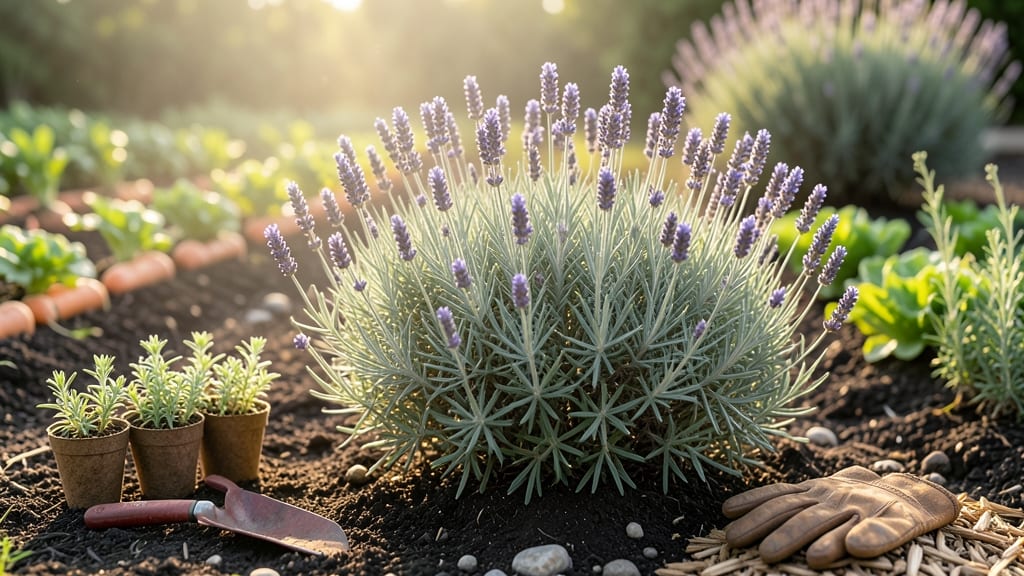
To plant lavender in a vegetable garden, choose the sunniest spot possible, use fast-draining soil with added sand or gravel, and space plants 18-24 inches apart to prevent overcrowding and maintain strong fragrance. Keep it away from moisture-retentive areas.
Lavender loves bright, direct sunlight—think at least 6-8 hours daily—because it boosts oil production for those signature floral notes. 🌞 The key to happy lavender is soil that drains like a sieve: mix in coarse sand or small gravel if your garden holds moisture, since soggy roots lead to rot.
Unlike most veggies, lavender prefers slightly alkaline soil (pH 7.0-8.0), so a sprinkle of crushed eggshells or lime can help if your soil leans acidic. I’ve found that planting lavender along garden edges or near pathways creates a natural fragrance border while keeping it separate from thirsty vegetables.
Another pro tip: lavender’s strong scent deters pests like aphids and moths, making it a perfect companion for nearby herbs or brassicas. Just avoid planting it too close to shallow-rooted veggies like lettuce, as its deep taproot can compete for nutrients.
The right placement turns lavender from a decorative plant into a functional garden helper!
💡 In This Article
- Lavender’s Ideal Sunlight and Soil Conditions
- Strategic Lavender Placement in Garden Layouts
Lavender’s ideal sunlight and soil conditions
Lavender’s love for full sun isn’t just preference—it’s survival. These Mediterranean natives evolved to thrive under intense sunlight (6-8+ hours daily), which triggers higher photosynthesis rates and boosts essential oil production.
The more sun lavender gets, the stronger its fragrance and the more vibrant its purple blooms. 🌿 Without sufficient light, stems grow leggy, flowers become sparse, and the plant’s signature aroma fades dramatically.
This is why even partial shade (like under fruit trees) can turn lavender into a weak, floppy shadow of its sun-loving self.
The soil story gets even more interesting. Lavender’s roots demand exceptional drainage—think of it as the opposite of a moisture-loving vegetable like spinach. Native Mediterranean soils are naturally rocky and sandy, so mimicking this texture is key.
Amend heavy garden soil with 50% coarse sand or small gravel by volume, or plant lavender in raised beds with perlite. The ideal soil mix should feel almost gritty when dry, allowing water to flow through rather than pool.
Even a slight waterlogged spell can trigger root rot within days, so test your soil’s drainage by digging a hole, filling it with water, and timing how long it takes to drain—lavender needs this to happen in under 30 minutes.
Here’s where lavender diverges sharply from most vegetables: it prefers alkaline soil (pH 7.0-8.0), while many garden crops (like tomatoes or peppers) thrive in slightly acidic conditions.
You can boost pH by adding crushed eggshells or agricultural lime (about 1 pound per 100 square feet), but avoid overdoing it—lavender’s roots are sensitive to sudden chemical shifts.
The alkaline environment helps prevent fungal diseases that plague lavender in acidic soils, making it another layer of protection against common garden pests.
One common mistake gardeners make is assuming lavender’s drought tolerance means it can handle any soil. While it’s true lavender stores water in its woody stems, poor drainage is its kryptonite. The plant’s shallow root system spreads widely but doesn’t penetrate deeply, so water must escape quickly.
This is why container growing works so well—pots with drainage holes and sandy potting mix create the perfect lavender habitat. Just remember: lavender’s drought resistance kicks in after establishment, not during germination, so keep new plants consistently moist (but never soggy) for their first 6-8 weeks.
For sensory contrast, imagine this: a lavender plant in heavy clay soil will look wilted and sad, with pale stems and few blooms, while the same plant in well-amended soil stands tall, releasing that signature citrusy, herbal aroma when brushed against.
The difference isn’t just visual—it’s olfactory and structural. Proper conditions turn lavender from a delicate annual into a hardy perennial that returns year after year with minimal care. 🌸