
Planting
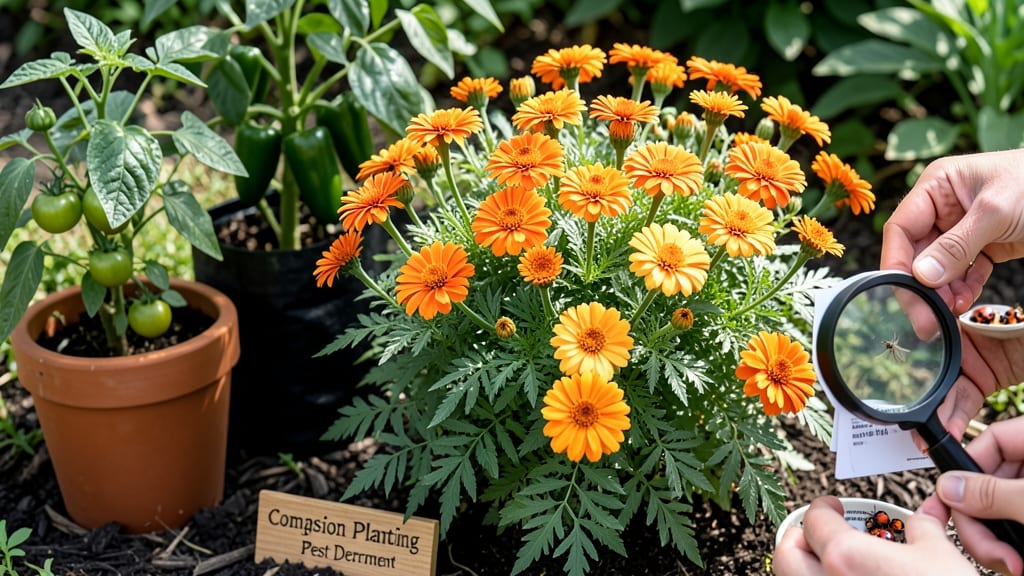
People plant marigolds in their gardens because these vibrant flowers naturally repel pests like nematodes, aphids, and mosquitoes while attracting beneficial insects such as ladybugs and hoverflies. Their strong scent and chemical compounds make them a powerful organic defense for vegetables and ornamentals alike.
Marigolds earn their spot in every garden thanks to their dual pest-fighting superpowers. 🌼 The bright orange and yellow blooms aren't just pretty—they contain natural compounds that disrupt harmful insects' life cycles.
For example, French marigolds release a chemical called alpha-terthienyl that specifically targets soil-dwelling nematodes, while their scent confuses flying pests like whiteflies. Even better, they act as a magnet for predator insects that keep your garden ecosystem balanced.
Beyond pest control, marigolds improve soil health by suppressing weeds and adding organic matter when tilled in. Their versatility makes them perfect for both vegetable gardens and flower beds—just plant them strategically around vulnerable plants like tomatoes or roses.
The key is consistency: marigolds need full sun and regular watering to maintain their pest-deterrent strength throughout the growing season.
💡 In This Article
- How Marigolds Naturally Deter Garden Pests
- Best Marigold Varieties for Pest Control in Gardens
How marigolds naturally deter garden pests
Marigolds deploy their pest-repelling magic through a chemical arsenal hidden in their leaves and roots. The star compound is alpha-terthienyl, a volatile oil found in French marigolds that specifically targets nematodes—microscopic worms that devastate plant roots.
These compounds disrupt the nematodes' feeding mechanisms, reducing populations by up to 70% when planted nearby. The scent alone works wonders too: marigolds release limonene and ocimene, citrusy oils that mask plant odors, confusing pests like aphids and whiteflies that rely on scent trails to find hosts.
What makes marigolds uniquely effective is their multi-sensory disruption. For example, when you crush marigold leaves, the released oils create a strong, spicy aroma that repels mosquitoes and beetles.
This scent also interferes with insect communication—some studies show it disrupts pheromone trails that insects use to locate mates or food sources. 🌼 The physical presence of marigolds matters too: their dense foliage creates physical barriers that deter crawling pests like slugs and cutworms from reaching vulnerable plants.
The science gets even more fascinating when you consider marigolds' root secretions. French marigolds release compounds that alter soil chemistry, making it less hospitable for nematodes while promoting beneficial soil microbes.
This is why they're often called "living mulch"—their roots continuously work to improve soil health while keeping pests at bay. The effect is particularly noticeable in vegetable gardens where nematodes are a persistent problem, like with tomatoes or peppers.
Not all marigolds repel pests equally—French marigolds (Tagetes patula) are the nematode specialists, while African marigolds (Tagetes erecta) excel at deterring flying insects. The key difference lies in their chemical profiles: French types contain higher concentrations of alpha-terthienyl, while African varieties produce more limonene.
This is why gardeners often mix varieties for comprehensive pest control. For instance, planting French marigolds near root crops and African types around flowering plants creates a layered defense system.
Temperature plays a surprising role in marigold effectiveness. These plants thrive in warm climates (60-90°F), and their pest-repelling compounds become most potent when fully mature—typically after 6-8 weeks of growth.
This is why early spring planting gives them time to establish before pest seasons peak. 💫 The compounds degrade in cold weather, so in cooler climates, gardeners often use marigolds as annuals, replanting each season for continuous protection.
What most gardeners don't realize is that marigolds also work as a "trap crop"—they attract pests away from more valuable plants. For example, Mexican marigolds (Tagetes lucida) are particularly effective at luring whiteflies, which then get consumed by the ladybugs and lacewings that marigolds attract.
This creates a natural pest control cycle that requires no chemical intervention. The visual contrast of bright marigold blooms against green foliage also makes it easier for gardeners to spot and remove pests manually.