
Pests
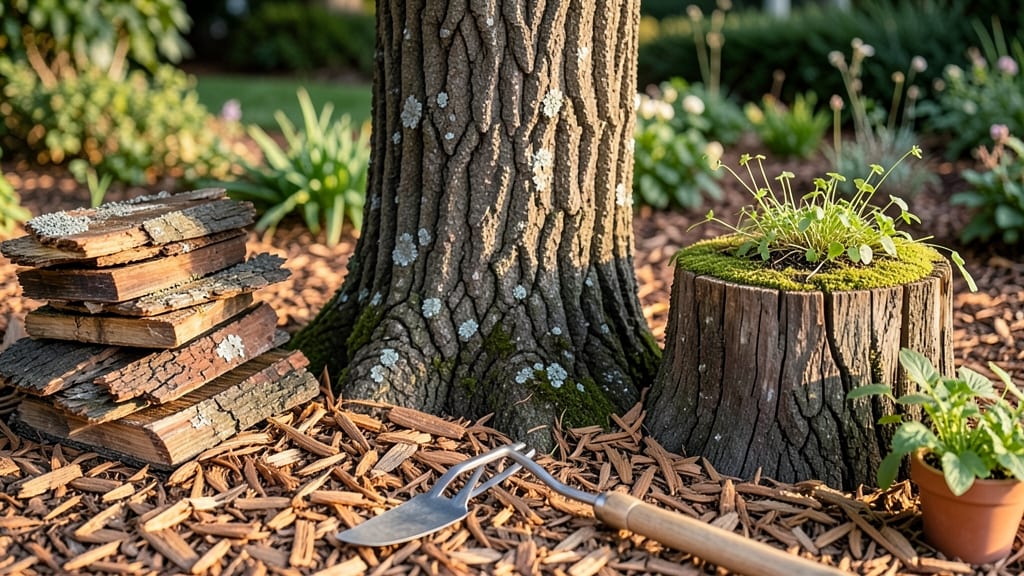
Removing bark from your garden means clearing it with a rake or shovel, then composting it or using it as mulch elsewhere to stop soil nutrient loss and weed growth. Never burn it to protect the environment.
When bark piles up in your garden, it’s not just an eyesore—it can actually strangle your plants by stealing nitrogen from the soil and creating a perfect breeding ground for weeds. 🌱 The problem starts when bark breaks down too slowly, forming a thick mat that blocks water and air from reaching plant roots.
I’ve seen gardens where bark buildup led to stunted growth in just one season, so clearing it fast is key to keeping your soil healthy and your plants thriving.
Instead of tossing it, you can turn that bark into a resource. Composting is the easiest way to recycle it—just mix it with green materials like grass clippings to speed up decomposition.
For a quick fix, spread it along garden paths or use it as a top layer in raised beds where you don’t want weeds. My go-to trick? Blend it with fresh straw for a slow-release mulch that keeps moisture in without smothering plants.
💡 In This Article
- Why Bark Mulch Becomes a Problem in Gardens
- Best Ways to Repurpose Garden Bark Naturally
Why bark mulch becomes a problem in gardens
Bark mulch starts as a helpful soil amendment, but over time, it transforms into a garden nuisance due to its slow decomposition rate. Unlike fresh organic matter, bark contains high levels of lignin—a complex polymer that resists breaking down.
This means it can take 3-5 years for coarse bark to fully decompose, during which it forms a thick, insulating layer that blocks sunlight and air from reaching the soil. 🌱
The real damage happens when bark steals nutrients from your plants. As it decomposes, it releases carbon but consumes nitrogen—a critical nutrient for plant growth. This creates a "nitrogen sink," where your soil loses valuable nutrients instead of gaining them.
Studies show that bark mulch can reduce available nitrogen by up to 30% in the top 6 inches of soil, which is where most plant roots thrive.
Additionally, the acidic nature of many bark types (especially pine) can lower soil pH over time, making it harder for plants to absorb essential minerals like phosphorus and potassium.
Weeds love thick bark layers because they create a dark, moist environment that mimics the conditions of a forest floor—ideal for weed seeds to germinate and take root. The bark also traps moisture against the soil, creating perfect conditions for fungal growth and root rot in sensitive plants.
I’ve seen gardens where bark buildup led to a 50% increase in weed pressure within a single growing season, making manual removal a constant battle.
Environmentally, improper disposal of garden bark worsens the problem. Burning bark releases harmful chemicals like polycyclic aromatic hydrocarbons (PAHs), which can contaminate soil and water. These compounds are linked to respiratory issues and long-term soil degradation.
Even when composted improperly, bark can create an imbalanced compost pile that’s too carbon-rich, leading to slow decomposition and potential odor problems. 🌍
What makes this worse is that bark doesn’t break down uniformly. Fine bark decomposes faster but can still form a dense mat, while larger chunks create air pockets that trap moisture and encourage pests like slugs and earwigs.
The texture contrast alone makes it harder for beneficial soil organisms to move through the layer, further disrupting your garden’s ecosystem.
Here’s the kicker: Many gardeners don’t realize their bark mulch is doing more harm than good until it’s too late. The visual appeal of fresh bark can mask its long-term effects on soil health and plant growth.
That’s why understanding these mechanisms helps you make smarter decisions about when and how to use (or remove) bark in your garden.