
Advice
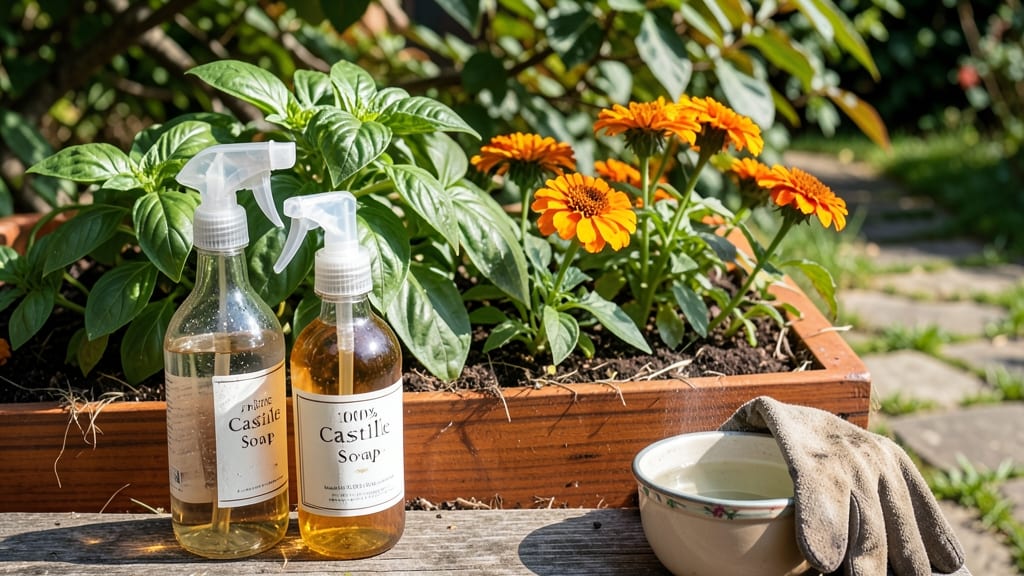
Using Castile soap for garden creates an effective organic pest control solution that targets aphids, mites, and soft-bodied insects by breaking down their protective layers. Always dilute properly and spot-test first to avoid plant damage.
This plant-safe solution works because the soap's fatty acid molecules penetrate pests' waxy outer layers, disrupting their cellular functions. 🌿 The key is dilution—too much can harm plants, while the right concentration (1-2 tablespoons per quart of water) delivers powerful results without toxicity.
I've found it especially effective when applied in the early morning, giving the soap time to work before the heat of the day evaporates it.
For best results, combine it with neem oil or insecticidal soap for a stronger defense against resistant pests. Always apply to the undersides of leaves where many insects hide, and reapply every 5-7 days or after rain.
💡 In This Article
- How Castile Soap Kills Garden Pests
- Best Ways to Use Castile Soap in Your Garden
How Castile soap kills garden pests
Castile soap works as a natural insecticide because its fatty acid molecules—primarily oleic and linoleic acids—disrupt the waxy cuticle layer that protects soft-bodied insects like aphids and mites. This layer acts as their skin, regulating moisture and protecting against environmental threats.
When diluted Castile soap makes contact, the soap molecules penetrate this protective barrier, causing dehydration and cellular damage. Unlike hard-bodied insects (such as beetles), these pests lack thick exoskeletons, making them particularly vulnerable to soap's emulsifying action. 🔥
The key to effectiveness lies in the soap's concentration and the size of its molecules. Castile soap's natural saponins (soap-like compounds) create micelles—tiny spherical structures that encapsulate oils and fats.
When sprayed, these micelles latch onto the pests' waxy coating, breaking it down and allowing water to seep into their bodies, leading to osmotic shock. A typical dilution of 1-2 tablespoons per quart of water provides enough fatty acids to disrupt pests without overwhelming plant tissues.
Too high a concentration, however, can damage plant leaves by stripping their protective cuticle as well.
This mechanism explains why Castile soap is selective—it targets pests with permeable outer layers while sparing plants with thicker, waxier surfaces. For example, aphids have a delicate, almost translucent body that absorbs the soap solution readily, while a beetle's hard shell repels it.
The soap doesn't kill pests instantly; instead, it weakens them over 24-48 hours, giving plants time to recover and reducing the risk of secondary infections from stressed insects. 🌱
Temperature and humidity also influence how well Castile soap works. In dry conditions, the soap's effectiveness drops because the pests' waxy layers become more resilient. Conversely, in humid environments, the soap's fatty acids remain active longer.
That’s why early morning applications (when dew is present) often yield better results—the moisture helps the soap adhere to both pests and plant surfaces. Always avoid applying when temperatures exceed 85°F, as heat can cause the soap to evaporate too quickly, reducing its contact time with pests.
Another critical factor is the pH balance. Castile soap typically has a neutral to slightly alkaline pH (around 7-9), which is gentle enough for most plants but still disruptive to insect physiology.
However, acidic plants like blueberries or azaleas may react poorly to even diluted soap, so a spot test on a single leaf is essential before full application. The soap's mild alkalinity also helps break down some fungal spores on leaves, adding a secondary benefit to its pest-control properties. 💫
For maximum impact, combine Castile soap with 1 teaspoon of vegetable oil per quart. The oil enhances the soap's ability to stick to pests and leaves, increasing both its residual effect and penetration.
This blend is particularly effective against mites, which thrive in dry conditions and are often missed by water-based sprays alone. The oil also helps prevent the soap from being washed away by rain within the first few hours of application.