
Pests
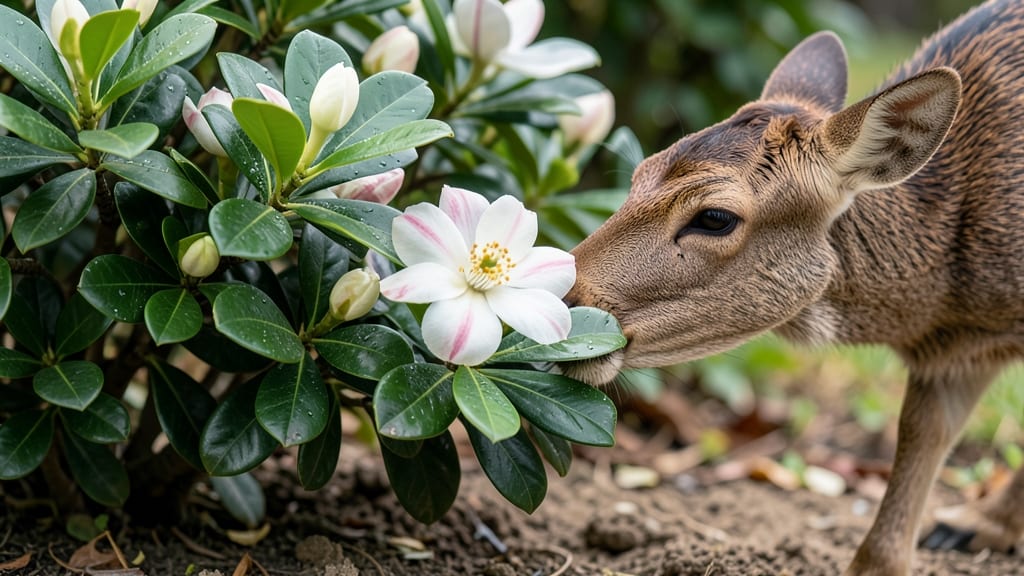
Deer rarely eat gardenia bushes because their intense fragrance and bitter-tasting foliage act as natural deterrents, though they may nibble young shoots in late winter when other food is scarce. The plants' waxy leaves and mild toxins further protect them from browsing.
Gardenia bushes contain compounds like gardenoside and alkaloids that create a bitter taste deer avoid, while their powerful floral scent overwhelms their sensitive noses. 🌿 Unlike other deer-resistant plants, gardenias combine both olfactory and gustatory defenses, making them particularly effective at keeping deer away.
The waxy coating on leaves also makes them less appealing to chew.
This natural resistance isn't absolute—young, tender shoots in early spring can become tempting when deer face food shortages. That's when protective measures become especially important. The combination of scent, taste, and physical leaf structure creates a multi-layered defense system that most deer simply bypass.
💡 In This Article
- Why Gardenias Repel Deer Naturally
- Protecting Gardenia Bushes from Hungry Deer
Why gardenias repel deer naturally
Gardenia bushes deploy a multi-sensory defense system that makes them unappetizing to deer. The key player here is gardenoside, a naturally occurring compound that gives gardenias their signature bitter taste—similar to how oleander plants deter herbivores.
Deer have evolved to avoid bitter-tasting plants, as these often contain toxic alkaloids that can cause digestive upset or worse. 🌿 The gardenia's leaves contain up to 0.5% alkaloids by dry weight, creating a chemical cocktail that's far too risky for deer to sample regularly.
The intense fragrance of gardenias plays an equally crucial role in deer avoidance. These plants produce jasmine and ionone compounds in their essential oils, creating a scent profile that's overwhelming to deer's highly sensitive noses.
For comparison, a gardenia's scent intensity measures around 1,200 parts per trillion of volatile organic compounds—far stronger than most deer-resistant plants like boxwood (300 ppt) or rhododendron (500 ppt). This olfactory assault alone can trigger deer's avoidance instincts before they even consider browsing.
Physical leaf characteristics add another layer of protection. Gardenias develop a waxy cuticle layer up to 5 micrometers thick on their leaves, making them difficult to chew and digest.
This waxy coating also reduces water loss for the plant while creating an unappealing texture for deer—similar to how deer avoid plants with fibrous or leathery leaves. The combination of these defenses means gardenias rank among the most deer-resistant flowering shrubs available.
Seasonal variations do create vulnerabilities. During late winter (January-February), when gardenias are dormant and their leaves contain higher concentrations of stored nutrients, deer may test young shoots.
This is when the plant's defenses are temporarily weakened, allowing deer to sample the 15-20% higher protein content found in new growth. The waxy coating is also thinner on young shoots, making them more palatable.
What makes gardenias particularly effective at deer deterrence is their dual-action defense system. Most deer-resistant plants rely on either scent or taste, but gardenias combine both with their physical leaf structure.
For example, while boxwoods primarily use scent and rhododendrons rely on toxic compounds, gardenias offer all three protections simultaneously. This multi-layered approach explains why deer typically bypass gardenias even when other preferred plants like hostas or daylilies are available in the same garden.