
Light Requirements
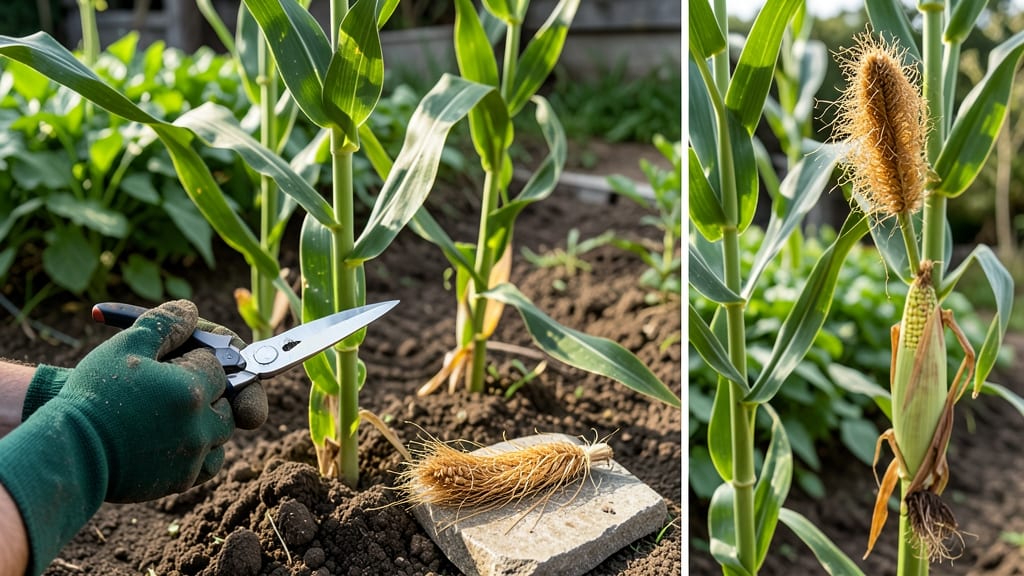
You only need to detassel corn in your garden if you're saving seeds or growing hybrid varieties, since it stops unwanted cross-pollination between different corn types. For regular eating corn or standard harvests, detasseling is optional unless you're worried about mixing varieties.
Detasseling becomes essential when you're working with seed-saving projects or maintaining specific hybrid traits, as it ensures genetic purity.
Without it, pollen from one variety can fertilize another, altering the intended characteristics of your corn. 🌽 For most home gardeners growing corn for fresh eating, this step is unnecessary—unless you're planting multiple varieties close together. Even then, proper spacing can reduce cross-pollination risks significantly.
What many gardeners don't realize is that detasseling also impacts yield in certain cases. Removing the tassels (the male flowers) means the plant must rely on pollen from neighboring plants, which can sometimes reduce overall production.
This makes detasseling a trade-off between seed quality and quantity for those focused on seed production rather than harvest volume.
💡 In This Article
- What Detasseling Corn Actually Does to Your Harvest
- When to Skip Detasseling for Home Garden Corn
What detasseling corn actually does to your harvest
Detasseling involves removing the tassels—the male flower clusters—from corn plants to prevent self-pollination or cross-pollination between varieties. These tassels produce pollen that carries genetic material, and when left intact, they can fertilize silks on neighboring plants, altering the intended genetic makeup.
For seed-saving, this is critical because hybrid corn (like Golden Bantam or Country Gentleman) relies on precise genetic combinations to maintain traits like disease resistance or yield potential.
The process works because corn is monoecious, meaning each plant has separate male (tassels) and female (silks) flowers. When you remove tassels, pollen must come from outside sources, giving you control over which plants contribute to fertilization.
This is especially important for open-pollinated varieties, where gardeners want to preserve the plant’s true-to-type characteristics. Without detasseling, pollen from a sweet corn variety could fertilize a flint corn meant for seed, resulting in off-type kernels that won’t grow as expected.
For home gardeners growing corn for fresh eating, detasseling is rarely necessary unless you’re planting multiple varieties within 200-300 feet of each other. Corn pollen can travel this distance, so if you’re growing sugar-enhanced sweet corn alongside field corn, cross-pollination can reduce sweetness or alter texture.
The trade-off is that detasseling adds 2-4 hours of labor per 100 plants, making it impractical for casual gardeners unless seed purity is a priority.
What’s fascinating is how detasseling affects plant physiology. Without tassels, corn plants redirect energy toward silk development, which can sometimes lead to longer silks that are more receptive to pollen from desired sources.
However, this also means the plant may produce fewer ears per stalk, as resources are diverted from ear development. In commercial seed production, this reduction in yield is worth the trade-off for genetic consistency, but for home gardens, the effort often outweighs the benefits unless you’re specifically saving seed.
Consider this scenario: If you’re growing Black Aztec corn for its striking kernels and want to save seeds, detasseling is essential to maintain its unique color and flavor profile.
But if you’re planting Silver Queen sweet corn for your family’s dinner table, skipping detasseling saves time and effort while still delivering delicious results. The key is understanding your goals—seed purity versus convenience—and adjusting your approach accordingly.
Detasseling also plays a role in managing earworm infestations, as removing tassels can reduce the attractiveness of corn plants to certain pests. However, this benefit is secondary to the primary goal of controlling pollination.
For gardeners focused on organic practices, detasseling with clean, sharp scissors minimizes plant stress compared to ripping tassels by hand, which can damage the stalk and invite disease.