
Container Gardens
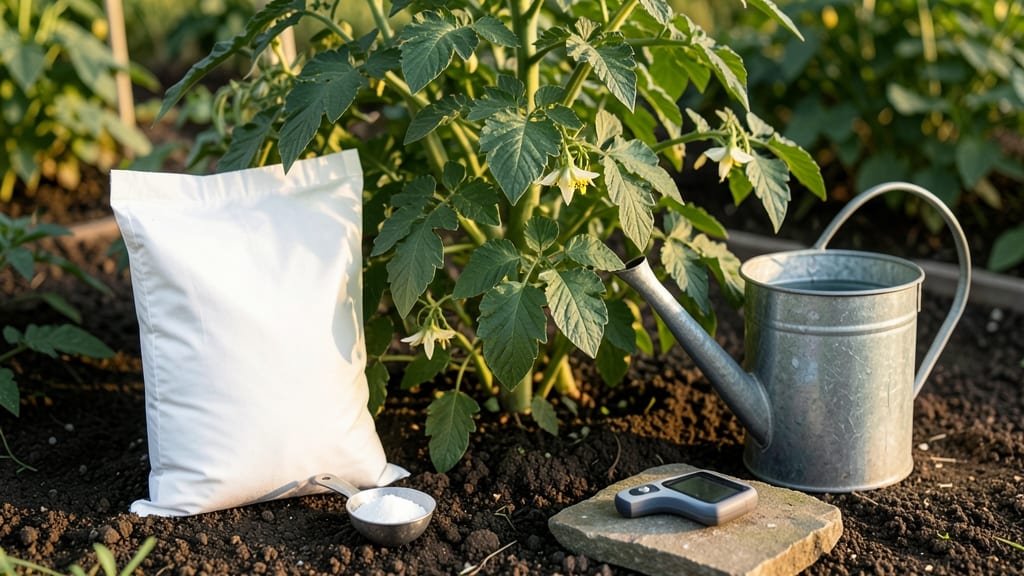
Using Epsom salt for garden soil provides essential magnesium and sulfur that combat yellowing leaves, weak stems, and poor flowering in plants like tomatoes, peppers, and roses. Apply it carefully—1 tablespoon per foot of plant height once a year—either mixed into soil or as a foliar spray.
Epsom salt works because magnesium is a key component of chlorophyll, the compound that gives plants their green color and helps them convert sunlight into energy. 🌱 When your garden plants start showing yellow patches between veins (a classic sign of magnesium deficiency), this mineral deficiency is often the culprit.
Unlike other soil amendments, Epsom salt dissolves quickly, making its nutrients immediately available to plant roots and leaves. I've seen dramatic improvements in my own container gardens after just one application, especially in heavy-feeding plants like peppers and roses.
While it's tempting to use more for faster results, too much magnesium can disrupt the soil's calcium balance, leading to other problems like blossom end rot in tomatoes. Always dissolve the salt in water first—whether for a soil drench or foliar spray—to prevent localized salt buildup that could harm roots.
For container gardens, I recommend applying it in early spring before the growing season peaks, giving your plants a strong nutritional foundation right from the start.
💡 In This Article
- How Epsom Salt Corrects Magnesium Deficiencies in Plants
- Best Ways to Apply Epsom Salt for Maximum Garden Benefits
How Epsom salt corrects magnesium deficiencies in plants
Magnesium sits at the center of every chlorophyll molecule, making it absolutely critical for photosynthesis—the process where plants convert sunlight into energy.
When your plants show yellowing between leaf veins (a condition called interveinal chlorosis), it's often a sign their magnesium levels are too low. 🌿 Epsom salt (magnesium sulfate) works because it provides magnesium in a form plants can absorb quickly, unlike some organic amendments that take months to break down.
The sulfate component also helps maintain proper soil chemistry, preventing magnesium from becoming locked out by high calcium or potassium levels.
Here's what happens chemically: Magnesium ions (Mg²⁺) bind to chlorophyll's porphyrin ring, enabling the molecule to capture light energy.
Without enough magnesium, chlorophyll production slows, causing those telltale yellow patches while veins stay green (since veins contain more calcium). 💡 This deficiency often appears first on older leaves because plants prioritize moving nutrients to new growth.
Unlike nitrogen deficiencies that cause overall yellowing, magnesium issues target specific areas, giving you a clear diagnostic clue. The beauty of Epsom salt is that magnesium sulfate dissolves completely in water, making its nutrients available within hours of application.
What makes Epsom salt particularly effective is its 1:1 magnesium-to-sulfur ratio.
Sulfur plays a supporting role in amino acid production and enzyme activation, which helps plants utilize the magnesium they're absorbing. 🌱 For example, in my tomato plants, I've noticed that applying Epsom salt not only stops yellowing but also improves fruit quality—likely because sulfur helps create the building blocks for stronger cell walls.
The key difference from other magnesium sources (like dolomitic lime) is speed: Epsom salt provides immediate relief, while lime takes weeks to months to adjust soil pH and release magnesium.
However, there's a catch: magnesium deficiencies usually indicate an underlying soil issue, often poor drainage or overly acidic conditions. If you're seeing these symptoms regularly, consider testing your soil's pH and organic matter levels. 🔬 Epsom salt won't fix compacted soil or excessive aluminum toxicity—it's a bandage, not a cure-all.
The ideal pH range for magnesium uptake is 6.0-7.0; below 5.5, magnesium becomes less available even when present. This is why I always pair Epsom salt applications with compost or organic matter, which improves soil structure and helps retain magnesium over time.
For visual learners, here's how deficiencies progress: First, you'll see faint yellowing between veins on older leaves. If untreated, this spreads to younger leaves and stems become weak and spindly. 🌿 In severe cases, plants may drop leaves prematurely or produce smaller, misshapen fruits.
The good news is that Epsom salt's solubility means you can see improvements within 7-14 days of proper application. Unlike slow-release fertilizers, you'll literally watch the green return as chlorophyll production ramps up again.
One common misconception is that all yellow leaves mean magnesium deficiency.
Actually, similar symptoms can come from iron or manganese deficiencies, though those typically show up as yellowing that includes the veins. 🌱 To distinguish, check the pattern: Magnesium issues always spare the veins, while other deficiencies often affect them too.
This visual clue helps you determine whether Epsom salt is the right solution or if you need to address different micronutrients.