
Tools
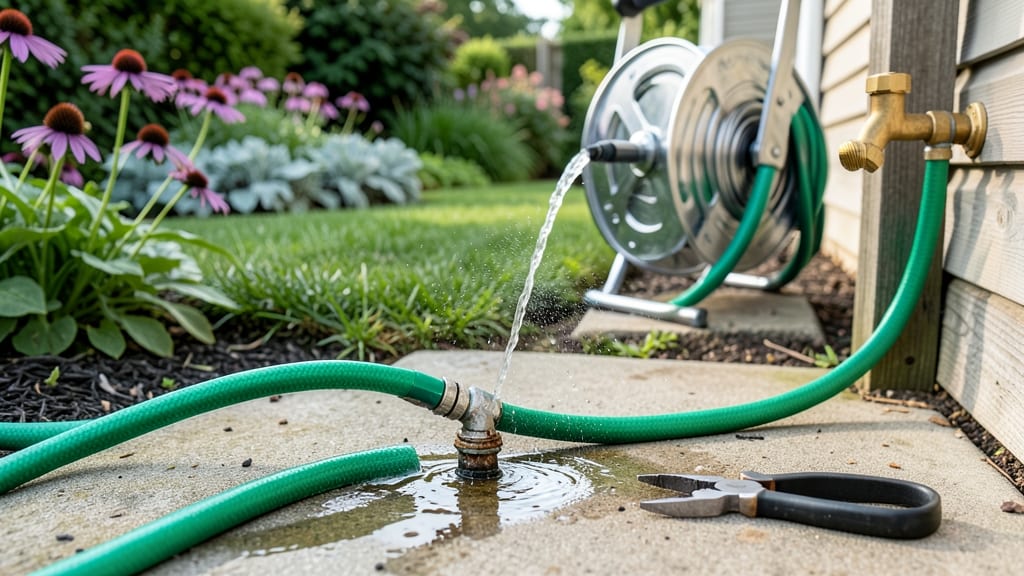
When a garden hose leaks at the swivel, it’s almost always due to a failing rubber gasket or loose connection. Tightening the coupling, replacing the worn seal, or applying a thread sealant can fix the issue quickly without needing a new hose.
A leaking swivel is usually caused by the rubber gasket inside the coupling breaking down over time or from exposure to extreme temperatures. 🔥 The gasket acts as a seal, and when it cracks or hardens, water escapes under pressure.
I’ve found that swivels on hoses stored coiled or left outside during winter are especially prone to this issue. The good news? Most leaks can be fixed with basic tools—no need to replace the entire hose.
If you notice water spraying from the side of the swivel instead of flowing straight, that’s a classic sign of a worn gasket.
Tightening the connection first is always worth a try, but if the leak persists, you’ll likely need to replace the rubber seal or apply a hose thread sealant. For long-term prevention, I recommend lubricating the swivel occasionally and storing your hose properly when not in use.
💡 In This Article
- Why Garden Hose Swivels Leak and How to Diagnose the Issue
- Step-by-Step Fixes for a Leaking Hose Swivel Connection
Why garden hose swivels leak and how to diagnose the issue
The swivel connection in your garden hose relies on a rubber gasket to create a watertight seal between the male and female couplings. Over time, this gasket degrades due to exposure to sunlight, extreme temperatures, and constant flexing.
When the rubber hardens or develops micro-cracks, water finds its way through these tiny gaps under pressure—often spraying outward instead of flowing smoothly through the hose. This is why you might see water leaking from the side of the swivel rather than a steady drip.
Improper storage accelerates this wear. Hoses stored coiled tightly or left in freezing temperatures cause the rubber to become brittle and crack more easily. The swivel joint itself is particularly vulnerable because it moves frequently, causing the gasket to compress and expand repeatedly.
For example, a hose left outside during winter in -10°F temperatures can see its rubber components lose elasticity in just a few hours, making leaks inevitable once thawed. Even in moderate climates, exposure to UV rays over months breaks down the rubber's molecular structure.
Diagnosing the issue starts with observing the leak pattern. A steady drip from the connection usually indicates a loose coupling, while a spray or mist suggests the rubber gasket has failed.
You can test this by turning on the water and feeling the swivel joint—if you notice vibration or hear a hissing sound, the seal is compromised.
Another clue is reduced water pressure when the hose is connected; a failing gasket restricts flow and creates turbulence that you can often feel by running your hand along the hose.
Seasonal factors also play a role. In spring and fall, when temperatures fluctuate dramatically, existing cracks in the gasket expand and contract, worsening leaks. This is why many homeowners notice their hoses start leaking more in these transitional seasons.
The good news is that most swivel leaks are fixable without replacing the entire hose—often just by tightening the connection or replacing the gasket. For a more permanent solution, applying a high-quality hose thread sealant can create a secondary barrier against leaks.
Consider this visual comparison: A healthy swivel connection should feel snug when tightened, with no play between the male and female threads. The rubber gasket should appear flexible and slightly compressed when the connection is made.
In contrast, a failing swivel will have visible cracks in the gasket (often detectable by running your finger along the rubber), and the connection may feel loose even when tightened to the manufacturer's specifications.
This visual inspection is your first step toward determining whether a simple fix or part replacement is needed.
What most people don't realize is that the swivel's metal components can also contribute to leaks. Corrosion or pitting on the brass or steel couplings creates uneven surfaces that prevent the rubber gasket from sealing properly.
If you notice rust or discoloration on the metal parts, this could be compounding your leak issue. In such cases, cleaning the threads with a wire brush and applying a fresh coat of thread sealant can make a significant difference in stopping the leak.