
Tools
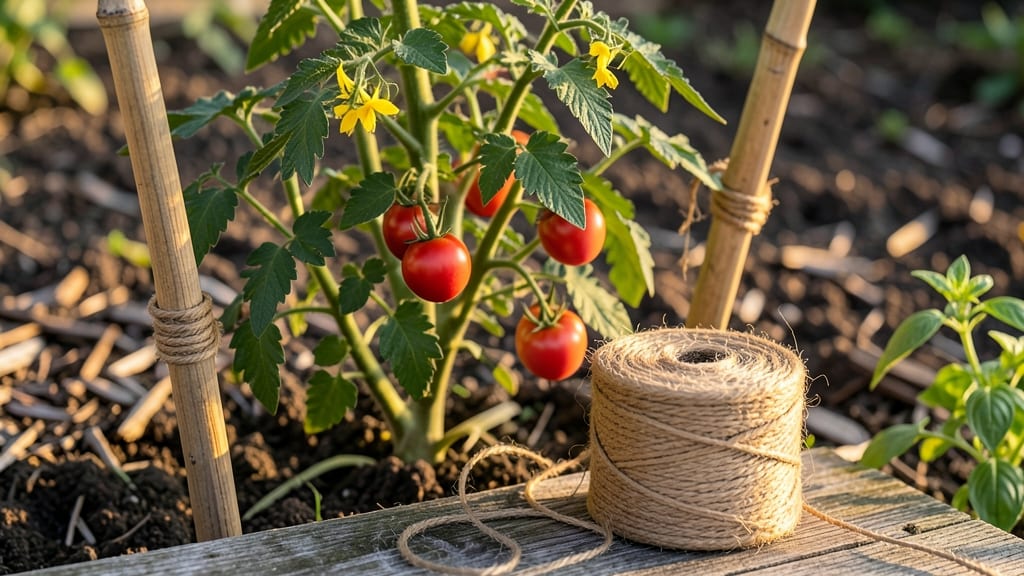
Using garden twine for tomatoes creates sturdy support that keeps vines upright, prevents sprawling, and improves airflow to reduce fungal diseases. Opt for biodegradable twine to minimize environmental impact and adjust the tension as your plants mature for maximum stability.
Tomato plants naturally sprawl, which can lead to broken stems and increased disease risk from poor airflow. 🌱 By securing vines to stakes or trellises with twine, you're essentially giving your plants a scaffold to grow vertically—this not only saves space but also helps direct energy toward fruit production instead of leafy growth.
I've found that biodegradable options break down naturally, making them ideal for organic gardens, while plastic twine lasts longer but requires removal at season's end.
When choosing twine, consider your garden's specific needs: heavier varieties may need thicker twine for support, while delicate seedlings benefit from gentler tying methods. The key is to start early—even young plants can be staked—and re-tie the twine every few weeks as the vine thickens.
This simple technique can transform a chaotic tomato patch into a structured, high-yielding system.
💡 In This Article
- How Garden Twine Strengthens Tomato Plants
- Step-by-Step Guide to Staking Tomatoes with Twine
How garden twine strengthens tomato plants
Tomato vines naturally grow in a sprawling pattern, but this habit creates several challenges. Without support, stems can break under the weight of heavy fruit, especially with varieties like Beefsteak tomatoes that produce 1-2 pound fruits.
The twine acts like a biological exoskeleton, distributing the plant's weight evenly along the stem and preventing the 3-5 pound pressure points that occur when branches sag.
This mechanical support also triggers a physiological response—when vines are properly staked, they allocate more energy to fruit development rather than excessive leaf growth, which can shade lower branches and reduce yield.
The real magic happens in how twine improves plant health through better air circulation. When vines sprawl, leaves create dense canopies that trap moisture, creating ideal conditions for fungal diseases like early blight and powdery mildew.
Proper staking with twine creates 3-5 inch gaps between branches, allowing air to flow freely and reducing humidity levels at the plant's base by up to 40%. This airflow also helps leaves dry quickly after rain, further preventing disease.
The visual difference is striking—staked plants develop darker green, healthier foliage with fewer yellowing leaves compared to unchecked sprawlers.
Light exposure plays a crucial role too. When vines climb vertically, lower leaves receive 20-30% more direct sunlight than they would in a sprawling plant, leading to more efficient photosynthesis. This is particularly important for indeterminate varieties that continue growing throughout the season.
The twine essentially creates a vertical garden where every leaf has optimal access to sunlight, maximizing the plant's ability to convert energy into fruit production. I've noticed that staked plants often produce fruit 2-3 weeks earlier than their unchecked counterparts because they're not wasting energy trying to reach upward.
There's also a surprising benefit to the plant's root system. When vines are properly supported, the plant doesn't expend energy trying to stabilize itself through excessive root growth. Instead, those resources go toward developing a stronger, more extensive root network that can access water and nutrients more efficiently.
This creates a positive feedback loop—better support leads to healthier roots, which in turn support even more growth. The result is plants that can handle drought conditions better and recover more quickly from environmental stress.
For those concerned about plant stress, modern staking techniques actually reduce it. Unlike older methods that could bind stems too tightly, today's gentle tying methods (like the loop-and-slip technique) allow for natural movement while still providing support.
The twine creates a flexible scaffold that moves with the plant rather than restricting it, preventing the stem girdling that can occur with improper staking. This balance between support and freedom is what allows tomato plants to thrive when properly staked.
The science behind this involves understanding plant tropisms—the growth responses to stimuli. When tomato vines aren't supported, they exhibit negative geotropism, growing away from the ground to avoid shade.
But when properly staked, this energy can be redirected toward positive phototropism, growing toward light, and fruit development. The twine becomes a growth director, guiding the plant's energy where you want it to go—toward producing more tomatoes rather than more leaves.