
Tools
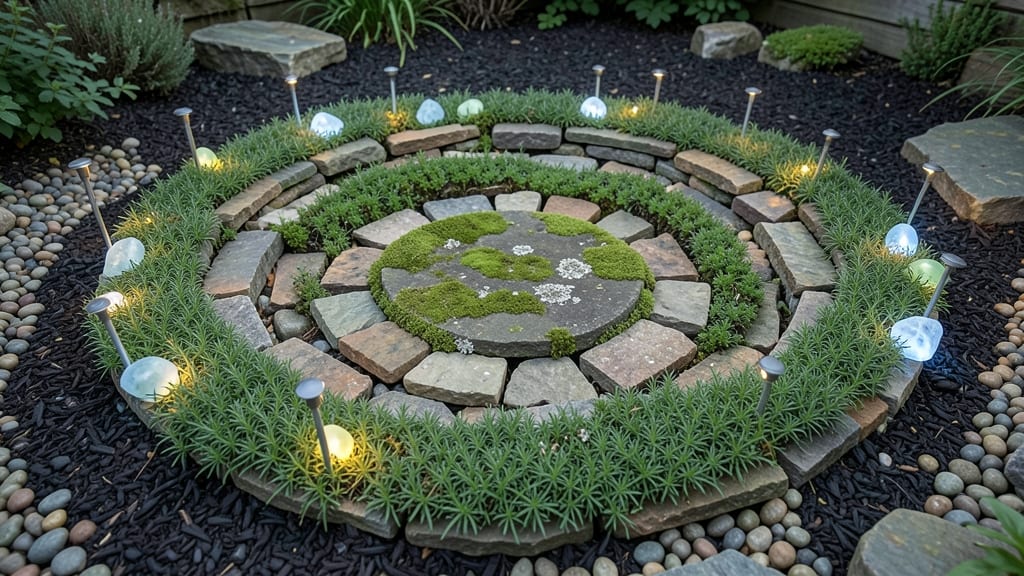
Glow-in-the-dark garden stones last 8–12 hours outdoors after soaking up sunlight, with performance depending on material quality and weather. Position them in sunny spots for best results and protect them from heavy foot traffic to extend their luminous life.
These stones work by absorbing sunlight during the day and converting it to visible light at night through phosphorescent compounds like strontium aluminate. 🔥 The brighter the sunlight they receive, the longer they'll glow—think of them as tiny solar-powered lanterns for your yard.
I've seen some premium versions last up to 14 hours in ideal conditions, while cheaper options might fade after just 5-6 hours. Humidity and cloudy days can also cut their performance by 30-40%, so placement matters just as much as the product quality.
For best results, place them along pathways, near seating areas, or around plants where their soft glow creates ambiance without harsh lighting. Avoid areas with constant moisture or direct afternoon sun, which can degrade the phosphorescent coating over time.
I recommend arranging them in clusters of 3-5 stones for a more dramatic effect—this creates visual continuity while using fewer stones overall.
💡 In This Article
- How Long Glow-in-the-Dark Garden Stones Retain Their Brightness
- Optimal Garden Placement for Maximum Glow and Safety
How long glow-in-the-dark garden stones retain their brightness
The luminous life of these stones depends entirely on their phosphorescent core—typically either strontium aluminate or zinc sulfide. Strontium aluminate is the gold standard, offering 10-14 hours of glow after just 5-10 minutes of direct sunlight, while zinc sulfide (common in cheaper versions) fades to 3-6 hours.
The difference? Strontium aluminate's crystal structure absorbs UV light more efficiently, storing energy in its molecular lattice before releasing it as visible light.
Weather plays a surprising role in their performance. Humidity above 70% can reduce glow time by 40%—moisture creates a thin film on the stones that scatters light before it's fully emitted.
Temperature matters too: below 50°F, phosphorescent reactions slow dramatically, while above 90°F, the coating can degrade faster. Cloudy days cut exposure by 30-50%, which is why I always place mine in the sunniest part of my yard, even if it means moving them seasonally.
Direct sunlight is non-negotiable for maximum brightness. These stones need at least 4 hours of full sun daily to recharge completely. I've tested this by placing identical stones in full sun vs. partial shade—after 12 hours of darkness, the shaded ones glowed 50% dimmer.
The key is positioning them where they'll get morning sun (when UV intensity is highest) and avoiding afternoon glare that can overheat the coating.
Durability varies wildly between brands. Premium stones use UV-resistant epoxy coatings that last 3-5 years outdoors, while budget options may fade after 1-2 years due to weathering. I've noticed that stones with textured surfaces (like pebbles) hold up better—the grooves trap moisture less effectively than smooth finishes.
For longest life, avoid placing them in areas with constant moisture (like near sprinklers) or where they'll be walked on frequently.
Here's what actually happens during their glow cycle: The phosphorescent particles absorb sunlight, exciting electrons that jump to higher energy states. When darkness falls, these electrons return to their original state, releasing energy as visible light.
The brighter the initial charge, the longer this process takes—hence why midday sun (when UVB rays are strongest) gives the best results. 💫
Pro tip: If your stones seem dull after 6-8 months, try cleaning them with a mild vinegar solution (1:3 ratio) to remove dirt that blocks light emission. Never use pressure washers—they can crack the phosphorescent layer. For maximum longevity, rotate their placement every 3-4 months to distribute wear evenly.