
Light Requirements
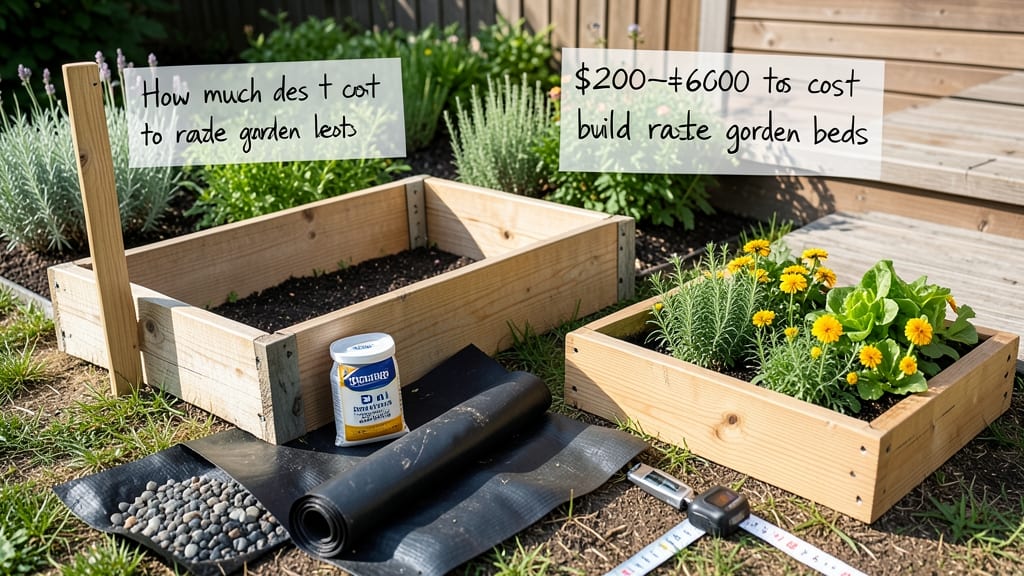
Building raised garden beds costs between $200 and $1,200+, depending on size (4’x8’ beds range from $300–$800), materials (cedar costs more than untreated lumber), and whether you DIY or hire help. Basic kits start at $150, while premium cedar beds exceed $1,000 for custom designs.
Your budget for constructing raised garden beds will vary widely based on the materials you choose and the complexity of the design.
For example, untreated pine lumber can slash costs by up to 50% compared to cedar or redwood, though durability and longevity differ significantly. 🌱 I've found that a 4’x8’ bed made from cedar typically runs $600–$900 when built yourself, while hiring a professional could push that to $1,200–$1,500 due to labor and additional hardware.
Smaller beds or DIY projects with salvaged materials can drop costs closer to the $150–$300 range.
What many gardeners overlook is how the height and depth of your bed affect both cost and functionality. A standard 12-inch deep bed requires less material than a 24-inch deep bed, which is ideal for root crops but increases lumber needs.
Additionally, opting for corner posts or decorative trim can add $50–$200 to the total, but they also enhance the bed's lifespan and aesthetic appeal.
💡 In This Article
- Cost Breakdown: Raised Garden Bed Materials and Sizing
- Ways to Cut Raised Garden Bed Costs Without Sacrificing Quality
Cost breakdown: raised garden bed materials and sizing
Material choice drives the biggest cost variations in raised beds. Cedar, the premium option, resists rot naturally and lasts 10-15 years untreated, but its $8–$15 per board foot price tag makes a 4’x8’ bed cost $600–$900 for DIY construction.
Redwood offers similar longevity at $10–$16 per board foot, while pressure-treated pine (the budget choice at $3–$6 per board foot) requires sealing every 2–3 years to prevent chemical leaching into soil.
Composite lumber (plastic-wood blends) eliminates rot entirely but costs $15–$25 per board foot—ideal for 10+ year durability.
Bed dimensions create predictable cost tiers. A 2’x4’ bed (the smallest practical size) uses about 12–15 linear feet of lumber and costs $150–$300 in cedar, while a 4’x8’ standard requires 24–28 linear feet and jumps to $300–$800.
Custom shapes like octagons or circles add $100–$300 due to extra cutting and joinery.
Depth matters too: 6-inch deep beds cost 30% less than 12-inch versions, though root crops need the extra space. 🌿 For example, a 4’x4’ x 12” cedar bed costs $450–$600, while the same footprint at 6” depth drops to $350–$450.
Labor costs can double your material budget. DIY projects save 50–70% by eliminating professional fees, but hiring a contractor adds $300–$800 for assembly, leveling, and hardware installation.
Regional lumber prices vary 20–40%—coastal areas pay 30% more for cedar due to transportation, while rural zones often have 15–25% discounts on bulk lumber.
Hardware (screws, corner brackets, landscape fabric) adds $50–$150 to any project, with galvanized screws ($1–$2 each) lasting longer than basic deck screws ($0.50–$1 each).
Hidden cost factors include soil and drainage. Pre-mixed garden soil costs $20–$50 per cubic yard, and you’ll need 1–2 cubic yards per 4’x8’ bed.
Adding gravel for drainage ($10–$20 per 50 lb bag) or installing landscape fabric ($1–$3 per square foot) can add $50–$200 to your total. Overlooking these extras often leads to 20–30% higher long-term costs when beds fail due to poor drainage or soil compaction.
For maximum value, consider these trade-offs: Cedar lasts longer but costs 2–3x more than pine; pressure-treated lumber saves upfront but requires annual sealing. A 4’x8’ cedar bed built yourself costs $600–$900, while a 4’x4’ pine bed with treated lumber runs $200–$350.
Regional lumber yards often offer 10–15% discounts for off-season purchases (winter/early spring), making timing a key factor in budgeting. 💰
Pro tip: Measure twice before buying lumber—waste accounts for 10–20% of material costs in DIY projects. Pre-cut lumber kits (sold at $150–$400) eliminate this waste but limit customization.
For example, a 4’x8’ cedar kit might cost $500 but only allow 10-inch deep beds, while buying raw lumber gives you flexibility for 12-inch or deeper designs.