
Light Requirements
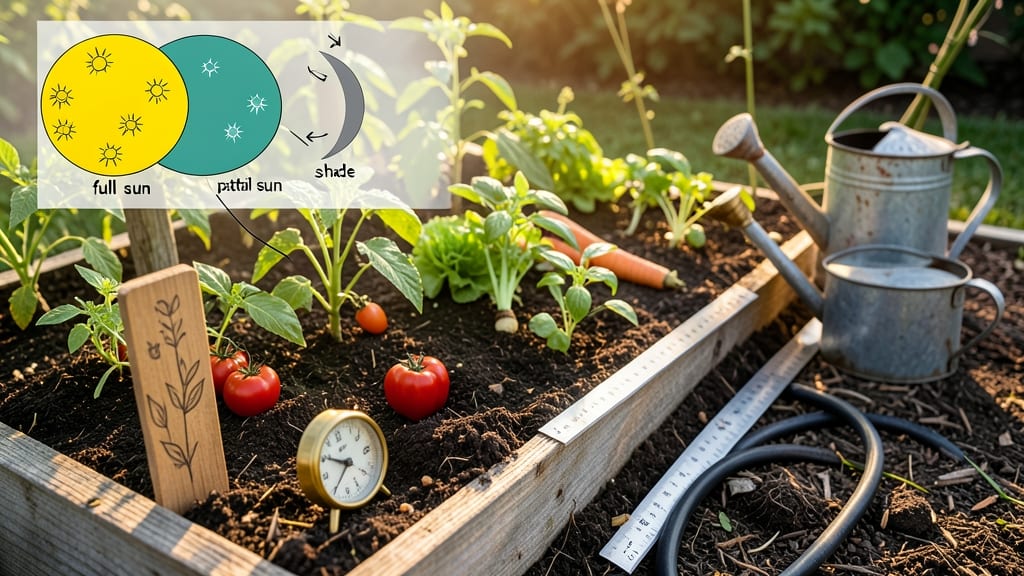
How much sun does a vegetable garden need to thrive?** A strong 6 to 8 hours of direct sunlight daily 🥬 is essential for producing robust, healthy crops—and too little can result in bitter greens or stunted tomatoes.
Struggling to decide where to plant your tomatoes or lettuce? Sunlight is the #1 factor determining whether your vegetable garden thrives or struggles—and getting it wrong can mean the difference between a bumper crop and wilting disappointment.
Most vegetables crave full sun, but some, like leafy greens, tolerate partial shade. The key is matching your garden’s sunlight patterns to each plant’s needs, whether you’re working with a bright backyard or a shady corner.
Below, I’ll break down exactly how many hours different crops need, how to measure sunlight in your space, and pro tips for maximizing growth even in less-than-ideal conditions.

Sunlight requirements by vegetable type: full sun vs partial shade needs
Understanding how much sun your vegetables need is crucial for a productive garden.
Most gardeners assume all plants require the same amount of sunlight, but the truth is far more nuanced. Leafy greens and root vegetables often thrive in partial shade, while fruiting plants like tomatoes and peppers demand full sun.
Getting this balance right can mean the difference between a thriving harvest and struggling plants.
Sunlight requirements are typically categorized into three groups: full sun (6-8+ hours), partial sun (3-6 hours), and partial shade (2-3 hours). Each category supports different types of vegetables, and misplacing them can lead to poor growth, low yields, or even plant death.
For example, tomatoes wilt in shade, while spinach bolts in too much sun.
Below is a detailed comparison of sunlight needs for major vegetable categories, including specific examples and growth impacts. This will help you design your garden layout for optimal productivity.
Fruiting vegetables like tomatoes and peppers are the most demanding, requiring 6-8+ hours of direct sunlight daily to produce quality fruit. Without enough sun, they’ll focus energy on leaf growth rather than fruit production, leading to smaller, fewer, and often bitter harvests.
My cherry tomatoes in a shady spot last summer produced only a handful of tiny, underripe fruits—hardly worth the effort!
Leafy greens, on the other hand, are far more adaptable but still need balance. Spinach and lettuce thrive with 3-6 hours of sunlight, but too much can cause them to bolt (send up flower stalks) prematurely.
I’ve learned the hard way that planting these in full sun during hot summers leads to bitter, tough leaves. The key is to provide afternoon shade or choose heat-tolerant varieties like Romaine lettuce.
Root vegetables such as carrots and beets prefer partial sun to prevent them from becoming woody or misshapen. Too much direct sunlight can cause their sugars to concentrate, making them less tender.
In my garden, radishes grown in full sun developed a tough, pithy texture, while those in partial shade were crisp and sweet.
If you’re working with limited sunlight, focus on shade-tolerant varieties like Swiss chard or kale, which can handle 2-4 hours of sun without bolting. For fruiting plants, consider using reflective mulches or grow lights to supplement natural light, especially in early spring or late fall when days are shorter.
One common mistake is assuming that morning sun is equivalent to afternoon sun. Morning sunlight is generally cooler and less intense, making it ideal for heat-sensitive crops like basil or peppers.
Afternoon sun, especially in hot climates, can scorch leaves. I’ve found that positioning tomato plants to receive morning sun and afternoon shade yields healthier, more productive vines.
To maximize your garden’s potential, observe your space for at least a week to map out sunlight patterns. Use stakes to mark areas with full sun, partial shade, and deep shade.
This simple step will help you create a layout that matches each plant’s needs, ensuring a bountiful harvest all season long.
How to measure sunlight in your garden and adjust plant placement
Understanding your garden's sunlight patterns is like reading a map for your plants—it tells you exactly where to place each vegetable for success. Morning sun behaves differently than afternoon sun, and dappled shade can create microclimates that drastically affect growth.
Without measuring, you might accidentally turn your tomato plants into sad, leggy shadows or let your leafy greens bolt too quickly.
Start by observing your garden for a full week, noting when sunlight hits different areas. Use a simple sunlight journal or even your phone's timer to track direct sunlight hours each day.
Pay special attention to obstructions like trees, fences, or buildings that cast shifting shadows. These can create partial shade zones where only certain vegetables will thrive.
Here’s how to assess your garden’s sunlight and adjust plant placement effectively:
- 🌞 Full Sun (6+ hours): Ideal for tomatoes, peppers, and corn. Place these in the sunniest spots where shadows are minimal.
- 🌳 Partial Shade (3-6 hours): Perfect for leafy greens like spinach and bush beans. These areas often get morning sun or afternoon shade.
- 🌿 Dappled Shade (<3 hours): Reserve for shade-tolerant crops like radishes or green onions. These spots have filtered light from trees or structures.
- ⏰ Morning vs Afternoon Sun: Morning sun is cooler and gentler, while afternoon sun is intense. Place heat-sensitive plants like lettuce in morning sun areas.
- 🔄 Rotate Crops Annually: Move heavy sun-lovers to new spots each year to prevent soil depletion and improve root development.
If you notice wilting leaves or stunted growth, your plants might be getting too much or too little sun. For example, yellowing leaves on tomatoes often signal excessive heat stress, while pale, leggy stems mean they’re stretching for more light.
Adjust by pruning nearby trees or using shade cloth in extreme cases.
For container gardens, mobility is your best friend. Move pots throughout the day to follow the sun, especially if your space has limited sunlight. This mimics natural conditions and helps compact vegetables like bush beans or peppers thrive.
Even a few hours of repositioning can make a 30% difference in yield!
Pro tip: Use reflective surfaces like white gravel or aluminum foil near your garden to bounce extra light onto shade-prone areas. This trick works wonders for small gardens or urban balconies where space is tight.
With these adjustments, you’ll turn even tricky sunlight conditions into a productivity powerhouse for your veggies. 🌱