
Tools
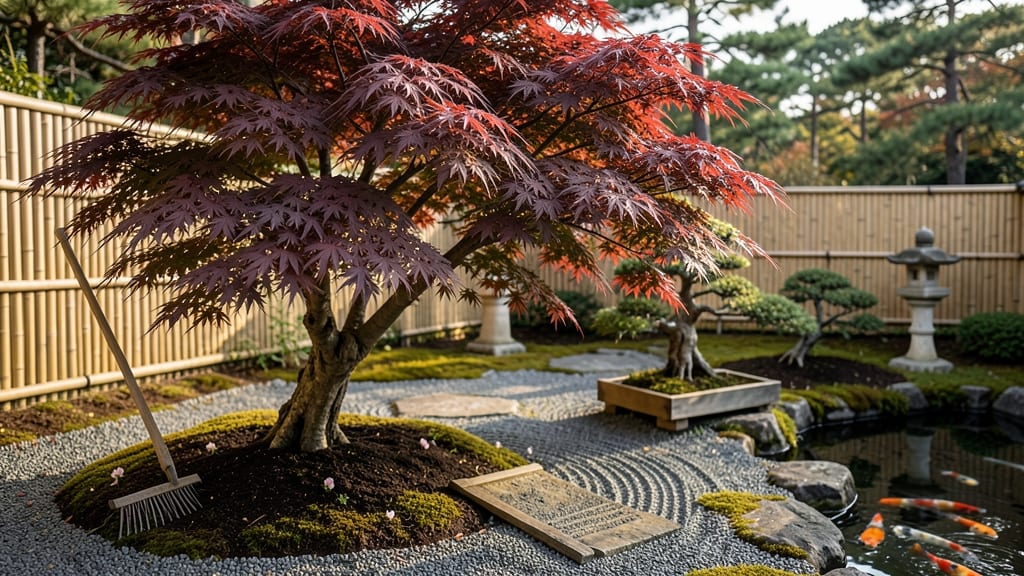
The James Irvine Japanese Garden in San Francisco embodies centuries-old Japanese garden traditions through its meticulously crafted landscapes, including tranquil koi ponds, living bonsai sculptures, and ever-changing seasonal displays like cherry blossoms and autumn maples. This 14-acre sanctuary merges Zen philosophy with natural beauty to create a peaceful urban retreat.
The James Irvine Japanese Garden isn't just a park—it's a carefully orchestrated meditation on nature's balance. 🌿 Designed to reflect Japanese principles like wabi-sabi (finding beauty in imperfection) and ma (negative space), every element—from the carefully placed stones to the rippling water features—serves a purpose in creating harmony.
What makes it unique is how it adapts traditional techniques for modern visitors, with features like the Moon Bridge that frames views differently at each season. Even the maintenance follows centuries-old practices, like hand-pruning bonsai to maintain their artistic forms year-round.
Beyond its famous highlights, the garden hides seasonal surprises. Spring brings delicate sakura petals that drift onto the ponds, while autumn transforms the landscape into a fiery mosaic of maple leaves. Winter reveals the skeletal beauty of bamboo groves, and summer offers lush azalea blooms.
The real magic happens when you explore beyond the main paths—like discovering the quiet tea house tucked among the pines or the hidden lantern-lined paths that guide you through moonlit evenings.
💡 In This Article
- Design Principles Behind Irvine Japanese Garden’s Mastery
- Hidden Features and Seasonal Highlights to Explore
Design principles behind irvine Japanese garden’s mastery
The garden’s design is rooted in Zen Buddhism principles, where every element—water, stone, and vegetation—serves a spiritual purpose. Water symbolizes purity and the flow of life, while stones represent mountains and stability.
The 14-acre layout follows karesansui (dry landscape) techniques, using raked gravel to mimic rippling water, a method that originated in Zen temples to evoke meditation through visual movement. 💫 The garden’s asymmetry and deliberate imperfections embody wabi-sabi, celebrating nature’s natural cycles rather than perfection.
Plant selection is strategic for seasonal harmony. Maples (like Acer palmatum) turn fiery red in autumn, while pines (such as Pinus densiflora) provide year-round structure. Azaleas bloom in spring, and bamboo groves sway in summer, creating a living calendar.
The garden’s chisen-kaiyu (clipped garden) style—seen in the meticulously trimmed hedges—reflects Japanese discipline, where precision enhances natural beauty. Even the Moon Bridge is positioned to frame views differently during each season, a technique called miegakure, or "hiding and revealing."
Water features, like the serpentine koi ponds, are designed to create soundscapes that mask city noise. The ponds’ curves follow shakkei (borrowed scenery), a technique that integrates distant views (like the San Francisco skyline) into the landscape.
This creates a sense of vastness in a limited space, a hallmark of traditional Japanese gardens. The 300-year-old bonsai trees are pruned using yose-ue (artistic pruning), where branches are shaped to mimic natural forms while maintaining structural integrity.
This process takes decades, with each cut made to preserve the tree’s health and aesthetic balance. 🌿
Color psychology plays a subtle role too. The garden’s soft, muted palette—earthy greens, whites, and blues—promotes calmness, a principle backed by studies showing that natural hues reduce stress.
The stone lanterns (like those along the Kodokan Tea House path) are placed at strategic intervals to guide visitors while reinforcing the garden’s meditative rhythm. Even the pathways are designed to encourage slow exploration, with curves that invite contemplation rather than straight lines that rush the experience.
One lesser-known detail is the garden’s underground water system, which uses gravity-fed channels to maintain the ponds without visible pumps. This shunin-sui (hidden water) technique was pioneered in Edo-period Japan and ensures the water remains crystal clear year-round.
The system’s design also prevents stagnation, creating a self-sustaining ecosystem where koi thrive and aquatic plants flourish. This engineering feat blends seamlessly with the natural landscape, proving that functionality and artistry can coexist perfectly. 💡
The garden’s negative space (ma) is just as important as its features. Empty areas between rocks, trees, and water allow visitors to pause and reflect, a concept central to Japanese aesthetics. This deliberate spacing creates a sense of tranquility that’s hard to find in urban environments.
The interplay of open and closed spaces—like the secluded tea garden versus the open plaza areas—ensures every visit feels fresh, regardless of the season. 🌸