
Tools
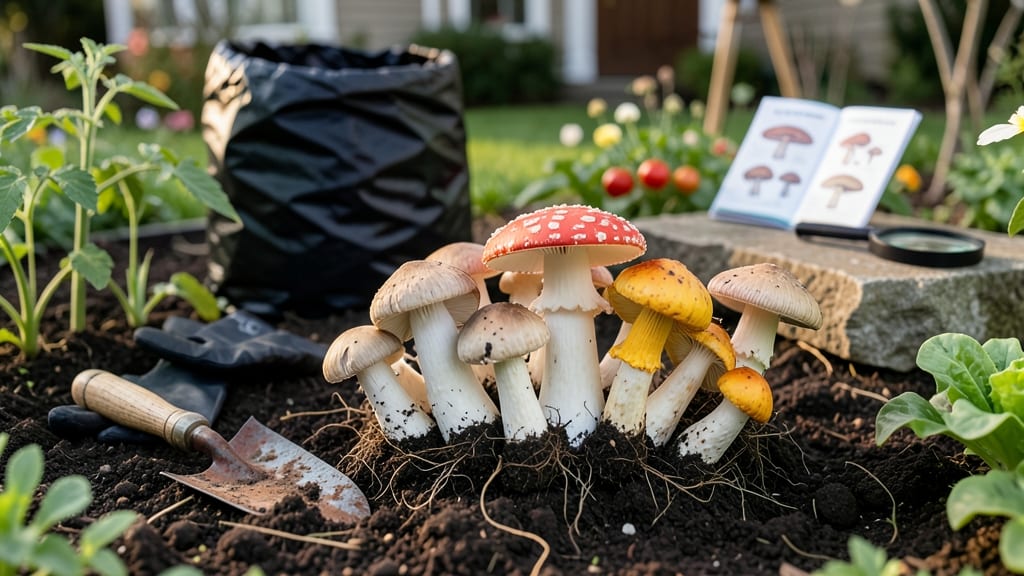
Whether you should remove mushrooms from your garden depends entirely on their type: toxic varieties like death cap must be removed immediately, while beneficial fungi (such as mycorrhizal species) should remain to boost soil health and plant growth. Always identify them first before deciding.
Deciding whether to remove mushrooms from your garden isn't just about aesthetics—it's about understanding their role in your ecosystem. 🌱 Toxic mushrooms like death cap or destroying angel can pose serious health risks if ingested by pets or children, so their removal is critical.
On the other hand, beneficial species like chanterelles or morels contribute to nutrient cycling and support plant roots through symbiotic relationships. I always recommend using a field guide or app to identify any mushrooms before acting, as some harmless-looking varieties can be dangerous.
If you do need to remove mushrooms, timing matters. Early morning is ideal when the caps are still closed, making them easier to pull without breaking.
For stubborn fungi, a mixture of vinegar and water (1:1 ratio) applied directly to the base can help break down the mycelium network over time. Always dispose of toxic mushrooms properly—never compost them—since their spores can survive and regrow.
💡 In This Article
- Identifying Harmful vs Beneficial Garden Mushrooms
- Safe Mushroom Removal Techniques for Gardens
Identifying harmful vs beneficial garden mushrooms
Mushrooms in your garden fall into two broad categories: those that harm your plants or health, and those that actively benefit your ecosystem.
Toxic varieties like the death cap (Amanita phalloides) or destroying angel (Amanita bisporigera) often feature a white gills and bulbous base, while beneficial species like chanterelles (Cantharellus) have forked, yellowish gills and a fruity aroma.
The key is to examine the cap shape, gill attachment, and spore print—rubbing the gills on paper reveals whether spores are white (common in toxic types) or brown/yellow (often safe). 🔍
Beneficial mushrooms, such as mycorrhizal species, form symbiotic relationships with plant roots, enhancing nutrient absorption and drought resistance. These fungi typically appear in clusters near tree bases or shrubs, unlike toxic varieties that often grow alone.
For example, morels (Morchella) have honeycomb-like caps and rarely pose risks, while false morels (Gyromitra) can be deadly due to their bitter taste and toxic compounds. Always cross-reference with a regional field guide or app like iNaturalist, as mushroom identification varies by climate and soil type.
Ecologically, mushrooms play a vital role in decomposing organic matter and recycling nutrients. The mycelium network of beneficial fungi can stretch for miles underground, connecting plants and improving soil structure. Removing these species disrupts this delicate balance, potentially weakening your garden's resilience.
In contrast, parasitic fungi like honey mushrooms (Armillaria) attack tree roots and should be eradicated using targeted treatments like copper-based sprays or vinegar solutions.
Seasonal timing also affects identification. Spring often brings toxic species like death caps, while summer favors beneficial varieties like chanterelles. Pay attention to growth patterns: mushrooms emerging after heavy rain are more likely to be decomposers, while those appearing in dry spells may indicate root stress or disease.
If you're unsure, avoid touching or ingesting any wild mushrooms—some harmless-looking species can cause severe poisoning within hours. 🌿
For a quick visual check, look for these red flags in potentially toxic mushrooms:
- Ring on the stem: Many poisonous Amanita species feature a distinctive ring (annulus) near the cap.
- Volva at the base: A cup-like structure (volva) often indicates a deadly variety like death cap.
- Red or white gills: While not always toxic, these colors frequently appear in dangerous species.
Remember, even "safe" mushrooms can cause allergic reactions in some people or pets. When in doubt, photograph the mushroom from multiple angles (including the base and gills) and consult a mycologist or local agricultural extension service. Their expertise can save your garden—and your health. 🍄