
Tools
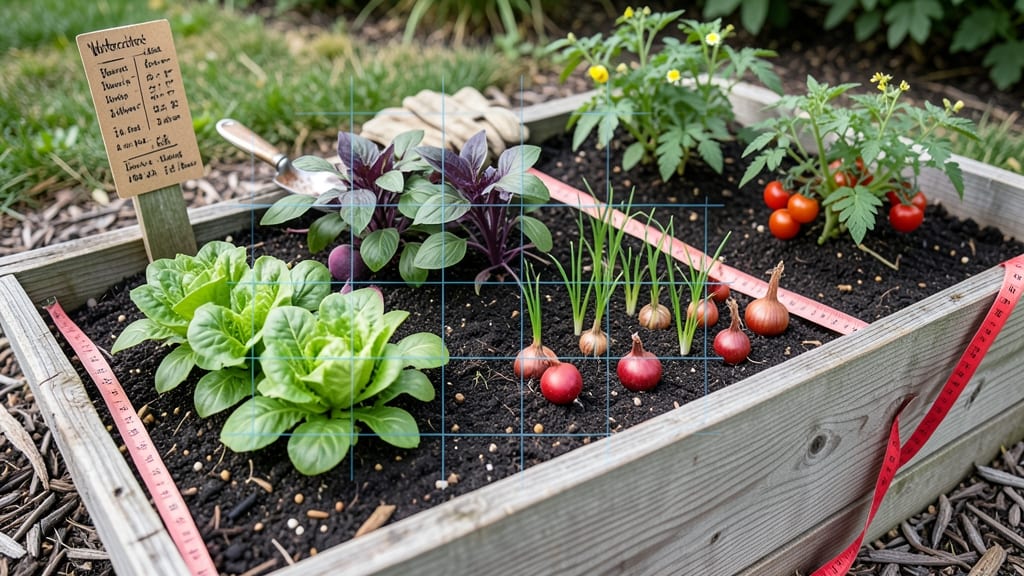
Square foot gardening plans organize garden space into 1-foot grids to maximize plant density and efficiency. Each square accommodates different plant counts based on size—like 16 leafy greens or 1 tomato plant—while letting you map sun exposure and harvest timing for optimal growth.
This method transforms gardening into a precise science by matching plant spacing to mature size, not just whimsy. 🌱 For example, a 4x4 square of tomatoes (1 plant per square) yields just as much as a traditional row garden but fits in a fraction of the space.
The real magic happens when you combine this with companion planting—placing basil near tomatoes or carrots near onions—to naturally deter pests and boost flavor. I’ve seen backyard plots triple their output just by switching to this grid system, especially when pairing heavy feeders like peppers with nitrogen-fixing beans.
Pro tip: Always sketch your layout first, labeling each square with the plant type and its sun requirements. This prevents overcrowding and lets you rotate crops yearly to maintain soil health.
The beauty of square foot gardening is that it turns even small balconies or urban lots into productive growing zones—no fancy tools required, just a tape measure and a little planning.
💡 In This Article
- How to Calculate Square Foot Gardening Plant Spacing
- Sample Square Foot Garden Layouts by Season
How to calculate square foot gardening plant spacing
The core of square foot gardening lies in its mathematical precision—each 1-foot square accommodates a specific number of plants based on their mature size. This system, pioneered by Mel Bartholomew, eliminates guesswork by matching plant spacing to their root spread and foliage requirements.
For instance, a 16-plant square works perfectly for leafy greens like lettuce or radishes, where each plant needs only 4 inches of space.
Meanwhile, a single tomato plant requires the entire square (1 plant per square) because its sprawling roots and branches need 12+ inches of diameter to thrive.
What makes this system so effective is how it accounts for plant maturity. A young basil seedling might fit comfortably in a 4-plant square, but as it grows, it’ll need more room—up to 9 plants per square when mature.
The key is to reference a square foot gardening chart that lists spacing requirements for each variety. For example, carrots need 16 per square (thinned to 4 inches apart), while broccoli plants should be spaced 1 per square due to their bulky heads and deep roots.
Companion planting also factors in: placing 1 tomato plant with 4 basil plants in the same square isn’t just about space—it’s a pest-control strategy, as basil repels flies and improves tomato flavor.
To calculate your own layout, start by sketching a grid of your garden bed (typically 4x4 feet or larger). Label each square with the plant type and its spacing requirement, then group plants with similar sun needs together.
For example, a 4x4 square of peppers (1 plant per square) should sit next to a 4x4 square of beans (9 plants per square)—both thrive in full sun.
The math becomes even more precise when you account for vertical growth: trellising cucumbers (4 plants per square) in a corner frees up ground space for other crops. This method ensures no square is wasted, even in tight urban gardens.
One common mistake is overcrowding squares to "maximize yield," but this leads to stunted growth and disease. For example, packing 16 onions into a square might seem efficient, but they’ll compete for nutrients, resulting in smaller bulbs.
Instead, use the "square foot rule": if a plant’s mature diameter is 6 inches, it gets 4 plants per square (since 6 x 6 = 36 square inches, and 144 square inches ÷ 36 = 4).
This rule applies to herbs too—9 thyme plants per square thrive because their compact growth habit fits neatly.
The grid system also simplifies soil management. Since each square is small, you can rotate crops annually without exhausting the soil. For instance, plant heavy feeders like tomatoes in one square this year, then switch to nitrogen-fixing beans next year to replenish nutrients.
This rotation reduces the need for chemical fertilizers and keeps pests at bay. The precision of square foot gardening turns gardening from an art into a science—where every inch of your plot is optimized for productivity and health.
For beginners, start with a 4x4-foot test bed and focus on 2-3 crops to master the spacing. Use a wooden or metal grid to mark squares, and keep a journal noting which combinations work best.
You’ll quickly see how 1 square of tomatoes can yield just as much as a traditional row garden but with 90% less space and far less weeding.
The system’s beauty is in its adaptability—whether you’re growing microgreens in a windowsill or zucchini in a backyard, the math stays the same.