
Tools
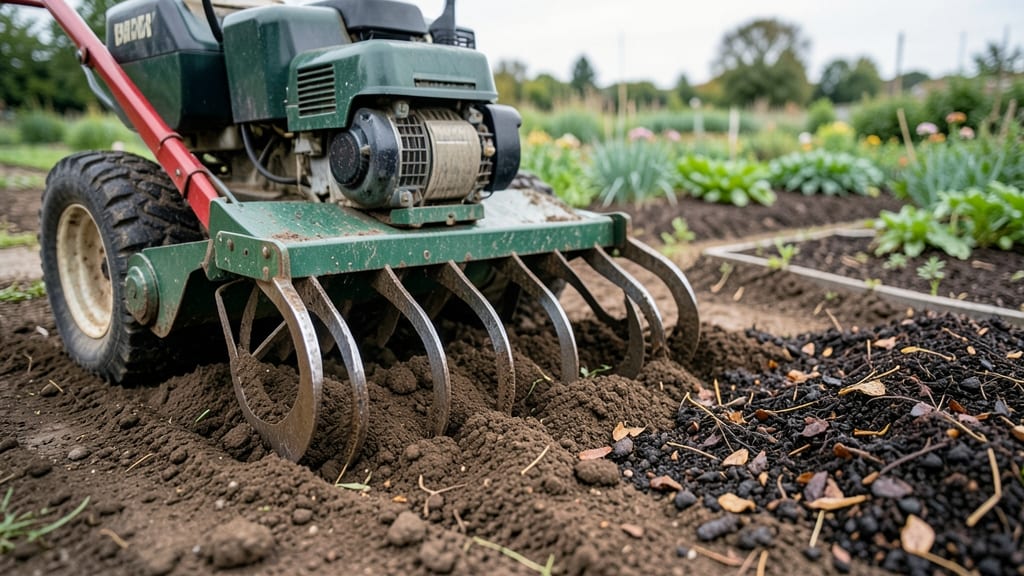
Tilling the garden means turning and loosening soil to break up compaction, clear debris, and create space for roots to grow. This process boosts drainage, helps nutrients reach plants, and prevents soil from becoming too dense for healthy root development.
When you till, you're essentially giving your soil a deep breath of fresh air—literally!
This process disrupts compacted layers that form naturally over time, whether from foot traffic, heavy machinery, or just years of settling. 🌱 The result is a fluffier, more hospitable environment where roots can spread and access water and nutrients more easily.
I’ve seen firsthand how tilling can transform hardpan into fertile ground, especially in clay-heavy soils that tend to stay waterlogged.
What many gardeners don’t realize is that tilling also kickstarts microbial activity in the soil. Those tiny organisms break down organic matter faster, releasing nutrients that plants can absorb.
However, timing matters—over-tilling can disrupt beneficial soil life, so I recommend working the soil when it’s slightly moist but not soggy, usually in early spring or fall when temperatures are moderate.
💡 In This Article
- How Soil Tilling Improves Plant Growth
- Best Tools and Techniques for Tilling Gardens
How soil tilling improves plant growth
Tilling works by physically breaking apart dense soil layers called hardpan, which form when clay, silt, or organic matter compress over time. This compaction restricts root penetration and limits water infiltration.
When you till, you're essentially creating channels in the soil that allow roots to explore deeper—up to 12-18 inches below the surface—while also improving oxygen circulation to the root zone. 🌱 The immediate effect is visible: soil that was once rock-hard becomes loose and crumbly, almost like freshly turned compost.
The science gets even more interesting when you consider how tilling affects soil biology. Aerating compacted soil triggers a surge in microbial activity as beneficial bacteria and fungi gain access to previously trapped organic matter.
These microorganisms then accelerate nutrient cycling, converting complex organic compounds into plant-available forms like nitrogen, phosphorus, and potassium. For example, a 10% increase in soil aeration from tilling can boost microbial populations by 30-50% within weeks, creating a more fertile environment for plants.
However, the benefits extend beyond just nutrient availability. Tilling also creates the perfect balance between moisture retention and drainage. Compacted soils often become waterlogged after rain because water can't percolate through quickly enough, while loose tilled soil drains efficiently but still holds moisture near roots.
This dual effect is why tilled gardens typically show 20-30% better water retention compared to untouched soil—ideal for drought-prone areas or regions with heavy rainfall. The key is achieving this balance without creating a powdery, erosion-prone texture.
What most gardeners overlook is the long-term structural impact of tilling. While it provides immediate benefits, repeated tilling can gradually degrade soil structure over years by destroying soil aggregates—the natural clumps that hold soil particles together.
This is why many experts recommend minimum tillage or no-till methods for established gardens, focusing instead on surface mulching or targeted aeration. The goal is to maintain that sweet spot where soil remains loose enough for roots but structured enough to retain nutrients and moisture.
Consider the case of clay soils, which are notorious for becoming impermeable when wet. Tilling clay breaks up the dense particles, allowing water to penetrate at rates 3-5 times faster than in untouched clay. Yet, this same tilling can create a crumbly texture that holds air pockets—critical for root respiration.
The transformation is dramatic: plants that struggled in compacted clay often thrive in tilled clay because their roots can finally access both water and oxygen simultaneously. This dual benefit explains why gardeners in heavy-clay regions swear by tilling as their secret weapon. 💫
For vegetable gardens, the difference is particularly noticeable. Crops like carrots and potatoes, which require deep root penetration, show 40-60% greater yield in tilled soil compared to compacted beds. The reason? Their roots can grow downward without hitting impenetrable layers.
Even shallow-rooted plants like lettuce benefit from improved moisture distribution in tilled soil, reducing the risk of bolting (premature flowering) during dry spells. The science clearly shows that tilling isn't just about loosening dirt—it's about creating an optimal physical environment for every stage of plant growth.