
Tools
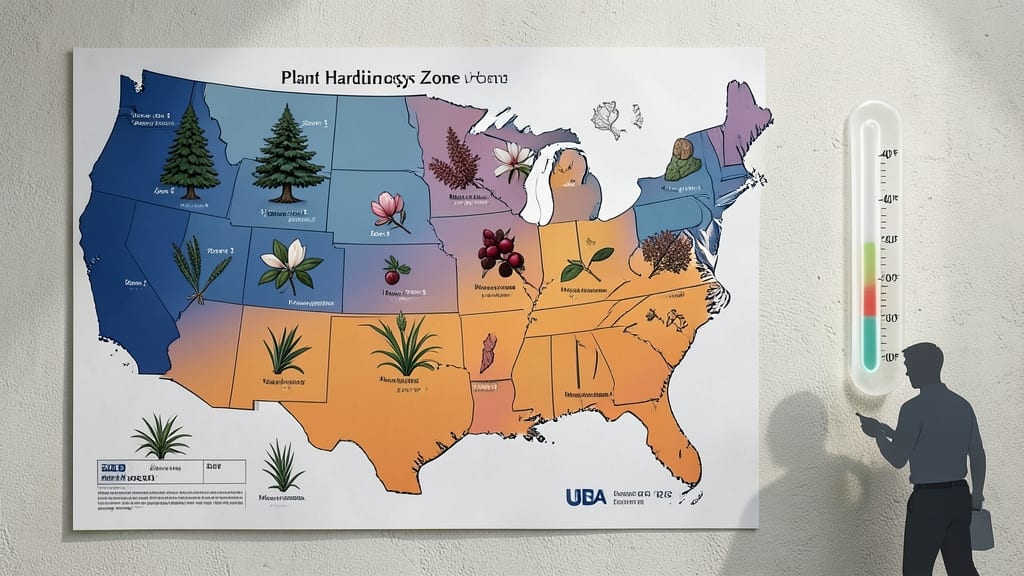
Understanding US climate zones for gardening starts with the USDA Plant Hardiness Zone Map, which organizes regions by average winter lows to predict which plants will survive in your area. The zones run from 1 (subarctic) to 13 (tropical), with half-zone increments (a/b) for precise planting guidance. This system helps gardeners choose cold-hardy varieties and time their planting seasons accurately.
These temperature-based zones aren't just about cold tolerance—they also influence growing seasons, soil conditions, and even pest pressures.
For example, Zone 5's 10-20°F winters demand frost-resistant perennials like coneflowers, while Zone 10's 30-40°F minimum lets gardeners grow citrus year-round. 🌱 The interactive USDA map lets you pinpoint your exact location down to the half-zone, which is especially helpful in transitional areas where microclimates create local variations.
I always recommend cross-referencing with your last frost dates for the most accurate planting schedule.
What many gardeners overlook is how zones interact with other climate factors like humidity or rainfall. A Zone 7 garden in Florida faces completely different challenges than one in Kansas—even though they share the same zone number.
That's why I suggest supplementing the USDA map with local agricultural extension resources for hyper-specific advice. The key takeaway? Your zone is your starting point, but successful gardening requires layering in regional knowledge.
💡 In This Article
- How USDA Plant Hardiness Zones Determine Garden Success
- Zone-Specific Planting and Care Strategies for US Gardens
How USDA plant hardiness zones determine garden success
The USDA Plant Hardiness Zone Map divides the U.S. into zones based on the average annual minimum winter temperature, measured over a 30-year period.
Each zone represents a 10°F range—Zone 1 (-60°F to -50°F) is the coldest, while Zone 13 (60°F to 70°F) is the warmest. This classification helps predict which plants can survive winter's harshest conditions in your area.
For example, a Zone 5 garden (typical of northern New York or Minnesota) faces -20°F to -10°F winters, while a Zone 9 garden (like coastal California) rarely drops below 20°F. 🌡️
Beyond temperature, zones indirectly reflect other climate factors like frost-free days and growing season length. A Zone 6 garden (e.g., Chicago) typically has 140-180 frost-free days, while Zone 10 (e.g., Miami) enjoys 300+ days.
This means tropical plants like mangoes thrive in Zone 10 but would perish in Zone 6's winter freezes. The map also accounts for microclimates—urban areas can be 1-5°F warmer than rural zones due to heat islands, while coastal regions often experience milder winters than inland areas at the same latitude.
Locating your zone is simple: use the interactive USDA map to enter your ZIP code. The system will display your primary zone (e.g., 7b) and show nearby transitions. For precision, I recommend checking your last average frost date (via local weather data) and adjusting planting schedules accordingly.
For instance, Zone 5 gardeners should wait until May 10-15 to plant warm-season crops like tomatoes, while Zone 9 gardeners can start as early as February 15. 📍
Exceptions exist—coastal areas like San Francisco (Zone 9) rarely see 32°F due to ocean influence, while inland valleys (e.g., Sacramento, Zone 9b) can drop to 20°F. Similarly, high-elevation gardens in Zone 7 (like Denver) may experience Zone 5 temperatures due to altitude.
These variations explain why gardeners in the same zone sometimes achieve different results. To refine your approach, I suggest testing plants in containers to see how they handle your local microclimate.
Understanding your zone also helps with soil preparation. Warmer zones (e.g., Zone 10) often require organic matter-rich soil to retain moisture in dry climates, while colder zones (e.g., Zone 3) benefit from mulching to insulate roots during -40°F winters.
The zone system doesn’t account for rainfall or humidity, so I always recommend pairing it with local agricultural extension resources for a complete picture. For example, a Zone 8 garden in Florida faces high humidity and hurricane risks, while a Zone 8 garden in Texas deals with drought and heatwaves.
Finally, zones help predict plant survival rates. A Zone 5 perennial like peonies will die if planted in Zone 10 without winter protection, while a Zone 10 tropical like hibiscus won’t survive Zone 4 winters.
The map’s sub-zones (a/b) add granularity—Zone 6a (-10°F to -5°F) is colder than 6b (-5°F to 0°F), which affects which varieties to choose. For instance, 'Red Delicious' apples thrive in Zone 5b but may struggle in 5a. 🍎