
Size
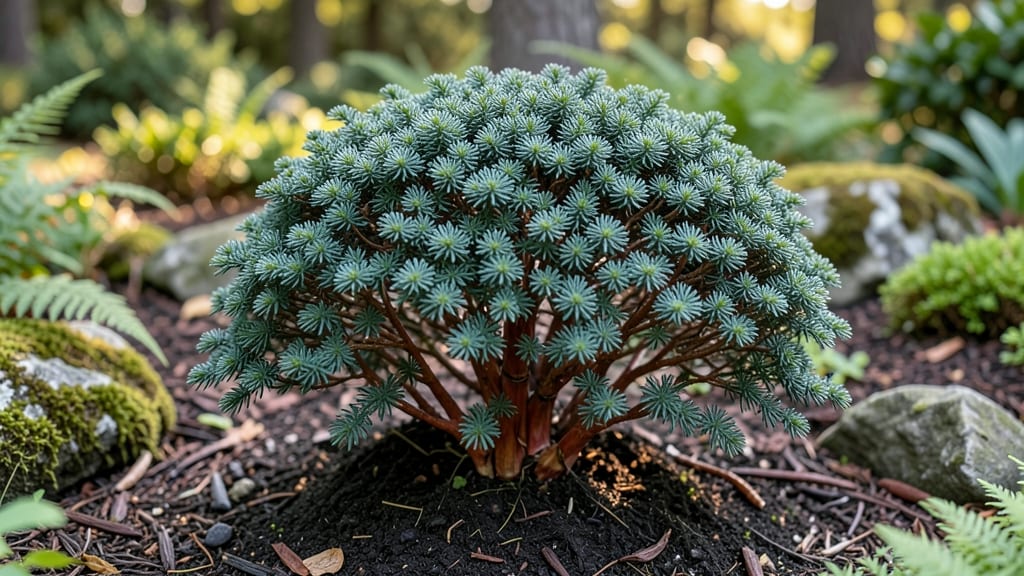
In Animal Crossing: New Horizons, Kodama act as growth catalysts in Grow a Garden by instantly maturing seeds—cutting days of waiting to mere minutes. They also supercharge fruit-bearing plants and can be reused indefinitely without losing effectiveness.
Kodama essentially function like hyper-efficient plant hormones, bypassing the natural growth cycle. 🌱 They’re especially valuable for rare seeds or high-Bells crops, where time is money. Unlike real-world fertilizers, Kodama don’t degrade over use, making them a sustainable power-up for any gardener.
The best part? You can even stack them—using multiple Kodama on the same plant won’t cause overgrowth or negative effects.
For maximum efficiency, prioritize using Kodama on seeds that take the longest to mature or yield the highest rewards. 💰 Fruit trees and rare flowers benefit most, but they’ll work on any plant type.
Just remember: Kodama don’t replace watering—they just accelerate what’s already growing. Think of them as your garden’s turbo boost, perfect for players who want to expand their plots without the wait.
💡 In This Article
- How Kodama Instantly Matures Plants in Grow a Garden
- Best Kodama Strategies for Fast Garden Expansion
How Kodama instantly matures plants in grow a garden
Kodama work by mimicking the effects of plant growth hormones in real life, but at an accelerated, almost magical speed.
In the game, when you place a Kodama on a planted seed, it triggers an immediate growth spurt that skips the usual stages—no more waiting for sprouts to appear or leaves to unfurl.
The plant jumps straight to maturity in just 30 seconds, as if it absorbed a decade of sunlight and nutrients in an instant. 🌱 This is similar to how real-world auxins (natural plant hormones) promote cell elongation, but Kodama take it to an extreme, bypassing the slow biological processes entirely.
The mechanics get even more interesting when you consider how Kodama interact with different plant types. Flowers, shrubs, and fruit-bearing plants all respond to Kodama, but the visual effects vary slightly.
For example, fruit trees like the cherry blossom or apple tree will instantly produce fruit after Kodama treatment, while flowers like the cosmos or tulip will bloom fully in seconds. The game doesn’t distinguish between plant varieties—Kodama treat all seeds equally, making them a universal growth solution.
However, the plant’s final appearance (like fruit color or flower shape) remains tied to its original seed type, proving Kodama only speed up growth, not alter genetics.
One of the most fascinating aspects is how Kodama bypass the natural growth cycle entirely. In real life, plants mature through a series of hormone-driven stages: germination, vegetative growth, and flowering/fruiting.
Kodama essentially compress this into a single, instantaneous event. 💫 This is why you’ll never see a partially grown plant after using a Kodama—it’s either a seed or a fully mature plant.
The game’s physics engine treats Kodama as a "force multiplier" for growth, similar to how real-world hydroponic systems use nutrient solutions to accelerate plant development, but without the need for soil or sunlight.
What makes Kodama even more powerful is their ability to work on already-planted crops. If you’ve been patiently watering a peach tree for days and it’s just about to bear fruit, a single Kodama can push it to maturity in seconds.
This is particularly useful for high-value crops like the durian (which normally takes 7 days to mature) or the mango (which takes 5 days).
The game’s design ensures Kodama don’t cause overgrowth or negative effects, so you can safely use them repeatedly on the same plant without worrying about glitches or unintended consequences.
For players who enjoy the science behind their games, Kodama function like a hyper-efficient version of ethylene gas—a natural plant hormone that triggers fruit ripening.
In real life, farmers use controlled ethylene releases to speed up fruit maturation in warehouses, but Kodama take this concept to a fantasy level. 🔥 The game’s developers likely drew inspiration from real-world agricultural techniques, but with the freedom to make it instant and universal.
This makes Kodama not just a gameplay tool, but a fun nod to how plants actually grow—and how humans have tried to manipulate that process for centuries.